Membrane roofing is a single, continuous waterproof layer installed over flat or low-slope roofs instead of overlapping shingles. It's the standard choice for warehouses, strip malls, additions, and modern low-slope homes where a sealed barrier matters more than a steep pitch. This guide breaks down the five main membrane types, what each one typically costs, and how to pick the right system for your roof.
What Is Membrane Roofing?
A membrane roof uses one unbroken sheet of synthetic or rubber material to cover an entire flat or low-slope roof deck. There are no shingles, no overlapping courses, and almost no gaps for water to find.
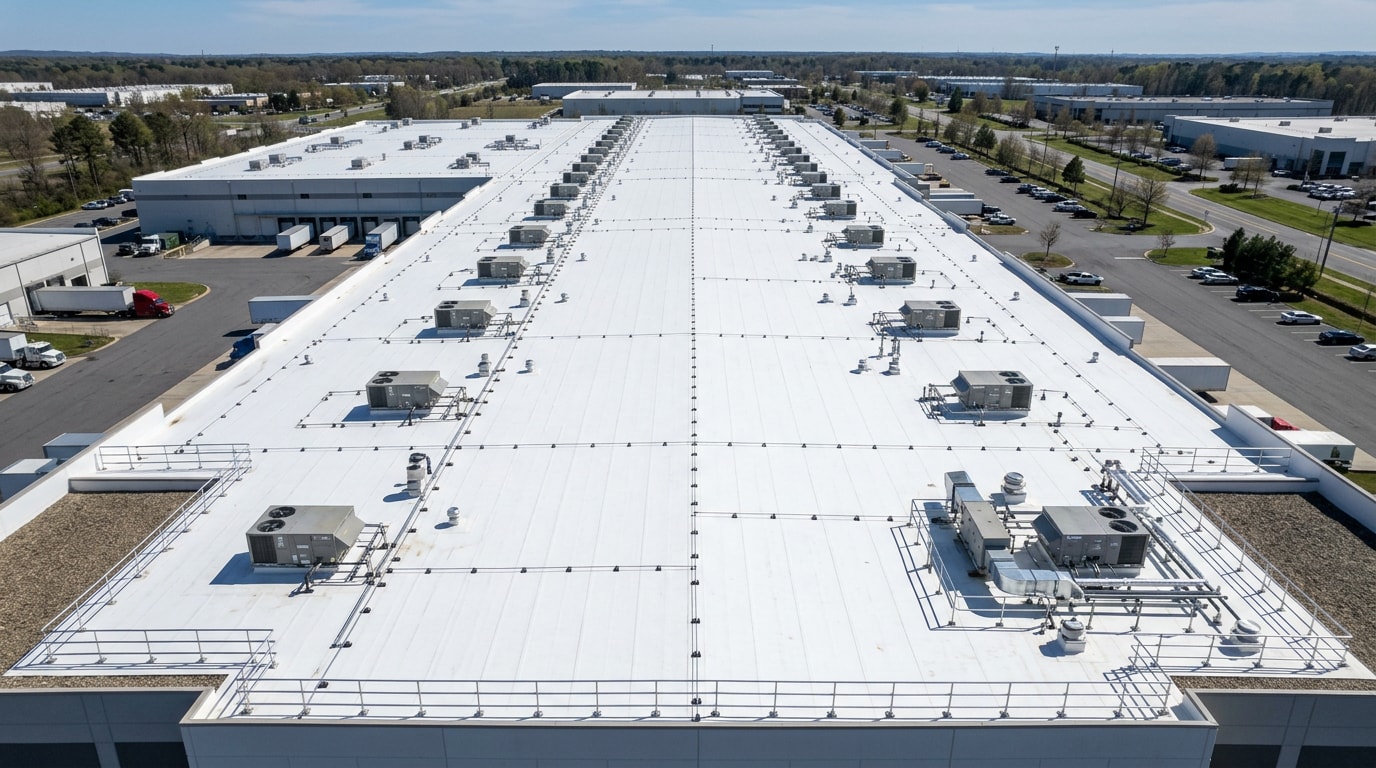
That single-sheet design is why membranes show up constantly on commercial buildings. Most large commercial projects such as apartments, warehouses, sports facilities, schools, and hotels utilize membrane roofing on flat roofs, largely because they require roof access for mechanical systems or have occupied roof terraces .
Residential use is growing too. Membrane roofing is also applicable in residential buildings that are unable to drain water quickly , which is why it's become common on additions, garages, and low-slope home designs.
Need a membrane roofing specialist for a flat-roof section of your building? Our roofing contractors install and repair TPO, EPDM, and PVC systems across Southwest Washington.
Types of Membrane Roofing
Membrane roofing isn't one material. It's a category that covers five distinct products, each with its own seam method, cost, and lifespan. The five most common types are built-up roofing (BUR), modified bitumen, EPDM, PVC, and TPO.
Which one makes sense for your building depends on your budget, local climate, roof traffic, and how long you want the system to last.
Built-Up Roofing (BUR)
Built-up roofing, often called a tar and gravel roof, consists of alternating layers of bitumen and reinforcing fabric topped with gravel or mineral aggregate. It's one of the oldest commercial roofing types and is still used today, built from felt or fabric layers (called plies) that are layered on top of the roof, overlapping, and infused with bitumen .
That layered construction is also its downside. Because BUR has no single sealed seam, finding the source of a leak takes more time and labor than it does on a single-ply system, which is why many building owners have shifted toward newer membrane options.
Modified Bitumen
Modified bitumen blends traditional asphalt with rubber or plastic polymers, creating a more flexible, crack-resistant sheet than classic BUR. SBS membrane (styrene-butadiene-styrene) is the most common variant, valued for stretching without splitting in cold weather.
Most owners have been moving away from purely asphalt-based roofing products because of the environmental and health hazards involved . Heating bitumen for application releases fumes, and exposure to asphalt fumes has been linked to headaches, skin rash, fatigue, and throat and eye irritation , according to OSHA's guidance on asphalt fume exposure. Many contractors now favor cold-applied or self-adhered modified bitumen for this reason.
Single-Ply Membranes: Thermoplastic vs. Thermoset
Single-ply roofing falls into two families. Thermoplastic membranes (PVC and TPO) soften with heat and seams are heat-welded, creating strong, watertight bonds, while thermoset membranes (EPDM) are rubber-like and don't melt with heat, so seams are sealed with adhesives or tape . This distinction drives nearly every performance difference between the three materials.
| Feature | Thermoplastic (PVC, TPO) | Thermoset (EPDM) |
|---|---|---|
| Seam method | Heat-welded | Adhesive or tape |
| Flexibility in cold weather | Moderate | High |
| Typical lifespan | 20-30 years | 20-25 years |
| Typical installed cost | $7-$14 per sq. ft. | $5-$10 per sq. ft. |
Exact pricing depends on your market, roof access, insulation needs, and which contractor you hire, so treat these as planning ranges rather than a quote.
EPDM Rubber Roofing Membrane
EPDM is a synthetic rubber membrane known for affordability and a long track record. It generally comes in at the lowest price per square foot of any flat or low-sloped roofing option, and a good-quality install can last more than 20 years . It's also easy to patch, which keeps repair costs down.
The trade-off: dark EPDM absorbs heat rather than reflecting it, which can raise cooling costs in hot climates. Some sheets also shrink slightly over decades, pulling at flashing and seams if nobody's watching for it.
PVC Roofing Membrane
PVC is a thermoplastic sheet valued for fire resistance and chemical resistance. It's the most chemically resistant of the common membrane types, which matters near kitchen exhaust vents, HVAC equipment, or anywhere oils and greases might reach the surface, and it also handles ponding water better than TPO or EPDM . Seams are heat-welded, creating a strong, watertight bond.
PVC typically costs more than EPDM and demands skilled installation to weld seams correctly. Get it wrong, and seam failure becomes the most common point of leaks down the road.
TPO Membrane Roof
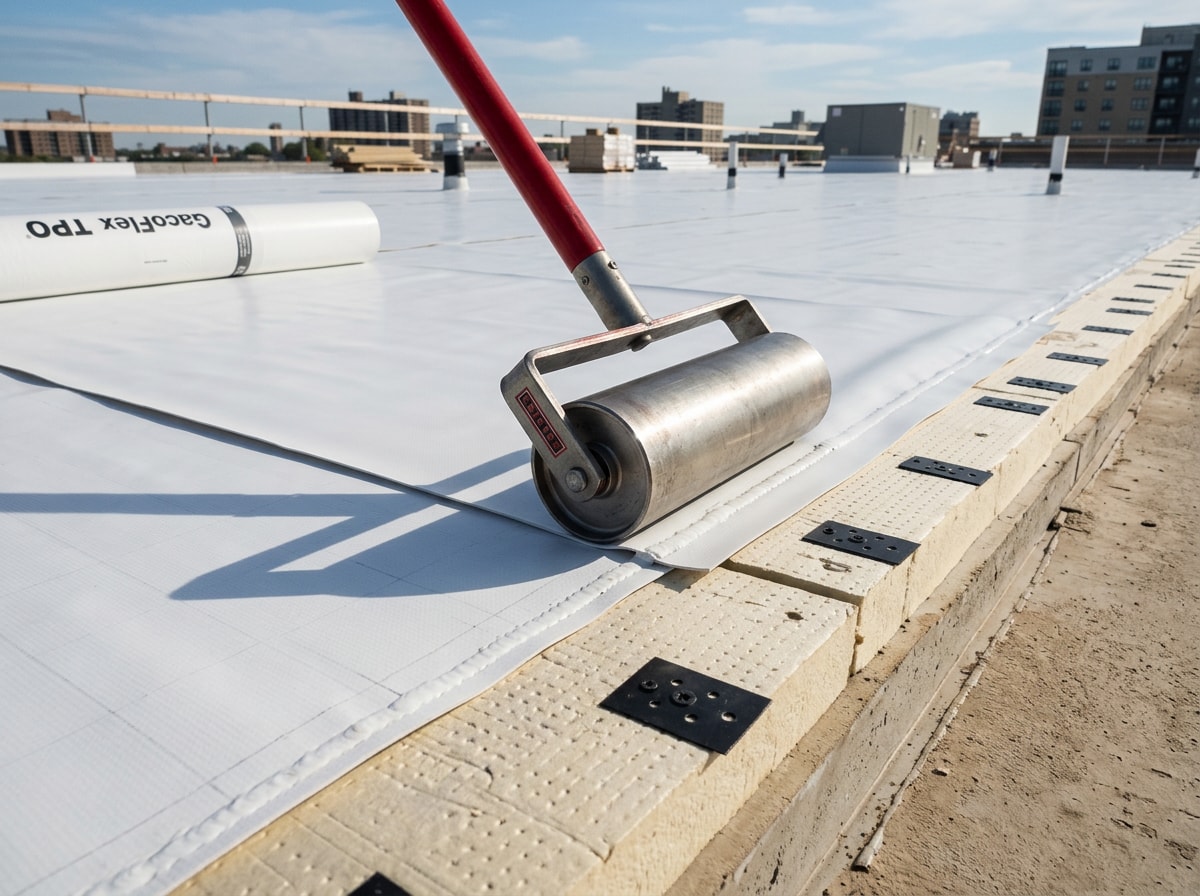
TPO combines thermoplastic materials into a single-ply sheet, usually in white or light colors that reflect sunlight instead of absorbing it. It's one of the fastest-growing roofing systems in the U.S., especially in warm climates, and its reflective surface helps reduce cooling costs while standing up to pollutants, chemicals, and UV exposure .
That reflectivity is part of why cool roofing matters for energy bills. Cool roofs keep buildings cooler on hot days, improving comfort while reducing air conditioning costs and strain on the electrical grid , according to ENERGY STAR's research on cool roofs. For more on this specific material, see our guide on what TPO stands for in roofing.
Seams are heat-welded like PVC, creating strong joints. One caveat: TPO quality varies significantly by manufacturer, so a cheap sheet may not perform as well or last as long as one from a reputable brand.
Membrane Roofing Types at a Glance
| Type | Seam Method | Typical Lifespan | Best For |
|---|---|---|---|
| BUR | Layered, no single seam | 15-20 years | Tight budgets, heavy roof traffic |
| Modified Bitumen | Torched, cold-applied, or self-adhered | 15-20 years | Cold climates, budget re-roofs |
| EPDM | Adhesive or tape | 20-25 years | Large roofs, cold climates, tight budgets |
| PVC | Heat-welded | 20-30 years | Restaurants, chemical exposure, ponding water |
| TPO | Heat-welded | 20-25 years | Hot climates, energy-conscious owners |
Advantages of Membrane Roofing
Beyond individual material differences, membrane roofing as a category offers some clear benefits:
- Waterproofing. A continuous, sealed membrane resists pooling water far better than shingles on a flat surface.
- Flexibility. Membranes conform to irregular roof shapes, HVAC penetrations, and rooftop equipment without a patchwork look.
- Localized repairs. A damaged spot usually gets patched rather than torn off and rebuilt.
- Energy efficiency. Light-colored options like TPO and PVC reflect heat instead of absorbing it.
- Longevity. With proper installation, most membrane systems deliver two decades or more of service.
Thinking about a new flat-roof section or addition? Our roof installation team can walk through which membrane fits your building and budget.
Membrane Roofing Installation Process
Membrane roof installation follows a consistent sequence, though the details shift depending on the material:
- Evaluate the deck. Crews inspect the existing roof deck, repair any damage, and add insulation if needed. A roof inspection is the right starting point if you're not sure what condition your deck is in.
- Roll out the membrane. Sheets go down across the surface with overlapping edges prepped for sealing.
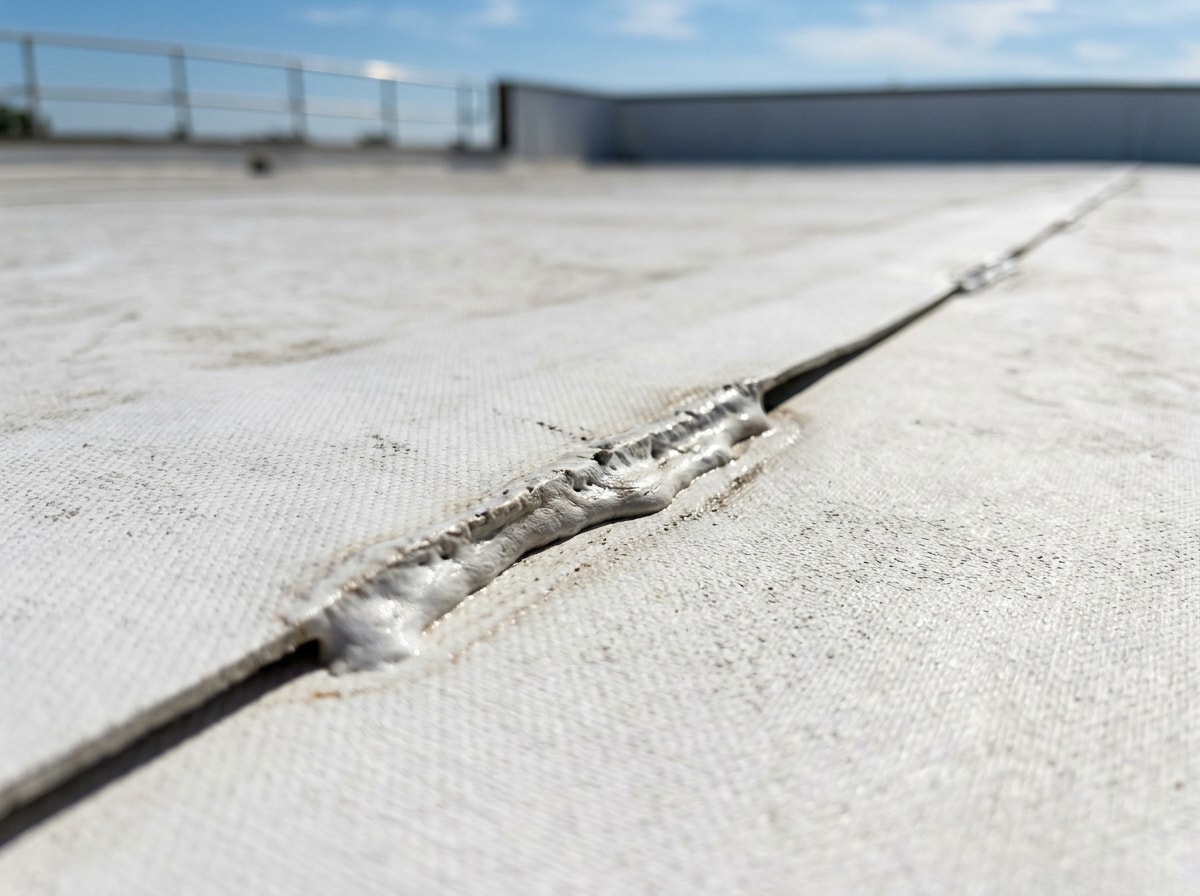
- Seal the seams. TPO and PVC use heat welding to fuse overlapping edges into one solid barrier. EPDM relies on adhesives or seam tape instead.
- Flash the edges. Flashing seals the membrane tightly around edges, drains, vents, and rooftop penetrations.
Installers also choose one of three attachment methods:
- Mechanically fastened: The membrane is screwed directly to the deck, fast and affordable for straightforward roofs.
- Fully adhered: The membrane is glued down for a smooth, wind-resistant finish.
- Ballasted: Stone or pavers hold the membrane in place without fasteners or adhesive, useful when deck penetration isn't desirable.
NRCA's technical library provides guidance on building codes, standards, and correct roof system installation for contractors specifying these systems, including which attachment method fits a given deck and wind-load requirement. Worth noting: single-ply membrane systems have now overtaken built-up and modified bitumen roofing in overall market share, and mechanically fastened installation has become the most common attachment method industry-wide , according to NRCA's annual market survey data.
Choosing the Right Membrane Roofing for Your Building
Picking the best membrane roof type comes down to a few practical factors: climate exposure, roof traffic, budget, and how long you want the system to last. Buildings in hot climates often benefit most from reflective TPO or PVC, while EPDM remains a solid budget choice in milder regions.
In our experience installing and repairing membrane systems across Southwest Washington's wet winters, heat-welded seams on TPO and PVC tend to hold up better through sustained heavy rain than adhesive-sealed EPDM seams, even though EPDM performs fine long-term once it's properly flashed and maintained. That difference matters more on roofs with a lot of standing water, like the flatter rooflines we see throughout the Southwest Washington Metro area.
Roofs with heavy equipment or frequent maintenance visits may need a more puncture-resistant membrane, while tight budgets might favor BUR or standard EPDM. If your existing membrane has reached the end of its service life, our roof replacement team can evaluate whether a full tear-off or a recover system makes more sense for your building.
This guide was put together by the roofing crew at Black Bear Home Exteriors, who install and repair membrane roofing systems for customers in Longview, Vancouver, Kennewick, and the surrounding Southwest Washington Metro area. Have questions about your specific roof? Get a free estimate and we'll walk through your options in person.
FAQ
What is the difference between a roof and a membrane roof?
A "roof" broadly covers any roofing system, including pitched, shingled designs that shed water through overlapping layers. A membrane roof is specifically a continuous, sealed sheet system built for flat or low-slope applications where shedding water isn't an option.
What is the best membrane roof for flat roofs?
TPO and EPDM are the most commonly recommended membrane roofs for flat applications. TPO offers energy efficiency and heat-welded seams, while EPDM delivers durability and flexibility at a lower cost. Both hold up well against varied weather conditions.
How do you repair a membrane roof?
Most membrane roof repairs involve cutting out the damaged section, installing a patch, and heat-sealing or adhering the edges to restore a watertight seal. Extensive damage, widespread seam failure, or significant age may call for a full replacement instead.
How long does a membrane roof last?
Lifespan varies by material: EPDM and TPO typically last 20-25 years, PVC can reach 20-30 years, and BUR often lasts 15-20 years. Climate, maintenance, and installation quality all affect how close a roof gets to its maximum expected lifespan.
What are the disadvantages of a membrane roof?
Seams remain the most vulnerable point for leaks, especially if welding or adhesion wasn't done correctly. Membrane roofs also aren't suited to steep slopes, and lower-quality materials or poor maintenance can shorten their lifespan compared to well-maintained alternatives.
Is membrane roofing more expensive than asphalt shingles?
Per square foot, most membrane roofing costs more upfront than standard asphalt shingles. But shingles aren't a realistic option on a flat or low-slope roof in the first place, so the real comparison is between membrane types, not membrane versus shingles. For a broader look at pricing across roofing materials, see our guide on cost-effective roofing materials.