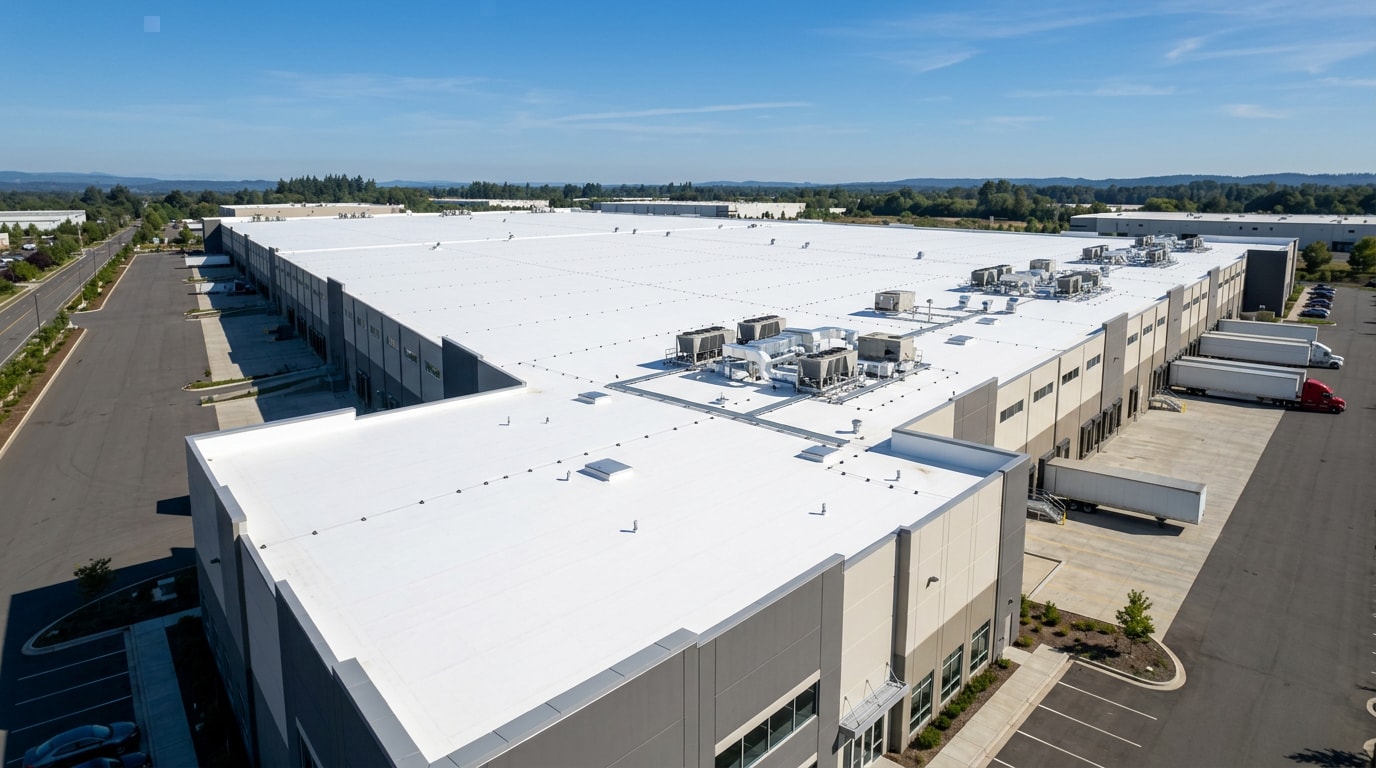

TPO stands for thermoplastic polyolefin, a single-ply roofing membrane used on flat and low-slope roofs. If you're comparing bids for a commercial building, a garage addition, or a porch roof, you'll see this acronym on nearly every spec sheet. Here's what it actually means, how the material is built, and how it stacks up against EPDM and PVC.
TPO Meaning: The Straightforward Definition
"TPO" stands for Thermoplastic Polyolefin, a single-ply roofing membrane which combines polypropylene and ethylene-propylene rubber, resulting in a thermoplastic blend. That blend gives the sheet flexibility, weather resistance, and the ability to be heat-welded at the seams instead of glued or taped.
The material isn't new. Its use as a commercial roofing product dates back to 1986, but before that it saw use as a liner for ponds and in-ground pools. Since then it's become one of the default choices for flat-roof commercial work, and it's showing up more often on residential additions with low-slope sections. In the 20-plus years TPO has been in the field, it's become one of the most popular products for low-slope roofs, with over 1 billion square feet installed annually, making up over 50% of single-ply roofs installed today.
When our crews walk clients in Vancouver, Longview, or the wider Southwest Washington Metro area through options for a low-slope porch or garage roof, TPO is almost always one of the first two or three materials we bring up, right alongside EPDM.
Thermoplastic vs. Thermoset: Why It Matters
Roofing membranes split into two chemical families, and the difference explains why TPO seams look and behave differently than rubber roofing seams.
- Thermoplastic membranes, like TPO,
are a polymer that becomes plastic (malleable, shapeable, pliable, and formable) when heated . That's what allows a heat gun to fuse two sheets into one continuous surface.
- Thermoset membranes, like EPDM rubber, work the opposite way.
Thermoset materials, by contrast, become harder and less workable as they are heated, which is why EPDM seams rely on adhesive tape rather than heat welding.
If you're weighing TPO against EPDM specifically, our team broke down that comparison in more detail in What Does EPDM Stand For in Roofing?.
How TPO Membranes Are Built
TPO ships in rolls, and roll width affects how many seams your roof ends up with. TPO membranes are typically manufactured in sheets of 10 feet wide, 12 feet wide, or 20 feet wide. Thickness varies by product line, but the TPO membrane itself is the single-ply waterproofing layer, running 45–80 mil thick.
Thicker sheets generally hold up better against punctures and hail impact. The seams are where quality control matters most: a properly heat-welded seam creates a bond that's stronger than the membrane itself, so installer experience matters a great deal with TPO roofing. A rushed or under-heated weld is the most common failure point on any TPO roof we've inspected.
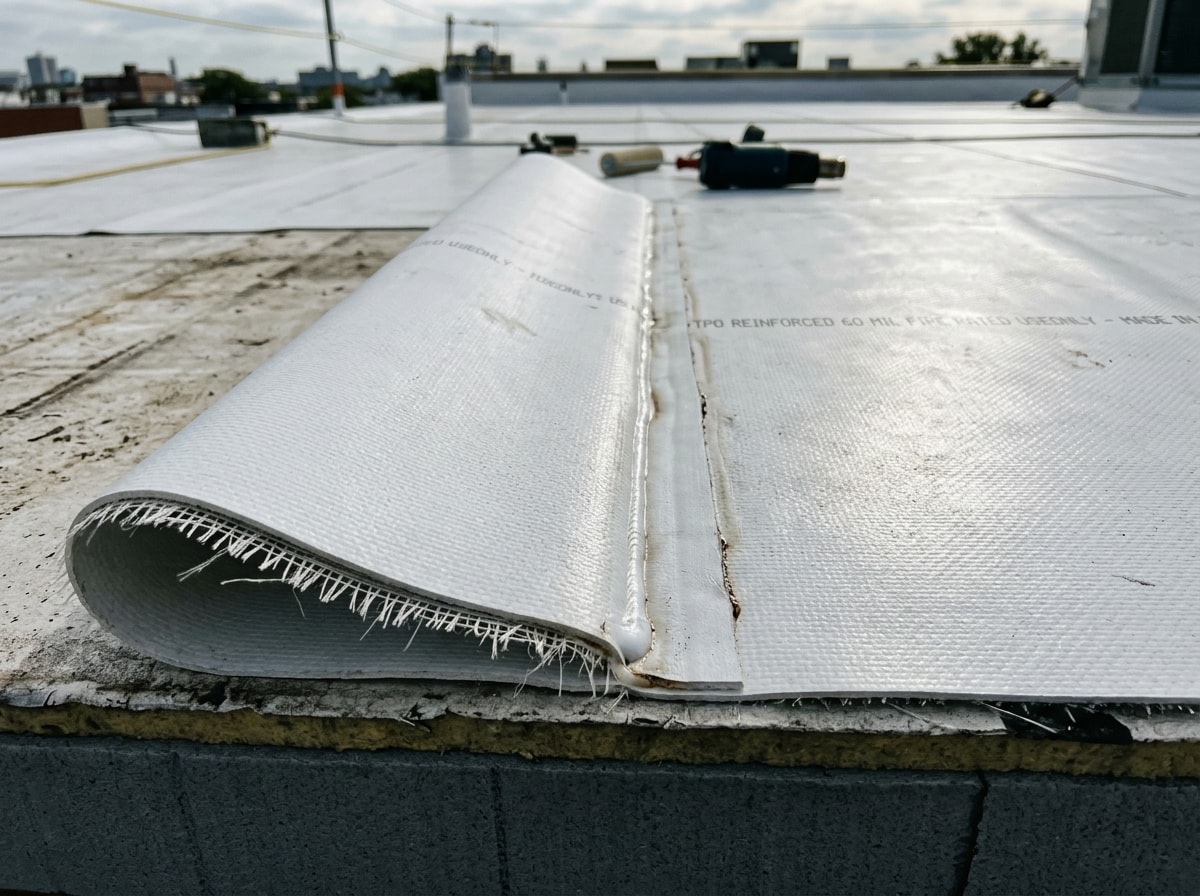
The industry standard governing all of this is ASTM D6878. That specification covers flexible sheet made from thermoplastic polyolefin (TPO) as the principal polymer, intended for use in single-ply roofing membranes exposed to the weather. It's been updated more than once as membranes got thicker: the standard originally was published in 2003 based on 45-mil-thick products, and has been revised several times since its original publication. That revision history is a big part of why 45-mil TPO is now considered the minimum thickness rather than the standard.
Benefits of TPO Roofing
TPO's popularity comes down to a handful of practical advantages:
- Reflective surface. White TPO reflects sunlight instead of absorbing it. The Department of Energy's ENERGY STAR program notes that
a roof with high solar reflectance is considered a "cool" roof, and an ideal cool roof pairs high solar reflectance with high thermal emittance , which is exactly the profile a white TPO membrane offers.
- Cost-effective installation. Compared to fully adhered PVC or older built-up systems, TPO generally installs faster and cheaper per square foot.
- Recyclable at end of life.
TPO is eco-friendly because it does not contain chlorine and is 100% recyclable, reducing carbon emissions.
- Flexible in changing weather. The same blend that allows heat-welding also lets the sheet expand and contract with temperature swings without cracking.
How Is TPO Roofing Installed?
TPO installation generally follows one of three methods:
- Mechanically attached — fasteners and plates secure the membrane through the insulation and into the deck.
This can include everything from mechanical attachment to a roof deck, to being fully adhered with adhesive, or ballasted with river rock.
- Fully adhered — adhesive bonds the sheet directly to the substrate, which is common on roofs with lots of penetrations or unusual shapes.
- Ballasted — stone or pavers hold the membrane down without fasteners or adhesive, though this adds significant roof-load weight.
After the sheets are down, seams are heat-welded to fuse the material into one watertight surface. Because the attachment method affects wind uplift performance and warranty terms, it's worth having a roof installation team evaluate deck condition and local wind exposure before locking in a method.
TPO vs. EPDM vs. PVC: How Does It Compare?
| Factor | TPO | EPDM | PVC |
|---|---|---|---|
| Seam type | Heat-welded | Taped or glued | Heat-welded |
| Color / reflectivity | Typically white, high reflectivity | Typically black, low reflectivity | Typically white or light, high reflectivity |
| Chemical family | Thermoplastic | Thermoset rubber | Thermoplastic |
| Manufacturer warranty |
10–20-year warranties available
| Commonly 20+ years quoted, varies by thickness |
About 20+ years
| Typical cost profile | Moderate | Lower material cost | Higher, due to chemical resistance |
PVC and TPO look almost identical, so much so that it can be difficult to tell the two materials apart from one another, but PVC costs more because of its higher chemical resistance, which matters for roofs exposed to grease or industrial exhaust. EPDM remains the budget option, and if you want the full breakdown of how it's made and where it fits, see what EPDM stands for in roofing.
What Does TPO Roofing Cost?
Pricing depends on membrane thickness, roof size, and whether the old roof needs to be torn off first. As a general benchmark: new TPO installation runs $5–$9 per square foot including materials, labor, and warranty; installing over existing roofing without a tear-off runs $3.50–$7 per square foot; and a full replacement with tear-off runs $7–$12 per square foot.
Insulation is usually a separate line item and can add meaningfully to the total, especially on older buildings that need a full recover rather than a simple overlay. A roof replacement quote from a licensed contractor is the most reliable way to pin down real numbers for your specific building or addition.
Maintenance Tips for TPO Roofing
Routine seam checks, debris removal, and prompt repair of any punctures go a long way toward helping a TPO roof reach its expected service life. Before anything else, the deck needs to be clean, dry, and structurally sound at install time, and that same standard applies at every follow-up inspection.
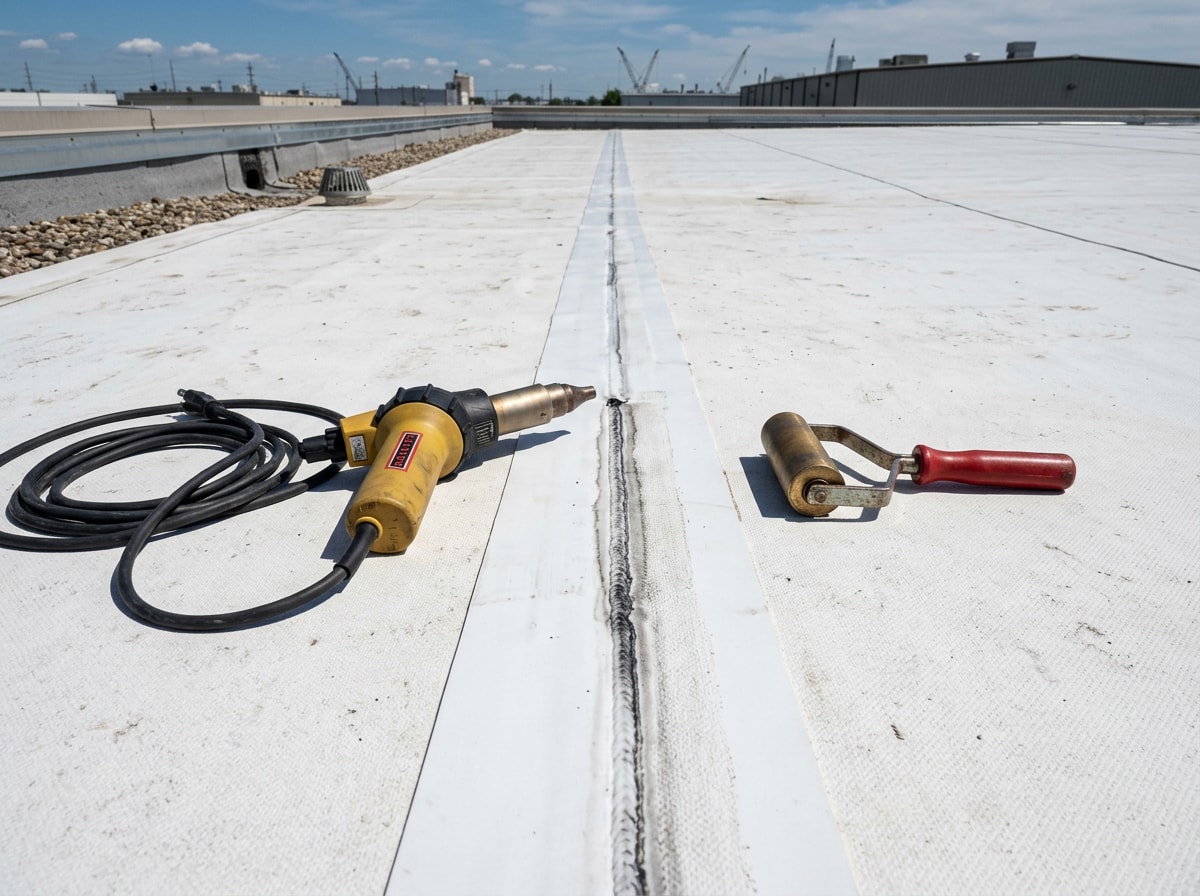
Scheduling a professional roof inspection once or twice a year is one of the simplest ways to catch small seam issues before they turn into leaks. If you already have a puncture or a lifted seam, don't wait on it, our roof repair team can usually patch a TPO membrane in a single visit.
Ready to find out what a TPO or EPDM roof would cost for your building or addition? Get a free estimate from Black Bear Home Exteriors and we'll walk you through the right membrane for your roof, your climate, and your budget.
FAQ
What does TPO stand for in roofing?
TPO stands for thermoplastic polyolefin. It's a single-ply roofing membrane which combines polypropylene and ethylene-propylene rubber, resulting in a thermoplastic blend.
What is TPO roofing made of?
TPO combines polypropylene and ethylene-propylene rubber into a thermoplastic blend, reinforced internally with a fabric scrim layer that adds tear and puncture strength.
How long does a TPO roof last?
Manufacturer warranties on TPO commonly run 10 to 20 years, though actual service life depends heavily on installation quality, seam workmanship, and how often the roof gets inspected.
What's the difference between TPO and EPDM roofing?
The biggest differences are seam type and color. TPO is heat-welded and typically white; EPDM is thermoset rubber, usually black, and joined with tape or adhesive rather than heat. See our full EPDM breakdown for more detail.
How much does TPO roofing cost?
New TPO installation typically runs $5–$9 per square foot installed, $3.50–$7 per square foot over existing roofing without tear-off, and $7–$12 per square foot for a full tear-off replacement.
Can TPO roofing be installed over an existing roof?
Often, yes. This is called a roof recover, and it's possible when the existing deck is sound, moisture-free, and local building code allows it. A contractor should confirm deck condition before recommending this route over a full roof replacement.
Is TPO a good roofing material?
For flat and low-slope roofs, yes. It's reflective, flexible, relatively affordable to install, and its heat-welded seams are easy to inspect and repair compared to taped alternatives. Its main weakness is seam quality, which depends entirely on installer skill.
Have more questions about whether TPO fits your roof? Contact Black Bear Home Exteriors and we'll help you compare it against EPDM, PVC, and traditional shingles for your specific project.