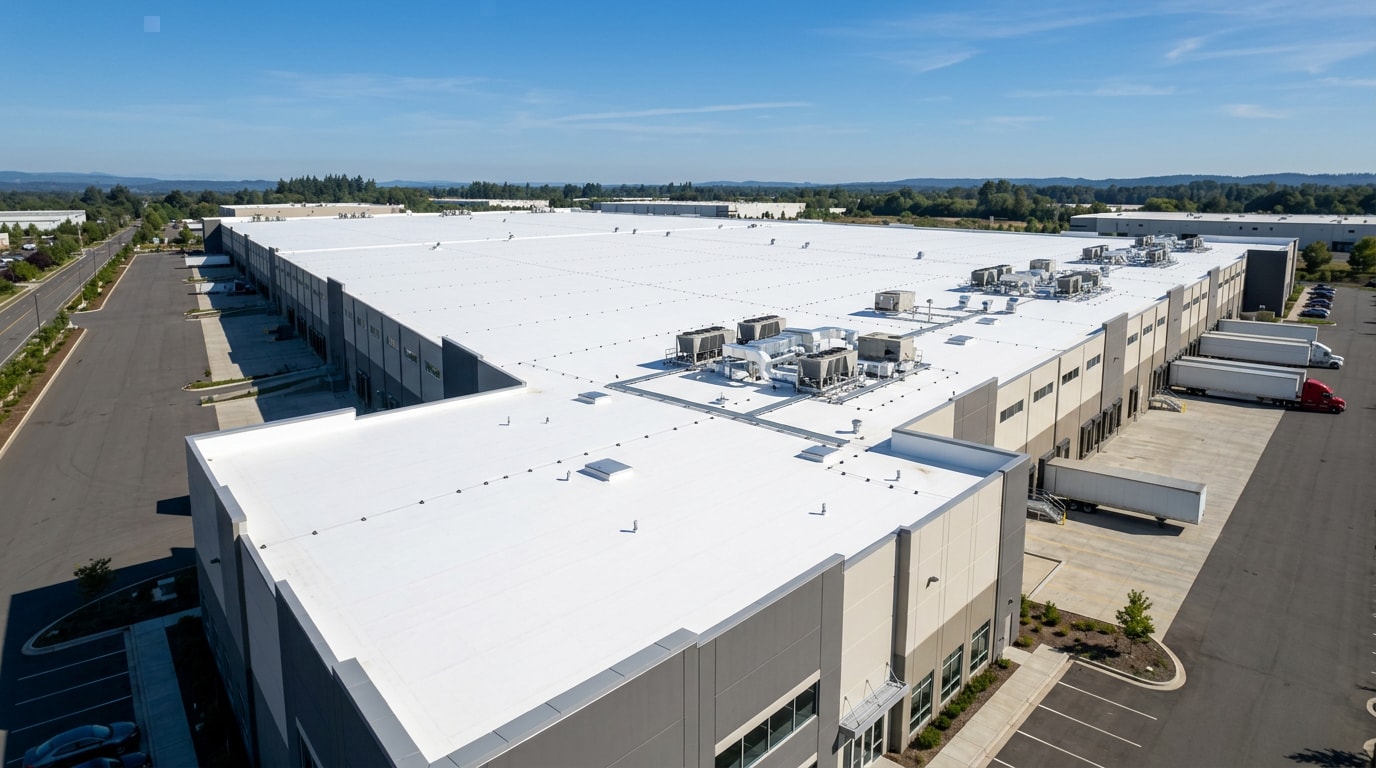

If you're asking what does EPDM stand for in roofing, the answer is ethylene propylene diene monomer, a synthetic rubber membrane built for flat and low-slope roofs. Crews have installed and patched enough of these membranes to know one thing firsthand: the acronym is simple, but the seams are where a roof either earns its lifespan or fails early. Here's what the letters actually mean, what the material is made of, and whether it belongs on your roof.
What Does EPDM Stand For?
EPDM stands for ethylene propylene diene monomer. Ethylene and propylene form the polymer backbone, while the diene lets the material cross-link into a tough, flexible sheet.
EPDM, ethylene propylene diene monomer, is a synthetic rubber material is one common way the industry defines it. The EPDM Roofing Association describes it slightly differently: EPDM is an extremely durable synthetic rubber roofing membrane (ethylene propylene diene terpolymer) widely used in low-slope buildings in the United States and worldwide . Both descriptions point to the same rubber compound, since three distinct monomers combine to form it. Either way, this is a specific synthetic rubber roofing product, not a generic label for any rubber roof.
If your building has a flat or low-slope section, our roofing contractor team can walk you through whether EPDM, TPO, or another single-ply system fits best.
What Is EPDM Roofing Made Of?
The two main ingredients in its fabrication, ethylene and propylene, come from oil and natural gas . Manufacturers blend those with a diene monomer that lets the rubber cross-link and resist breakdown over decades.
The finished sheets come in black or white, and installers choose one of three attachment methods depending on the deck, budget, and wind exposure:
| Installation Method | Typical Cost Tier | Wind-Uplift Performance | Best-Use Scenario |
|---|---|---|---|
| Fully Adhered | Higher | Excellent | Irregular decks, high-wind zones |
| Mechanically Attached | Moderate | Good | Standard commercial retrofits |
| Ballasted (Loose-Laid) | Lower | Fair-to-good, depends on ballast weight | Large, open flat roofs with adequate structural load capacity |
Choices include black or white EPDM, and assembly methods include ballasted, fully adhered, or mechanically fastened systems , and each one carries different tradeoffs in cost and performance. The material itself is specified under ASTM D4637, which sets minimum quality benchmarks: this specification covers flexible sheet made from ethylene-propylene-diene terpolymer (EPDM) intended for use in single-ply roofing membranes exposed to the weather .
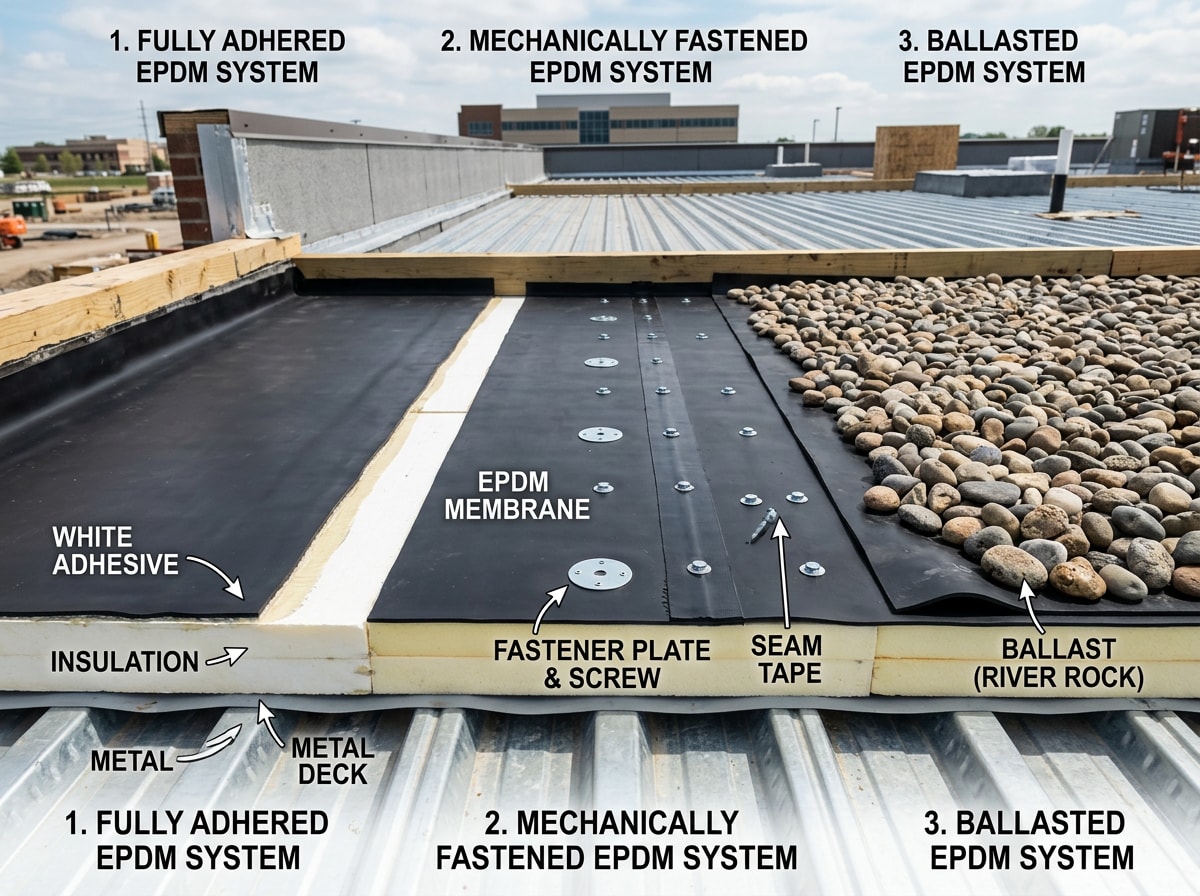
A typical installation starts with cleaning and repairing the deck, rolling out the membrane, then adhering or fastening it based on the chosen method. Seams get sealed with tape or adhesive, and edges and penetrations are trimmed and flashed. These steps can move quickly, but professional installation still matters, since most EPDM leak problems occur at terminations, penetrations, and lap splices rather than across the field of the membrane . A roof inspection before and after installation catches those weak points early.
How Long Does EPDM Roofing Last?
Lifespan numbers for EPDM have actually shifted in the past year. Based on the breadth of available field evidence, laboratory findings, and practitioner input, the EPDM Roofing Association is announcing that properly designed, installed, and maintained EPDM roof membranes have an expected service life of 38 years .
That figure comes from real field data, not marketing copy. In ERA's 2025 survey of 569 roofing professionals, respondents reported expected service lives ranging from about 25 years to more than 40 years depending on membrane thickness and attachment method . Many respondents also reported encountering EPDM roofs still performing at 40, 45, and even 50 years of age .
The rubber resists UV radiation, ozone, hail, and temperature swings without turning brittle. EPDM roofing materials, unlike traditional roofing materials like wood, have a high resistance to fire, so they can help keep your family or employees safe in case of fire incidents . Actual performance still depends heavily on installation quality, seam workmanship, and local climate, which is why a periodic roof inspection matters more on an EPDM roof than on almost any other system.
Benefits of EPDM Roofing
EPDM's benefits go beyond the acronym itself:
- Lightweight and easy to handle on most deck types
- Waterproof across seams and field membrane when properly installed
- Wide temperature range performance, staying flexible in cold and stable in heat
- Long track record, with decades of field data backing its durability
- Lower material cost than many single-ply alternatives
That combination explains why so many flat-roof buildings still rely on it decades after thermoplastic alternatives entered the market.
Energy Efficiency & Cost
Color changes performance. White EPDM reflects sunlight to cut cooling costs in hot climates, while black EPDM absorbs heat, which can help in colder regions. The energy math behind reflective roofing is well documented: in air-conditioned residential buildings, solar reflectance from a cool roof can reduce peak cooling demand by 11 to 27 percent , according to EPA data on heat island reduction.
Either EPDM color option tends to cost less than asphalt shingles or built-up roofing over its lifespan. If you're comparing that value against other roof types, our guide to cost-effective roofing materials breaks down the full price picture.
EPDM Advantages and Disadvantages
EPDM isn't flawless. Here's the honest tally.
Advantages:
- Long service life with decades of field-verified performance
- Simple, fast installation with no flame or heat welding required
- Strong cold-weather flexibility compared to thermoplastic membranes
- Lower material cost per square foot than many alternatives
Disadvantages:
- Limited aesthetic variety since a flat black membrane doesn't suit every look
- Vulnerable to punctures from ponding water or sharp debris without regular checks
- Seam quality is the single biggest failure point on the entire roof
- Black EPDM absorbs more heat than reflective alternatives unless coated or upgraded to white
None of these rule EPDM out. They're trade-offs worth weighing, and a roof repair team can usually patch small punctures with seam tape or liquid adhesive rather than replacing the whole membrane.
EPDM vs. TPO: What's the Difference?
This comparison comes up constantly once homeowners understand what EPDM stands for. Both are single-ply membranes for flat roofs, but they behave differently in the field.
TPO reflects heat radiation better than EPDM , which makes it the stronger pick in cooling-dominated climates unless you specifically choose white EPDM. Compared to TPO, EPDM is cost-effective and performs well in cold climates, but absorbs heat, necessitating reflective options for energy savings . TPO has also grown fast: TPO, which stands for Thermoplastic Polyolefin, is possibly the fastest growing commercial roofing system on the market . EPDM still wins on cold-climate flexibility and long-term field data; TPO tends to win on reflectivity and heat-welded seam strength.
Should You Choose EPDM Roofing?
For flat or low-slope roofs, EPDM remains one of the more reliable materials available, particularly for budget-conscious projects or buildings with energy-efficiency goals. It's not the right call for every steep-slope home, but within its intended use, it performs well when installed correctly.
If a section of your roof is flat or nearly flat, whether that's a garage, addition, or full commercial building, Black Bear Home Exteriors serves homeowners across Longview, Vancouver, Kennewick, and the broader Southwest Washington Metro area. A free roofing estimate can clarify whether EPDM, TPO, or a different system suits your specific roof and budget. If you're weighing a full roof replacement versus a repair, that conversation is worth having before the next storm season.
FAQ
How Long Does EPDM Roofing Last?
Most EPDM roofs have an expected service life of about 38 years when properly installed and maintained, with some field-verified examples still performing at 45 to 50 years. Membrane thickness, installation quality, and attachment method all affect the actual number.
Is EPDM Roofing Good for Homes?
Yes, especially on flat or low-slope sections like additions, garages, and patios, though it's more common on commercial buildings than full residential roofs.
Does EPDM Come in Different Colors?
Yes, EPDM comes in black and white. Black absorbs heat, which can help in colder climates. White reflects it, which cuts cooling costs in hot ones.
Can a Damaged EPDM Roof Be Repaired?
Usually. Small punctures and tears can typically be patched with seam tape or liquid adhesive without replacing the whole membrane. Larger seam failures need a professional roof repair inspection first.
What's the Difference Between EPDM and TPO Roofing?
EPDM is a rubber membrane with strong cold-weather flexibility and decades of field data. TPO is a plastic-based membrane that reflects more heat and has grown faster in commercial use, but its seams rely on heat welding instead of adhesive.
What Happens If EPDM Seams Fail?
Seam failure is the most common cause of leaks on EPDM roofs. Left unaddressed, it lets water track under the membrane and damage the deck below, which is why routine inspection matters more on EPDM than on most steep-slope materials.