Learning how to get commercial roofing leads starts with accepting one fact: property managers don't buy roofs the way homeowners do. They compare three bids, call your last five references, and loop in a regional owner before anyone signs. Build your pipeline around that slower, multi-stakeholder process and the contracts follow; ignore it and you'll keep chasing leads that never close.
This guide covers the digital, referral, and bid-based channels that actually fill a commercial calendar, plus how to qualify and track what you generate once it starts arriving.
What Are Commercial Roofing Leads?
Commercial roofing leads are job opportunities where contractors connect with businesses, property managers, or building owners who need roof repair, replacement, or maintenance on a commercial structure. Unlike homeowner leads, these projects usually involve multiple decision-makers, formal bidding, and sales cycles stretching from weeks to several months.
Residential leads tend to close after one homeowner signs off following a single estimate visit. A commercial roofing contractor often presents to a property manager, then a regional owner, and sometimes a corporate procurement team before anyone signs a contract. For a deeper breakdown of how these systems and bid cycles work, see our guide on what commercial roofing actually involves.
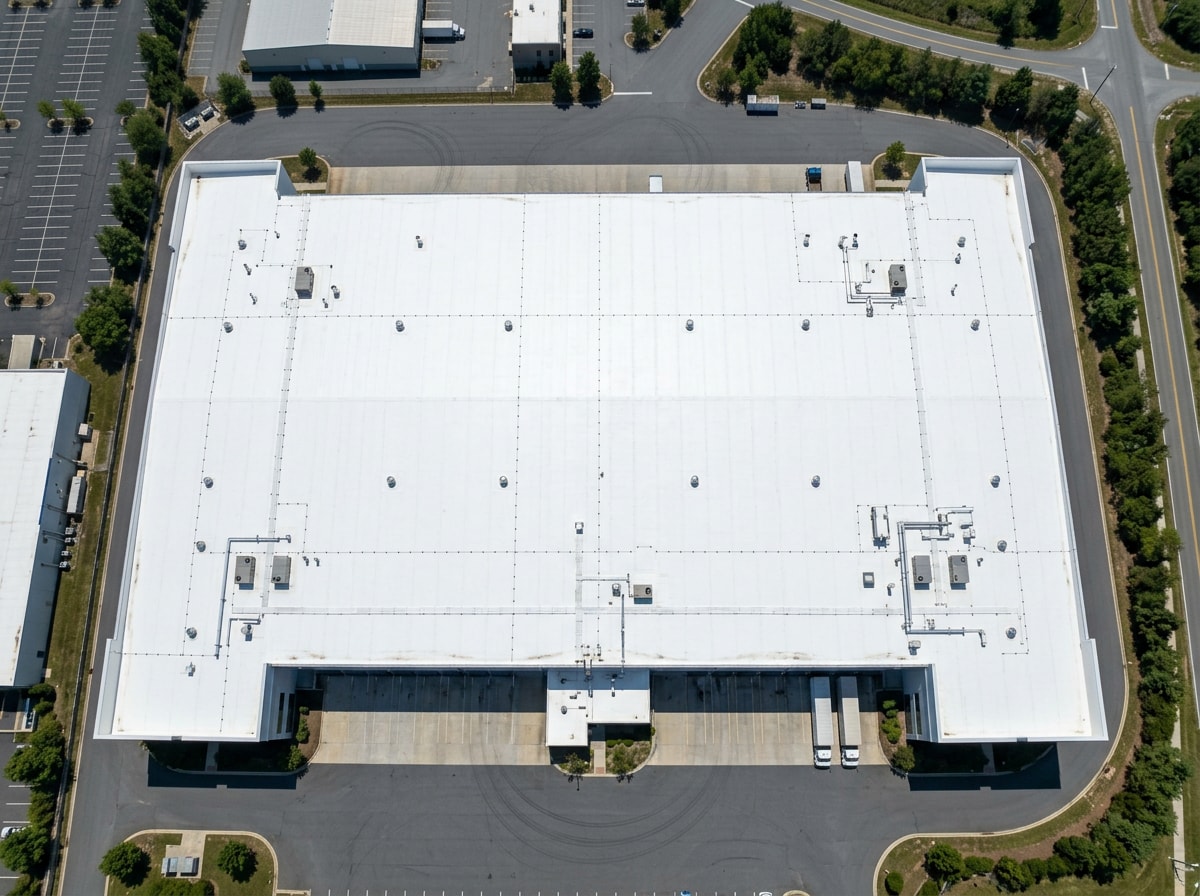
A qualifying commercial roofing lead typically comes from a property with a flat or low-slope roof system, a property management company behind it, and a higher project value than a single-family reroof. A few property types generate the bulk of commercial work:
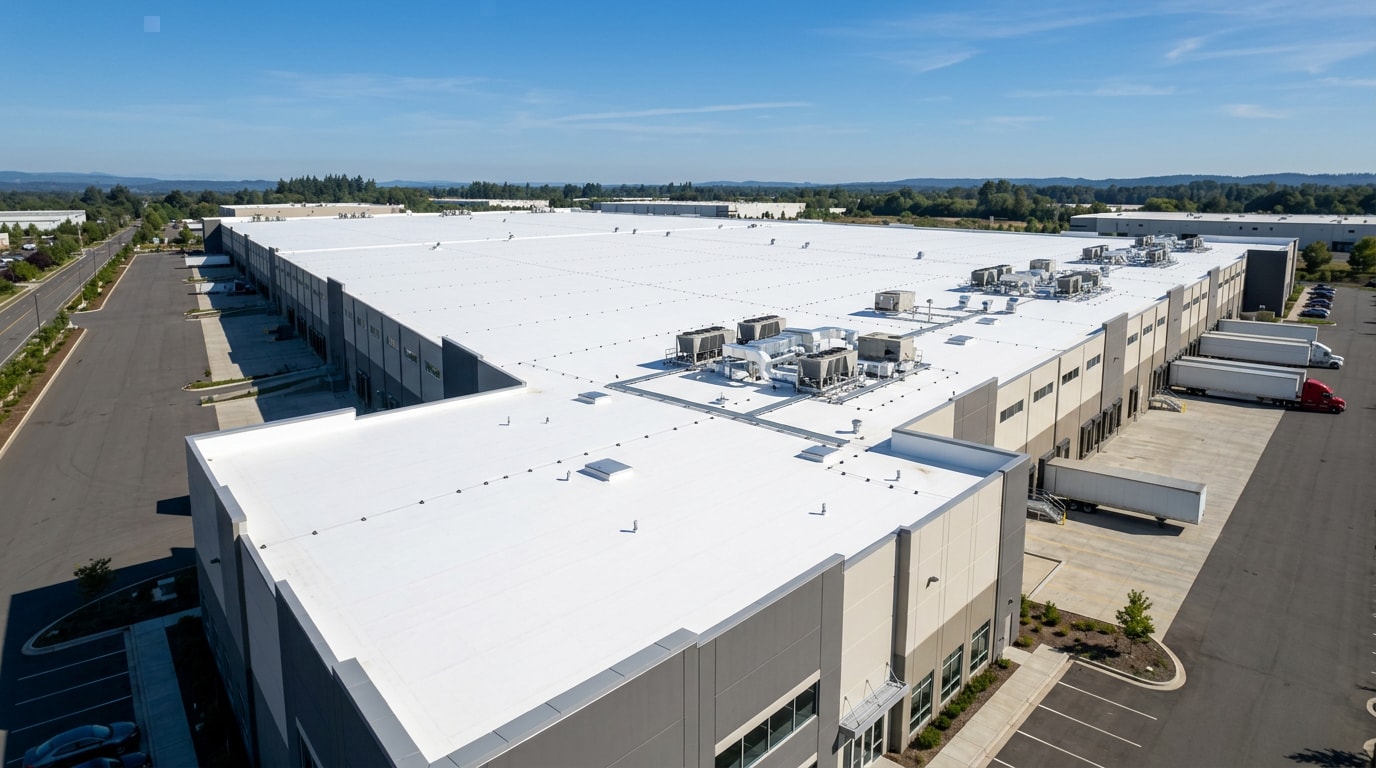
- Warehouses and distribution centers — large, flat roofs with frequent membrane issues
- Retail centers and strip malls — owned by regional property management companies with multi-property portfolios
- Medical and institutional buildings — replacement cycles driven by code compliance
- Industrial facilities — specialized flat roof systems with tight maintenance windows
Recognizing which of these fits your crew's strengths before you spend a dollar on marketing keeps your lead spend from scattering across properties you don't actually want to bid on.
How Commercial Buyers Are Different From Residential Customers
Commercial projects involve property managers, asset owners, and sometimes a board or ownership group signing off before work begins. Many commercial clients also want ongoing partnerships rather than one-time jobs. Offering maintenance contracts can become a lead generator on its own, since it creates recurring revenue and keeps your crew top-of-mind the next time a roof needs attention, something a typical residential roof replacement rarely includes.
Specializing by roofing system sharpens your positioning and cuts the keyword competition you're up against. Commercial projects often require specialized materials like TPO, EPDM, or metal roofing, and a contractor who markets as a dedicated specialist in one of those systems tends to stand out faster in search results than a generalist bidding on everything.
Generate Commercial Roofing Leads With Digital Marketing
Organic search, Google Business Profile, and paid ads feed the same engine. Most contractors need all three running together to keep a pipeline full, especially since commercial buyers tend to research for months before they ever submit a bid request.
Build Organic Authority With SEO and Content
Commercial roofing keywords carry less competition than residential terms like "roof repair near me," mostly because fewer contractors bother targeting property managers directly. That gap matters more than it looks: nonresidential construction spending ran at a seasonally adjusted annual rate of roughly $1.3 trillion in August 2026, with commercial building construction alone accounting for over $120 billion of that figure. Construction spending during August 2026 was estimated at a seasonally adjusted annual rate of $2,203.1 billion, with nonresidential spending running at roughly $1.3 trillion and the commercial category alone at approximately $122.8 billion annualized. That's a market worth building dedicated content for.
Property managers search for research-phase questions long before they issue a bid, things like roof system comparisons, cost-per-square-foot breakdowns, and material lifespans. Publishing detailed answers to those questions, including guides like how TPO roofing systems differ from EPDM, puts your company in front of decision-makers while they're still comparing options, not just when they're ready to call.
Here's a rough comparison of what to expect from each channel over time:
| Channel | Time to First Lead | Cost Trend (6–12 months) | Lead Quality |
|---|---|---|---|
| Organic SEO | 3–6 months | Drops as rankings build | High, often better-fit prospects |
| Paid Ads / LSAs | Days to weeks | Flat or rises with competition | Mixed, needs filtering |
| Referrals | Ongoing, slow start | Near zero marginal cost | Highest, pre-vetted |
Paid channels fill the gap while organic content matures. Organic leads eventually lower your blended cost per lead once rankings stabilize, so the two should run in parallel rather than one replacing the other.
Optimize Google Business Profile and Directories
Your Google Business Profile is the digital front door for local searches. Keep your name, address, and phone number identical across your website, GBP, and any directory you join; mismatched NAP data confuses Google and quietly tanks local rankings.
Beyond GBP, listing your company in industry directories gives you another path to visibility. The National Roofing Contractors Association is widely recognized as a leading authority in the industry, and NRCA is one of the construction industry's most respected trade associations and the voice of roofing professionals and leading authority in the roofing industry for information, education, technology and advocacy , which makes its member directory worth joining for the credibility signal alone. Make sure your service area coverage is listed accurately everywhere a prospect might find you.
Run Paid Ads and Local Services Ads
Google Ads and Local Services Ads let you target property managers actively searching right now, rather than waiting for organic rankings to build. LSAs display near the top of results with a Google Guaranteed badge, which eases some of the trust concerns commercial buyers naturally carry into an unfamiliar vendor relationship. Mentioning emergency roof repair availability in ad copy also signals you can handle the operational urgency a facilities manager cares about most.
Build Referral Networks and Offline Relationships
Referrals still outperform almost every paid channel on commercial jobs. After years of fielding warehouse and retail-center reroofs, our estimating team has watched a single satisfied property manager generate three or four introductions within their own portfolio, something no ad campaign replicates at that cost.
Offering referral incentives (discounts, cash bonuses, or exclusive service packages) encourages existing clients and partners to recommend your company. A simple referral program with clear rewards keeps that channel active instead of leaving it to chance.
Beyond asking current clients, these offline channels surface new work before it hits the open market:
- Local property management directories and Chamber of Commerce member lists
- BOMA (Building Owners and Managers Association) chapters, where decision-makers network directly
- Industrial facility databases that track new construction and major renovations
Attending the same networking events repeatedly, rather than once, builds the familiarity that eventually turns into a call. Offering a complimentary roof inspection to a new contact after an introduction gives them a low-commitment way to experience your work quality before committing to a full bid.
Cold Outreach That Doesn't Get Deleted
Cold calling and email campaigns remain effective for commercial roofing, provided the outreach is researched rather than generic. A message with a specific observation about the property, a relevant resource, and a low-commitment offer like a free inspection performs far better than a form letter.
Speed matters as much as the message. Research on business-to-business lead response found that companies that respond to leads within one hour are nearly seven times more likely to qualify those leads than companies that respond later, while firms that wait 24 hours or more are dramatically less likely ever to make contact . That finding, published in the Harvard Business Review study on online sales leads, applies just as directly to a property manager replying to your cold email as it does to any inbound web form.
Win Work Through Bidding, RFPs, and Government Contracts
Bid-based work is a channel many commercial roofing contractors underinvest in relative to its actual contract value. Construction bid platforms and RFP boards list commercial and government roofing projects, often before they're advertised anywhere else, giving prepared contractors a head start.
Government roofing contracts in particular tend to involve larger scopes and multi-year maintenance components. SAM.gov is the official U.S. government website where businesses register their entity and get a Unique Entity ID to start doing business with the federal government , and it's the authoritative place to search active federal roofing solicitations. State and municipal procurement sites typically list smaller local opportunities that are easier for a regional contractor to win without competing against national firms.
Should You Buy Commercial Roofing Leads?
Third-party lead platforms can supplement your own marketing, but they shouldn't replace it. Favor exclusive leads over shared leads whenever your budget allows, since shared leads get sold to multiple competing contractors at the same time, and a property manager who's already fielded three calls before yours is a harder close.
Set strict geographic and property-type filters on any purchased leads so you're not paying for work outside your service area or outside the niches you actually want. Treat these platforms as a bridge during slow months, not as your long-term strategy; a bought lead list rarely includes a decision-maker with real budget authority, and the contact information gets stale fast.
Qualify Leads and Track the Metrics That Matter
Once leads start arriving consistently, the job shifts from generation to conversion. A structured follow-up process, automated reminders that still feel personal, keeps response times fast without manual tracking on every contact.
Not every inquiry deserves equal sales effort. Ask a few direct questions early:
- Is this a full replacement or a repair?
- What's the approximate budget and funding source?
- What's the decision timeline, and who else needs to sign off?
Good qualification protects your sales team's time and keeps focus on prospects with realistic odds of converting. Once qualification is routine, compare these three numbers by channel:
| Metric | How to Calculate | Why It Matters |
|---|---|---|
| Cost per lead | Total spend ÷ number of leads | Shows channel efficiency |
| Lead-to-appointment rate | Appointments ÷ total leads | Flags weak follow-up or poor lead quality |
| Close rate | Signed contracts ÷ appointments | Reveals sales process effectiveness |
If conversions stall at any stage, fix that specific step rather than scrapping the whole strategy. Weak follow-up, poor qualification, and a generic sales presentation each need a different fix, and lumping them together just hides which one is actually costing you the job.
Reduce Buyer Hesitation and Close More Bids
Large commercial contracts come with more hesitation than a residential reroof, so removing uncertainty matters as much as generating the lead itself. Clear information about your service area, experience, and specific roofing systems reduces the doubt that stalls a decision for weeks.
Requesting reviews after every project, paired with clear warranties and honest expectation-setting, turns hesitant prospects into signed clients over time. Testing your calls to action matters too. Swapping a generic "Get a Quote" button for something specific, like offering a free commercial roof inspection, often drives a noticeably higher response than a vague request.
If you're ready to put these tactics to work, get a free estimate and see how a dedicated commercial roofing partner fits into your property's maintenance plan. You can also browse our full range of exterior services from the Black Bear Home Exteriors homepage to see what a complete building-envelope partner looks like.
FAQ
What are the most effective online strategies for reaching commercial property owners?
A combination of local SEO, an optimized Google Business Profile, and LinkedIn outreach covers most of what works online. Use LinkedIn specifically to connect with decision-makers directly, share relevant expertise, and stay visible wherever property managers already research contractors.
What is the cheapest way to get commercial roofing leads?
Referrals remain the cheapest and most effective channel for most contractors. Asking satisfied clients for introductions, and building partnerships with general contractors, property managers, and commercial real estate agents, creates a steady stream of high-quality leads at little to no ongoing cost.
How much do commercial roofing leads cost?
Shared commercial roofing leads often cost less per lead but convert at a lower rate, while exclusive leads cost more upfront but tend to close more often. Cost per lead matters less than cost per booked job; a cheap lead that rarely converts can end up more expensive than a pricier exclusive one.
How do I get commercial roofing leads fast?
The fastest inbound results typically come from a fully optimized Google Business Profile paired with Local Services Ads, since both can start generating calls within days. Combine that with direct outreach to a short, targeted list of property managers for the quickest path to a call without waiting on organic rankings to build.
How long does commercial roofing SEO take to generate leads?
Expect three to six months before organic content starts producing consistent inquiries. Commercial buyers research for weeks before reaching out, so rankings need time to build trust as well as visibility.
How do I find property managers who need roofing work?
Chamber of Commerce member lists, BOMA chapter directories, and industrial facility databases are the fastest ways to identify active property management companies in your market. Cross-reference those lists against your ideal property type before you start outreach so you're not wasting calls on buildings outside your niche.