
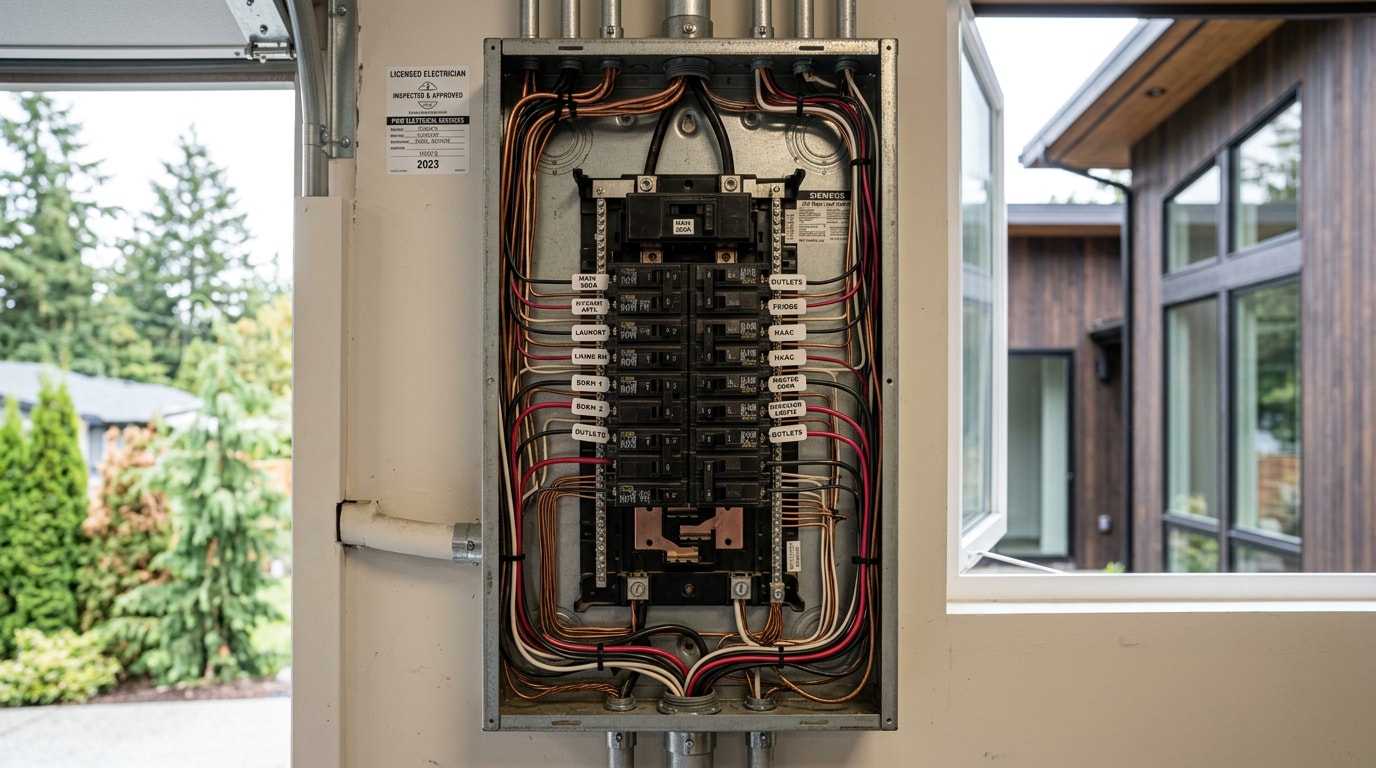
Can a general contractor do electrical work in Kennewick, WA? In almost every case, no, not without holding a separate state electrical contractor license. Washington treats electrical work as its own regulated trade, and Kennewick adds a city licensing layer on top of that. Here's exactly where the line sits, what the narrow exceptions are, and who should actually be on your crew.
Short Answer: No, Not Without a Separate License
A general construction registration does not authorize anyone to install, repair, or alter wiring in Washington State. You need BOTH contractor registration under RCW 18.27 AND an electrical contractor license under RCW 19.28 to operate an electrical contracting business in Washington. A GC who isn't also a licensed electrical contractor has to subcontract that portion of the job.
This isn't a gray area the state leaves open to interpretation. Washington law requires that all electrical work, with limited exceptions, be performed by licensed and certified electricians.
What a General Contractor Is Actually Licensed to Do
A general contractor's registration covers coordination: scheduling trades, managing the build sequence, pulling general building permits, and overseeing quality across a project. It does not cover specialty trades that carry their own licensing chapter, electrical being the big one.
Washington treats electrical (along with plumbing, elevator mechanics, boiler and pressure vessel inspection, manufactured home installation, asbestos removal, and construction cranes) as a specialty trade requiring its own credential. A GC can know exactly what a job needs, the same way a GC knows a trench needs shoring, without holding the license required to legally perform the work.
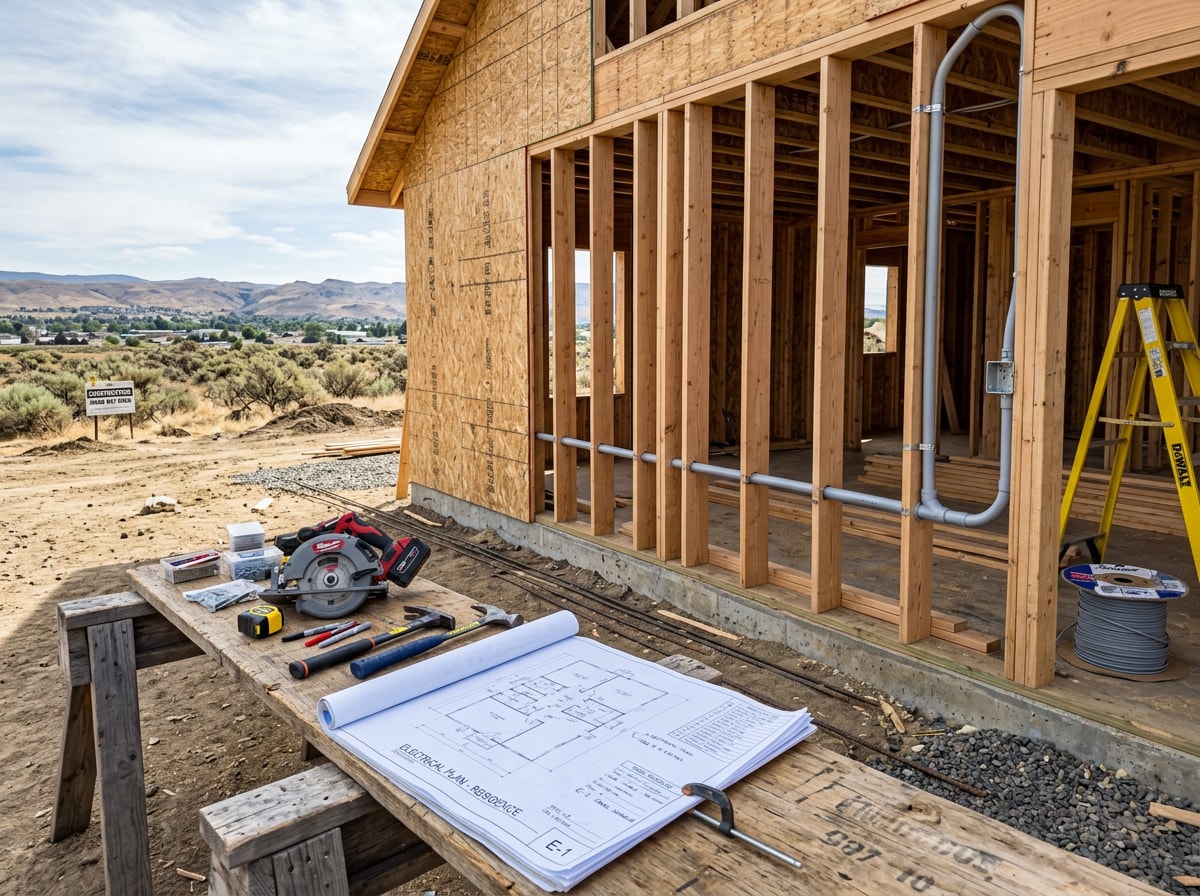
Washington's Electrical Licensing Rules, in Plain Terms
The electrical contractor license is issued by L&I, not the city, and it's a different credential than a general contractor registration.
To engage in the business of the electrical construction trade, you must get an electrical contractor license from L&I, and general electrical (01) contractors are licensed to perform all types of electrical and telecommunications installations. To qualify, a business needs:
A valid UBI number issued by the Department of Revenue or Secretary of State's office
A certified, assigned electrical administrator or master electrician
An original, $4,000 electrical/telecommunication contractor's surety bond, or assignment of savings account
All work performed must be done by properly certified electricians
There's no "I'm already a licensed GC" shortcut past any of that. The bond and the certified electrician requirement sit on top of whatever general construction credentials a contractor already holds.
The Homeowner Exemption (and Why It Doesn't Cover Your Contractor)
This is the part most generic articles skip, and it's exactly where Kennewick homeowners get confused. Washington does carve out an exemption, but it's narrower than people assume.
Nothing in RCW 19.28.161 through 19.28.271 requires a person to obtain a license or a certified electrician to do electrical work at their own residence, farm, place of business, or other property they own , with specific exceptions for new rental or lease construction. That exemption belongs to the property owner personally. It does not transfer to a general contractor you hire, even if that GC is doing every other part of the remodel.
One more catch homeowners miss: the exemption waives the license requirement, not the permit requirement. Washington's RCW 19.28.261 permits owner-occupants to perform electrical work on their own single-family residence under specific conditions, but the permit requirement is not waived, the work must still be inspected by L&I. Skip the inspection and you've created a problem for the next home sale, not a shortcut.
Kennewick's Local Licensing Layer
State licensing is only half of it inside city limits. If your business is located within Kennewick city limits or is conducting business activities in Kennewick, you need to be licensed with the City of Kennewick as well as the state, and the city partners with the State of Washington Business License Service's combined licensing program to roll both into one license.
That applies to the general contractor managing your project and to any electrical subcontractor working under them. If you're vetting a contractor for a Kennewick remodel, both the state electrical contractor number and the city business license are worth confirming before signing anything.
When Does a General Contractor Legally Touch Electrical Components?
There are really only two situations:
- The GC is also dual-licensed. Some contracting businesses hold both a general contractor registration and a separate electrical contractor license under RCW 19.28, staffed by a certified electrician. In that case, the business can legally perform both scopes.
- The homeowner is doing it themselves under RCW 19.28.261. The GC still can't do it on the homeowner's behalf, the exemption is personal to the owner-occupant, not assignable to a hired crew.
Outside those two scenarios, a general contractor coordinates the electrical subcontractor rather than performing the wiring. That's standard practice, not a workaround.
The Real Cost of Skipping the License
This isn't just a paperwork technicality. Performing electrical work without a permit is a gross misdemeanor under Washington law, and civil penalties for unlicensed or unpermitted electrical work can reach significant amounts depending on the infraction classification.
There's a safety case behind the rule, too. Home electrical fires account for approximately 13% of all home structure fires and 18% of all home structure fire deaths each year , according to the National Fire Protection Association. That's the reason behind the bond requirement and the certified-electrician mandate, not bureaucratic overreach.
How We Handle Electrical-Adjacent Work on Kennewick Exterior Projects
At Black Bear Home Exteriors, we see this licensing boundary come up constantly on exterior remodels, even though we're not an electrical contractor ourselves. A siding replacement often means relocating an exterior outlet. A deck build usually means running a line for post lights or a hot tub circuit. A roof replacement can mean coordinating solar conduit or attic fan wiring before the new roofing goes down.
Our role on those projects is exactly what RCW 19.28 expects of a general contractor: we scope the job, sequence the trades, and bring in a licensed electrical contractor for anything that touches wiring. If you're planning a siding installation, a new deck construction with lighting, or a roof replacement that involves rooftop electrical equipment, we flag the electrical scope up front instead of letting it become a change order surprise mid-project.
If you're comparing contractors for any multi-trade remodel, our guide to hiring the right contractor covers the licensing and vetting questions worth asking before you sign a contract, not just for electrical, but across every trade on the job.
Quick Reference: Who Can Legally Do What
| Task | General Contractor Alone | Licensed Electrical Contractor | Homeowner (Primary Residence) |
|---|---|---|---|
| Replace a light fixture (existing circuit) | No | Yes | Yes, with permit |
| Install a new circuit or panel upgrade | No | Yes | Yes, with permit and inspection |
| Wire a new deck outlet or post light | No | Yes | Yes, with permit |
| Install an EV charger | No (unless dual-licensed) | Yes | Yes, with permit |
| Pull an electrical permit | No | Yes | Yes, for own residence only |
| Coordinate the overall remodel | Yes | Yes | N/A |
FAQ
Can a General Contractor Pull an Electrical Permit in Washington?
No. A Washington-licensed electrical contractor must pull the permit in most cases. The exception is a homeowner working on their own primary residence under RCW 19.28.261.
Can I Do My Own Electrical Work on My House in Kennewick?
Yes, if you own and occupy the home. Washington law doesn't require a license or certified electrician for work on your own residence, farm, place of business, or owned property , but you still need a permit and inspection, and the exemption doesn't extend to a contractor you hire on your behalf.
What Can a Licensed Electrician Do That a General Contractor Can't?
A licensed electrician can legally pull an electrical permit, perform panel and circuit work, and work inside walls or above standard household voltage. A general contractor without that separate license can't self-perform any of it.
When Should I Use a General Contractor vs. a Licensed Electrician?
Panel upgrades, new circuits, and in-wall wiring need a licensed electrical contractor. A general contractor fits better when you're coordinating a multi-trade remodel where electrical is just one piece of a bigger scope.
Can a General Contractor Install an EV Charger?
Not unless they're also a licensed electrical contractor or they subcontract one. An exception exists under RCW 19.28.261, which allows an owner-occupant of a single-family residence to perform their own electrical work and pull their own permit, but this exemption does not apply to rental properties, commercial buildings, or multi-family units.
What Happens If I Hire an Unlicensed Person for Electrical Work?
You're taking on both a safety risk and a legal one. Performing electrical work without a permit is a gross misdemeanor under Washington law , and unpermitted work almost always surfaces during a future home sale or insurance claim.
Planning an exterior remodel in Kennewick that touches wiring, lighting, or a deck circuit? Get a free estimate and we'll scope the full project, including flagging exactly where a licensed electrician needs to step in. You can also browse what we handle directly for homes in Kennewick, WA.