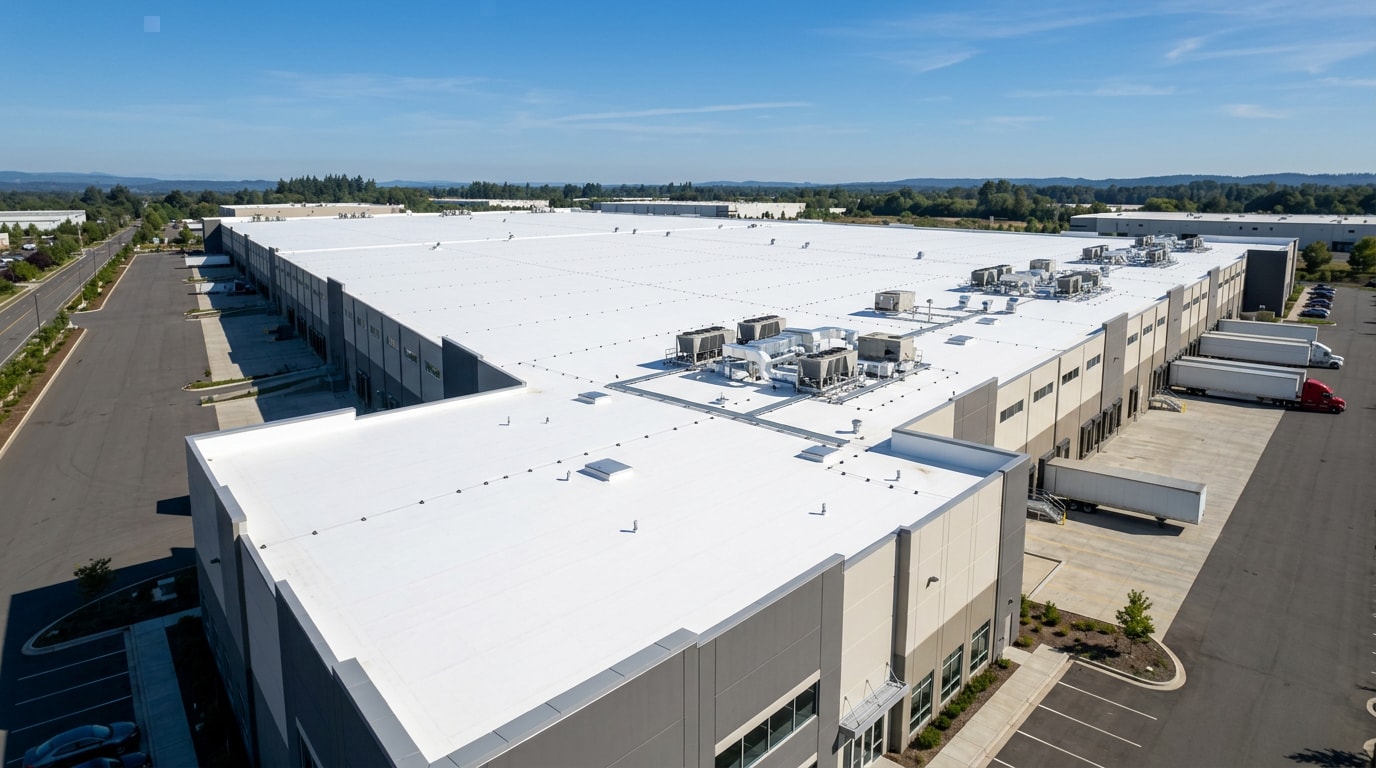

Commercial roofing is the set of materials, systems, and installation methods used to build and maintain roofs on business properties instead of houses. It typically means flat or low-slope designs engineered for larger, heavier-use structures like offices, warehouses, and retail centers, which is why a leaking membrane behaves so differently than a missing shingle. Here's what actually separates a commercial roof from the one over your kitchen, and how to pick the right system for your building.
What Is Commercial Roofing?
The commercial roofing definition covers everything from the membrane on a flat rooftop to the drainage systems, insulation, and flashing that keep water out of a building that never really shuts down. Property managers often ask what does commercial roofing mean when they're budgeting for repairs, and the answer matters beyond terminology.
A sound roof is critical to how a business runs. A minor leak over a server room, a retail floor, or a warehouse of inventory can trigger expensive repairs, product damage, and lost operating hours in a way a residential leak rarely does.
If you manage a property in Southwest Washington, understanding these systems before a problem shows up is what keeps a small repair from becoming a five-figure capital project.
Commercial Roofing vs. Residential Roofing: Key Differences
Commercial and residential roofs aren't just different sizes of the same structure. They're built around different logic entirely, and that's often the fastest way to answer what is commercial roofing in practical terms.
- Slope: Most commercial roofs are flat or low-slope, while residential roofs typically have steeper pitches.
Building codes prescribe a minimum roof slope of just 1/4:12 for asphalt built-up, polymer-modified bitumen, and thermoplastic single-ply membranes in new construction , which is why these roofs still drain even though they read as "flat" to the eye. See the NRCA's roof slope guidelines for the full breakdown.
- Scale: A commercial roof typically covers far more square footage than a house roof, which changes how it's engineered, inspected, and repaired.
- Materials: Single-ply membranes (TPO, PVC, and EPDM) are common on commercial buildings but rarely appear on a residential project, where shingles and tile still dominate.
- Rooftop equipment: Commercial buildings often carry HVAC units, vents, and unique rooflines that residential roofing wasn't designed to handle.
Explore our roofing contractor services to see how these differences shape project scope and pricing on your building.
Types of Commercial Roofing Systems
Knowing what commercial roofing is on paper matters less than understanding the systems actually available. Commercial roofing offers a range of solutions depending on how much longevity, structural support, and budget flexibility a building needs.
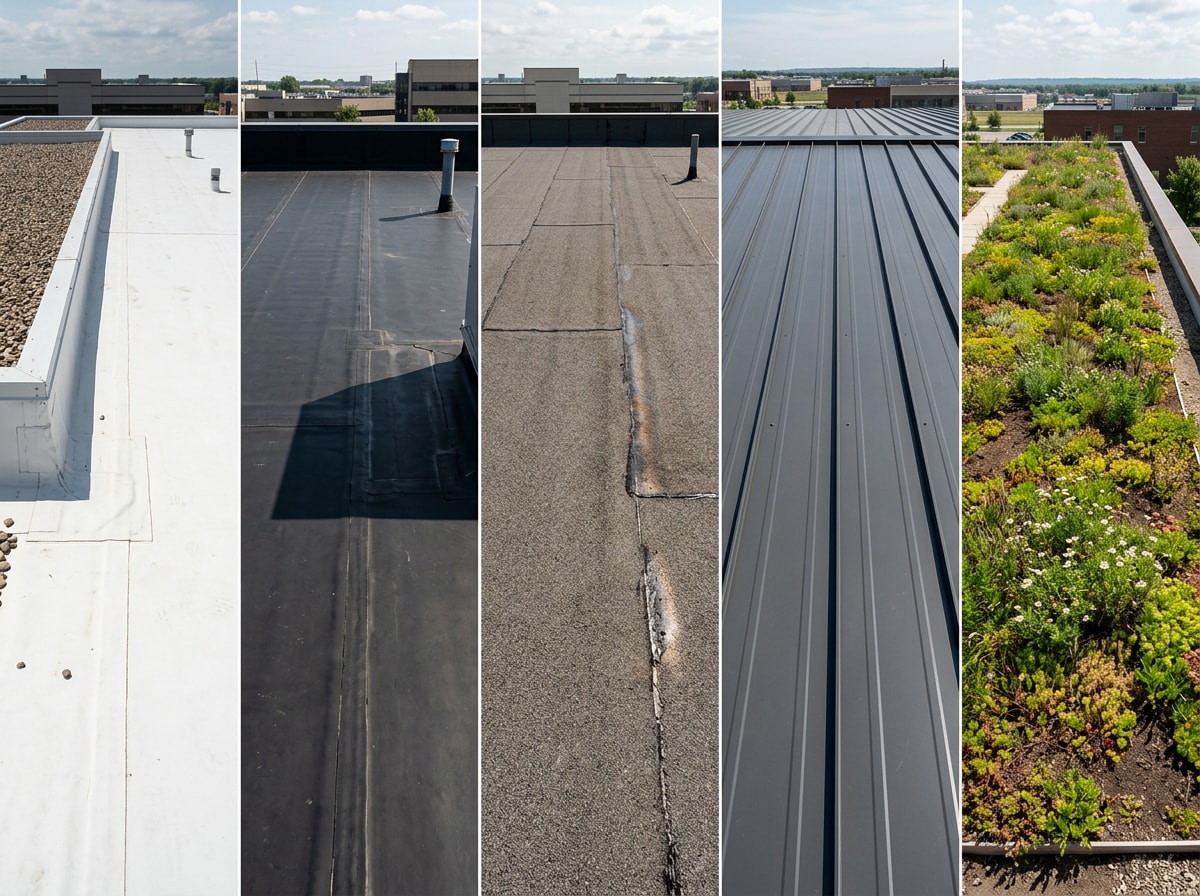
| Material | Typical 2026 Cost per Sq. Ft.* | Typical Lifespan | Best-Fit Building Type |
|---|---|---|---|
| Single-Ply (TPO/PVC/EPDM) | $10.50–$15.50 | 20–30 years | Retail, office, restaurants |
| Modified Bitumen | $6.50–$11.50 | 15–20 years | Warehouses, light industrial |
| Built-Up (BUR) | $5.50–$10.00 | 20–30 years | Low-slope industrial buildings |
| Metal | $9.00–$18.00 | 40–70 years | Manufacturing, showrooms, ag facilities |
| Green/Vegetative | $15.00–$25.00 | 30–50 years (membrane) | Urban buildings, LEED projects |
*These are approximate national ranges. Actual pricing depends on your region, roof size, structural complexity, and contractor.
Single-Ply Membranes (TPO, PVC, EPDM)
Single-ply membranes are sheets of synthetic rubber or thermoplastic rolled out in one layer, making them the most widely installed low-slope commercial roofing system today. PVC holds up well against chemical exposure and grease, which is why restaurants and manufacturing spaces often pick it despite a higher upfront cost. TPO reflects sunlight efficiently, so buildings in hotter climates often see real value from that, while EPDM remains a dependable, budget-friendly rubber option for straightforward applications. For a deeper look at one of these membranes, see our guide on what TPO stands for in roofing.
Modified Bitumen Roofing
Modified bitumen is a flexible asphalt membrane reinforced with polymers and applied in layers. It handles foot traffic better than most alternatives, though repairs can be trickier once a section fails. Built for low-slope roofs, it's valued for toughness and layered protection.
Built-Up Roofing (BUR)
Built-up roofing is the traditional flat roof style, sometimes still called a tar-and-gravel roof, that layers asphalt and reinforcing ply sheets for durability. A BUR roof is labor-intensive to install and considered an older system, but many owners still choose it for its long track record on low-slope industrial roofs.
Metal Roofing
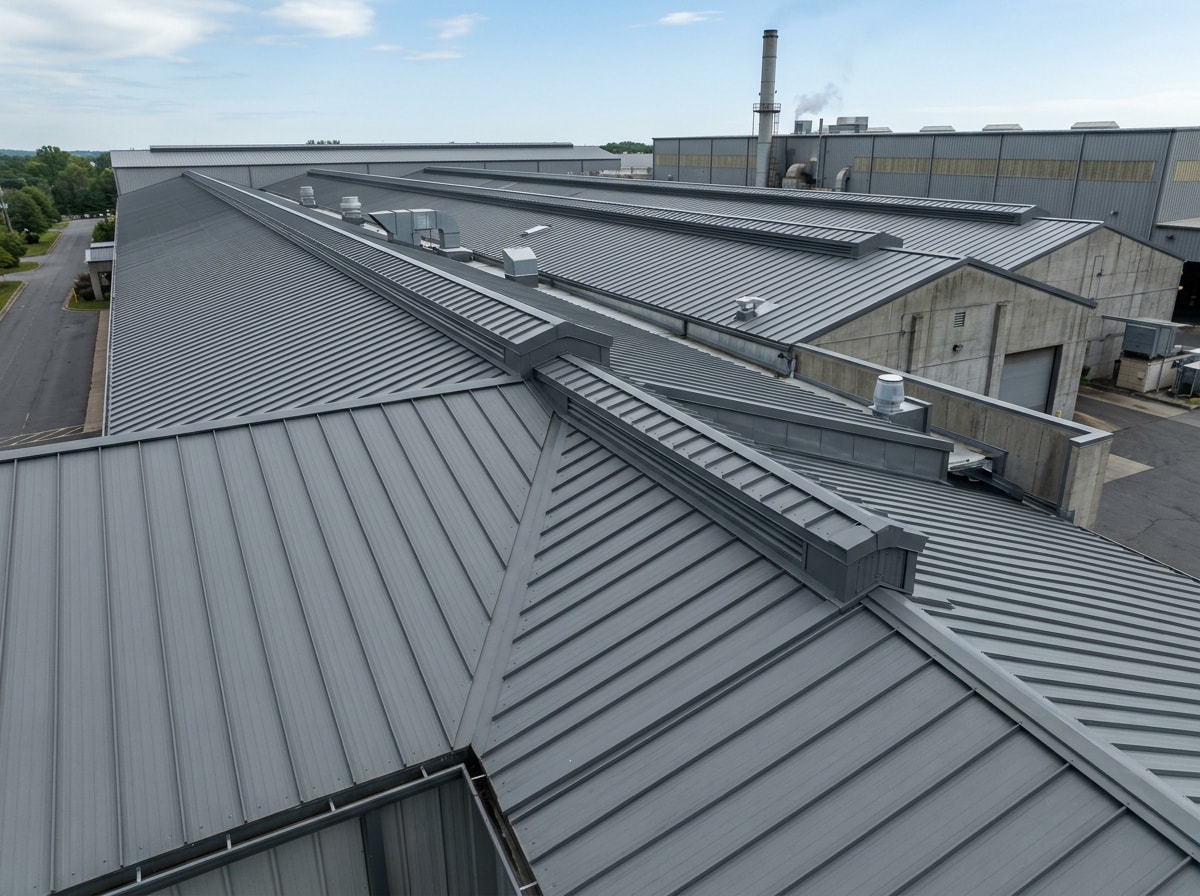
Metal commercial roofing comes in exposed-fastener and standing-seam styles and can last decades with minimal upkeep. It shows up often where slope, visibility, or long-term durability matter most, though fasteners, seams, and expansion joints need correct detailing to avoid leaks down the road. If you're weighing metal for a smaller structure first, our step-by-step metal roofing installation guide walks through the process.
Green (Vegetative) Roofing
Green roofs add a layer of vegetation over a waterproof membrane, helping manage stormwater runoff while boosting energy efficiency. Beyond sustainability, vegetative roofing can reduce heat absorption and add extra insulation, making it a popular choice for urban buildings pursuing LEED certification.
How to Choose the Right Commercial Roofing System
Budget is usually the starting point, since materials vary widely in both upfront cost and long-term maintenance needs. Climate and location matter just as much. A roof in a hail-prone or high-UV region needs materials built to withstand that specific stress.
Energy efficiency is worth weighing early rather than as an afterthought. Reflective cool-roof systems help reduce building air conditioning costs and ease the strain on the electrical grid during peak energy demand , according to ENERGY STAR. Green roofs and cool, reflective membranes can meaningfully reduce cooling costs over a building's lifetime.
There's rarely one universal "best roof" answer. It depends on how the space is used and how long the owner plans to hold the property. Learn more about roof replacement and installation options to compare systems side by side, or get a free estimate to see what fits your building and budget.
Commercial Roof Maintenance
Commercial roofing systems require more structured upkeep than residential ones, largely due to their size, HVAC foot traffic, and constant weather exposure. On our own commercial jobs, we see more roof failures caused by clogged drains and neglected flashing than by an actual material defect. That's the part a routine roof inspection schedule is built to catch.
Regular inspections and timely repairs catch small issues, a cracked seam, ponding water, a minor puncture, before they turn into costly structural damage.
Reflective systems like cool roofs and TPO membranes also play a maintenance role. Cool roof coatings typically cut a building's cooling costs by 7% to 15% , according to the Cool Roof Rating Council, since they reflect more sunlight and absorb less heat, lowering air conditioning demand. Building owners in Vancouver, WA and across Longview, WA tend to see the fastest payback on reflective systems during peak summer months.
Repair vs. Replacement: How to Decide
A targeted roof repair is often the smarter move when a roof is still within its expected service life and the damage is isolated. A single puncture, an open seam, a flashing failure, or a storm-damaged section are usually repairable without a full tear-off.
Repeated leaks in different spots, saturated insulation, or an aging membrane where repairs keep stacking up are signs of a bigger problem. At that point, a coating or patch job tends to be only a temporary fix, and roof replacement becomes the more cost-effective path.
Building codes play a role too. Roofing is addressed in the building code's chapter on roof assemblies and rooftop structures, with a dedicated section covering roof re-covering and full reroofing separately . That threshold, detailed in the International Code Council's reroofing provisions, affects what's required once a certain share of a roof is replaced. If a leak turns urgent before you can weigh the options, our emergency roof repair team can stop the damage the same day.
Talk to our roof repair team before deciding which direction makes sense for your building.
FAQ
Do Commercial and Residential Roofers Have Different Skill Sets?
Yes. Residential roofers typically focus on quicker re-roofing jobs on houses, while commercial roofers manage larger, more complex projects and often work through more extreme weather conditions on the job.
How Often Should Commercial Roofs Be Maintained?
Regular maintenance is essential to keeping a commercial roof in good condition year-round. Many building owners enroll in a preventative maintenance program that schedules inspections at least twice a year, plus after any major storm.
How Long Does a Commercial Roof Last?
Commercial roofing systems typically last 20 to 50 years depending on the material chosen, with well-maintained metal roofs sometimes reaching 70 years. Lifespan also depends heavily on climate exposure and consistent upkeep.
How Much Does Commercial Roofing Cost Per Square Foot?
Commercial roofing typically costs between $5.50 and $18.00 per square foot, depending on material, roof size, and building complexity. Exact pricing varies by region and contractor, so check with a local roofer for a specific estimate.
What Is the Most Common Commercial Roofing Material?
Single-ply membranes, especially TPO, are the most widely installed low-slope commercial roofing systems today because they balance cost, installation speed, and durability. EPDM and modified bitumen remain common on older buildings and budget-driven projects.
Is Commercial Roofing More Expensive Than Residential Roofing?
Per square foot, commercial materials often cost less than premium residential shingles or tile, but total project cost is usually higher because commercial roofs cover far more area and involve more complex drainage, flashing, and rooftop equipment.
Ready to talk through your building's roof? Get a free estimate from Black Bear Home Exteriors, or start at our homepage to see the full range of exterior services we handle across Southwest Washington.