What gauge is metal roofing? Most panels sold today fall between 22 and 29 gauge, and the number tells you how thick the steel is, with lower numbers meaning thicker metal. That backward relationship confuses almost every first-time buyer, so here's the breakdown you actually need before you sign a contract.
What Does Metal Roofing Gauge Mean?
Gauge is a standardized number that tells you how thick a metal panel is. Counterintuitively, a lower gauge number means a thicker, heavier panel.
A 22 gauge panel is noticeably thicker than a 29 gauge panel, even though 29 is the larger number. This trips people up constantly, and there's a historical reason for it.
The gauge system dates back to wire and sheet-metal drawing, where thickness was tracked by how many times metal passed through a set of rollers. More passes meant a thinner sheet and a higher gauge number, a convention that stuck around long after the manufacturing process changed.
For roofing, gauge directly affects durability, weight, and price. Before comparing specific panels, it helps to see how the four most common gauges stack up.
Common Metal Roofing Gauges Compared (22, 24, 26 & 29)
Most metal roofs on the market fall into one of four gauge categories. Each represents a different balance of thickness, cost, and intended use, ranging from heavy commercial systems down to budget outbuildings.
22 Gauge Metal Roofing
22 gauge is the heaviest and thickest option in common use, typically reserved for commercial standing seam and mechanically seamed systems. If a project is in an area that receives severe hail, it's worth considering 22-gauge steel, and some government and municipal projects may also require it.
It's heavy-duty by design, which also makes it the most expensive gauge to install on a typical home.
24 Gauge Metal Roofing
24 gauge standing seam panels are the most widely specified choice for residential, light commercial, and barndominium projects. 24-gauge steel is the most popular for standing seam metal roof applications and will serve the majority of projects.
24 gauge panels resist oil canning, the wavy, rippled look that can appear on thinner metal, better than lighter gauges. For homeowners who want a premium look without jumping to commercial-grade thickness, this is usually the sweet spot. If you want to see how these panels look once installed, our guide on how to install metal roofing walks through the process start to finish.
26 Gauge Metal Roofing
26 gauge is the single most popular gauge sold today, especially for exposed-fastener panel systems on homes, barns, and light commercial buildings. 26 gauge is the most popular gauge across the metal roofing industry, strong enough for a wide range of residential, commercial, and agricultural applications while hitting a price point that works for most budgets.
The trade-off is modestly reduced durability and a slightly higher chance of oil canning on longer panel runs. For many standard residential projects, 26 gauge delivers dependable performance without the cost of a heavier sheet.
29 Gauge Metal Roofing
29 gauge is the thinnest commonly sold option, positioned firmly as a budget choice. It's one of the thinner, more affordable gauges, ideal for sheds or buildings in mild climates.
It's generally not recommended for primary residential roofs or anywhere severe weather is common, since the lighter gauge offers less resistance to denting and wind damage. Think of it as a practical option for outbuildings, not a long-term roof over living space.
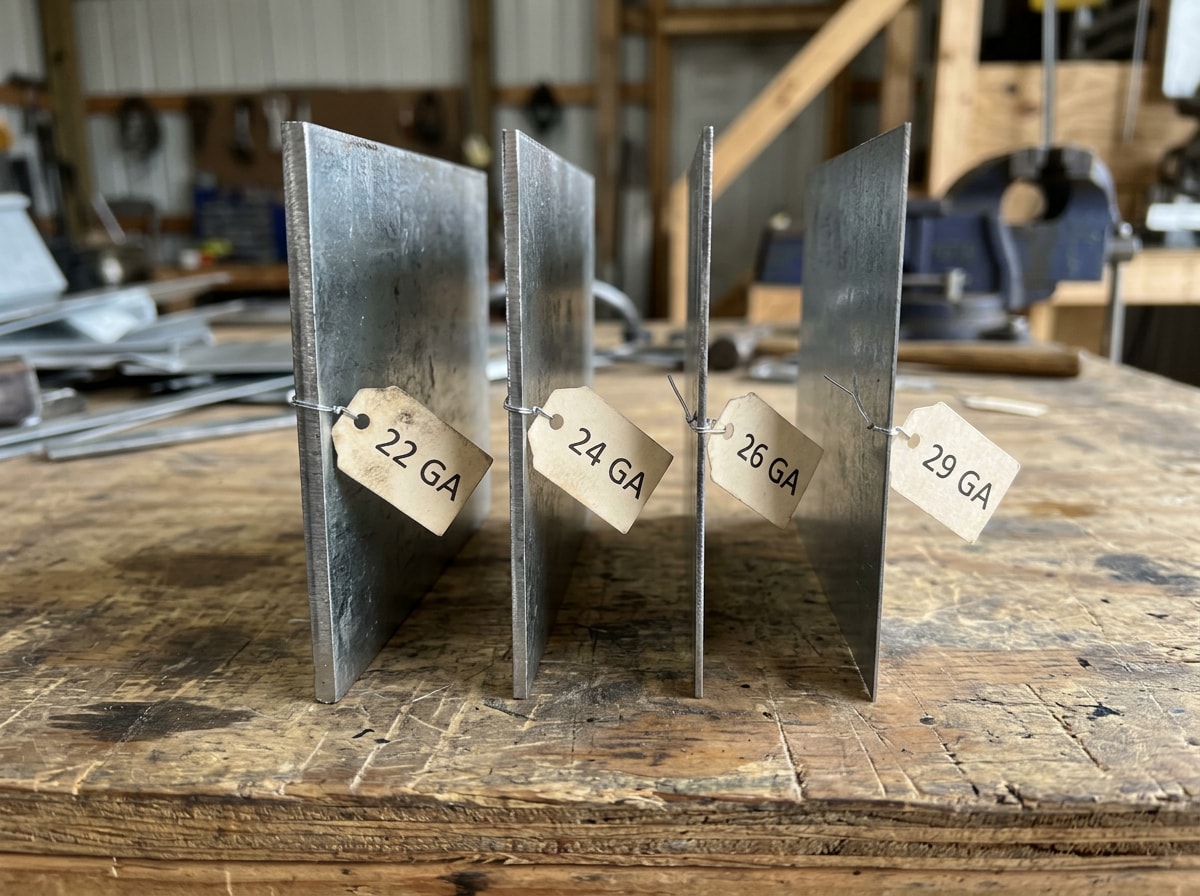
Metal Roofing Gauge Thickness Chart
Here's how each gauge translates into actual, measurable steel thickness, so you can compare numbers instead of just labels.
| Gauge | Nominal Thickness (inches) | Nominal Thickness (mm) | Approx. Weight (lbs/sq ft) |
|---|---|---|---|
| 20 | 0.036" | 0.91 mm | ~1.60 |
| 22 | 0.030" | 0.76 mm | ~1.25 |
| 24 | 0.024" | 0.61 mm | ~1.00 |
| 26 | 0.018" | 0.46 mm | ~0.75 |
| 29 | 0.014" | 0.36 mm | ~0.56 |
These figures reflect standard steel sheet gauge-to-inches conversions and can vary slightly by manufacturer and coating weight. The governing specification for galvanized steel sheet in the U.S. is ASTM A653, which covers coating designations and base metal tolerances that roll formers use when they certify a panel's actual thickness.
Why Steel and Aluminum Gauge Numbers Aren't the Same
Here's something most gauge guides skip entirely: gauge numbering isn't one universal system. Aluminum sheet uses the Brown & Sharpe system, while steel uses the Manufacturers' Standard Gauge, so the same gauge number means a different thickness.
Aluminum uses the Brown & Sharpe American Wire Gauge system, which is completely different from the steel gauge system, so a 14-gauge aluminum sheet is much thinner than 14-gauge steel.
That means a 26 gauge aluminum panel is not the same actual thickness as a 26 gauge steel panel, even though the label is identical. If you're comparing quotes across materials, always ask for decimal thickness, not just the gauge number.
| Material | Typical Gauge System | Relative Thickness vs. Same-Number Steel |
|---|---|---|
| Steel | Manufacturers' Standard Gauge (MSG) | Baseline |
| Aluminum | Brown & Sharpe (B&S / AWG) | Thinner at the same stated gauge number |
| Copper | Often specified by weight (oz/sq ft) rather than gauge | Not directly comparable |
| Zinc | Often specified in mm or zinc titanium standards | Not directly comparable |
Each material brings a different practical advantage. Steel offers structural strength at a relatively low cost. Aluminum resists corrosion well, making it a strong pick for coastal properties. Copper and zinc are typically priced and specified by weight or millimeter thickness rather than a shared gauge chart, so cross-material comparisons need actual spec sheets, not gauge labels alone.
Factors That Determine Which Gauge You Need
Choosing the right gauge isn't just about buying the thickest option you can afford. A few real-world factors narrow the decision:
- Climate and weather severity. Homes in hail-prone or high-wind regions generally need a heavier gauge to resist denting and panel failure. Mild climates allow more flexibility toward 26 or even 29 gauge for outbuildings.
- Panel type. Exposed-fastener panels and standing seam systems have different gauge norms, so the style you choose narrows your options before thickness even enters the conversation.
- Installation surface. Panels installed over solid decking, like plywood, don't need to carry much structural load on their own, so a lighter gauge can work fine. Panels spanning purlin to purlin must bridge open gaps without solid backing, which usually calls for a heavier gauge to avoid sagging. Wind-uplift and roof-covering performance requirements for these assemblies are governed by IBC Chapter 15 roof covering provisions, which your local building department will reference during permitting.
- Budget. Heavier gauges cost more per square foot, so most homeowners land somewhere between durability needs and what they're willing to spend.
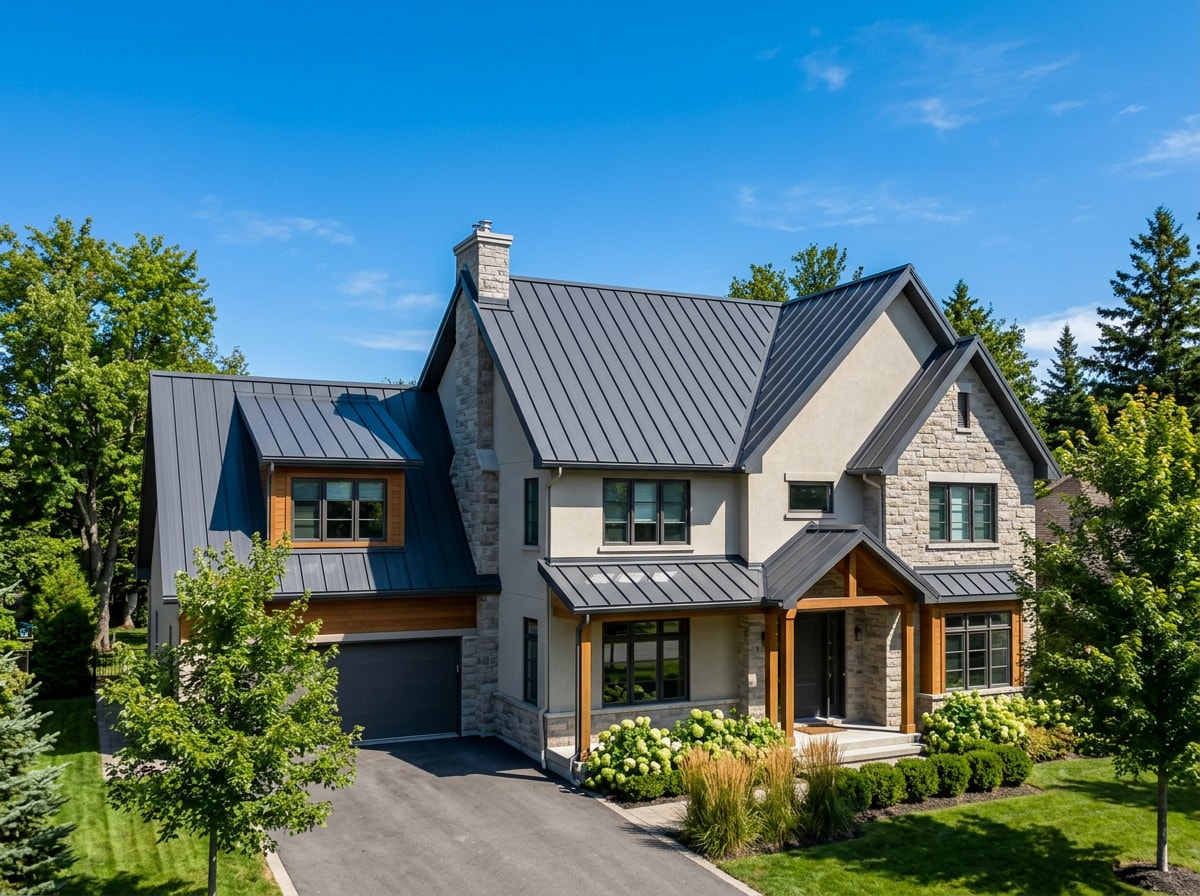
On the projects we've handled across Southwest Washington, the deciding factor is almost always roof pitch and exposure, not just regional climate averages. A 24 gauge standing seam roof on an open, wind-exposed ridge earns its keep in a way it wouldn't on a sheltered, low-slope garage.
What Gauge of Metal Roofing Is Best?
There's no universal "best" gauge for every project. The right choice depends on your climate, panel type, and budget, all covered above. A hail-prone region with a standing seam system calls for a different answer than a mild-climate shed.
As a general default, 24 gauge is the recommended thickness for homeowners who prioritize long-term durability, especially with standing seam systems. For budget-conscious standard installs, 26 gauge remains a reliable, widely used choice. Panel width and overlap also affect how a gauge performs over time; our guide on how wide metal roofing panels run covers sizing if you're still finalizing specs.
If you're weighing options for your specific roof, our roof installation team can walk you through gauge recommendations based on your home's exposure and pitch. For homes with an aging roof that may need more than a gauge upgrade, our roof replacement service covers full tear-off and re-installation. If you're not sure what condition your current roof is in, a roof inspection is the fastest way to find out before you commit to a gauge.
Ready to talk specifics? Get a free estimate and we'll bring gauge samples to your property so you can see and feel the difference before you decide. You can also learn more about our full range of exterior services on our homepage.
FAQ
Is 22 gauge smaller than 24?
No. 22 gauge is actually thicker than 24 gauge. In the metal roofing gauge system, lower numbers mean thicker metal, so going from 24 down to 22 means more thickness and strength, not less.
Is 24 gauge thicker than 26?
Yes. 24 gauge measures roughly 0.024 inches compared to about 0.018 to 0.019 inches for 26 gauge, a meaningful difference in dent resistance and oil-canning resistance.
What gauge metal roofing is best for a residential home?
For most homes, 24 gauge is the preferred choice for standing seam systems where appearance and long-term durability matter most. When the metal roofing sits on a solid wood substrate, 26 gauge material is appropriate and a good value for exposed-fastener installs.
Is 22 gauge metal roofing good?
22 gauge offers excellent durability and holds up well in harsh conditions, including hail and high wind. For typical residential use, though, it's often more thickness, and cost, than most homes actually need.
Is 26 gauge or 29 gauge better for a roof?
26 gauge is thicker and more durable than 29 gauge, and it's the better choice for anything other than a mild-climate shed or outbuilding. In milder climates, 29-gauge may be sufficient , but 26 gauge holds up better against wind and hail over the life of the roof.
Does gauge affect the cost of a metal roof?
Yes. Thicker gauges use more raw steel per panel, so material cost rises as the gauge number drops. 22 gauge typically costs more than 24 gauge, which costs more than 26 gauge, with 29 gauge sitting at the budget end of the range.