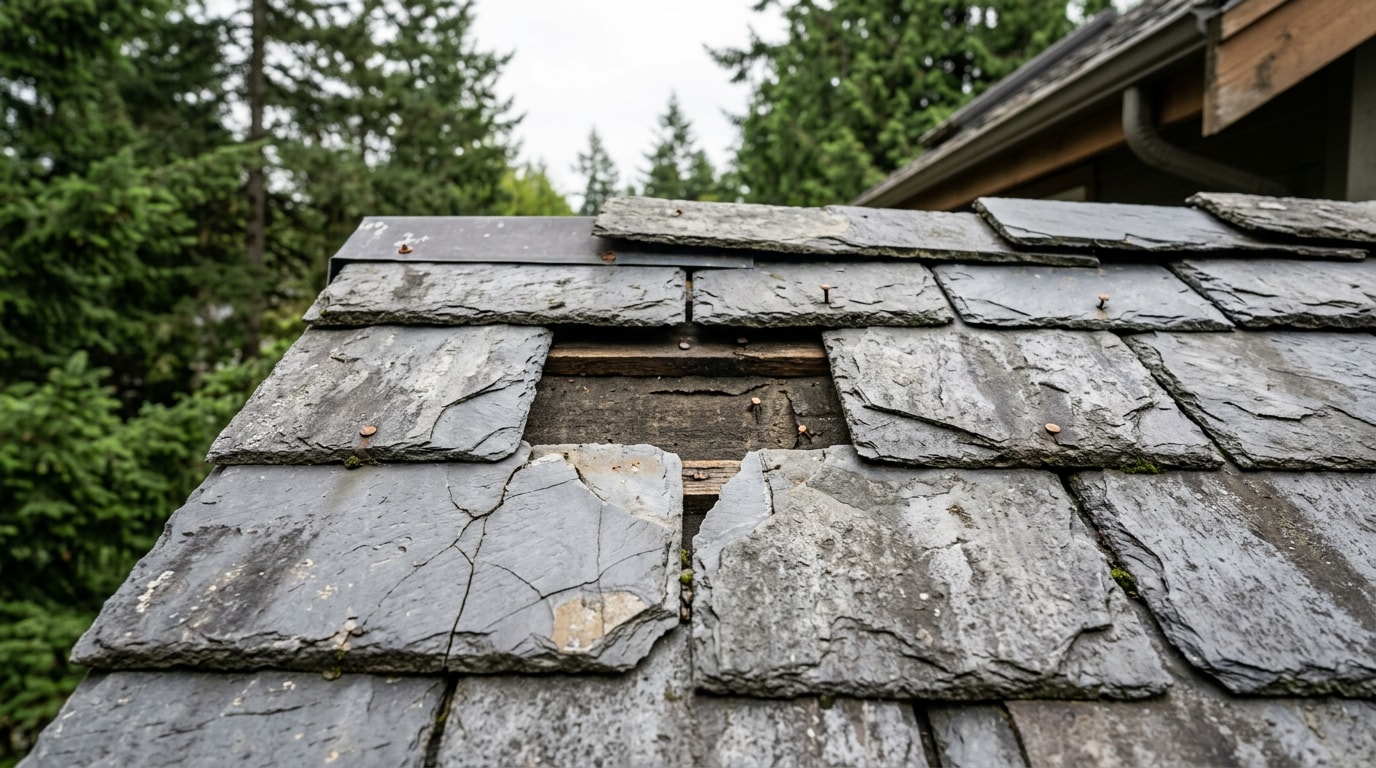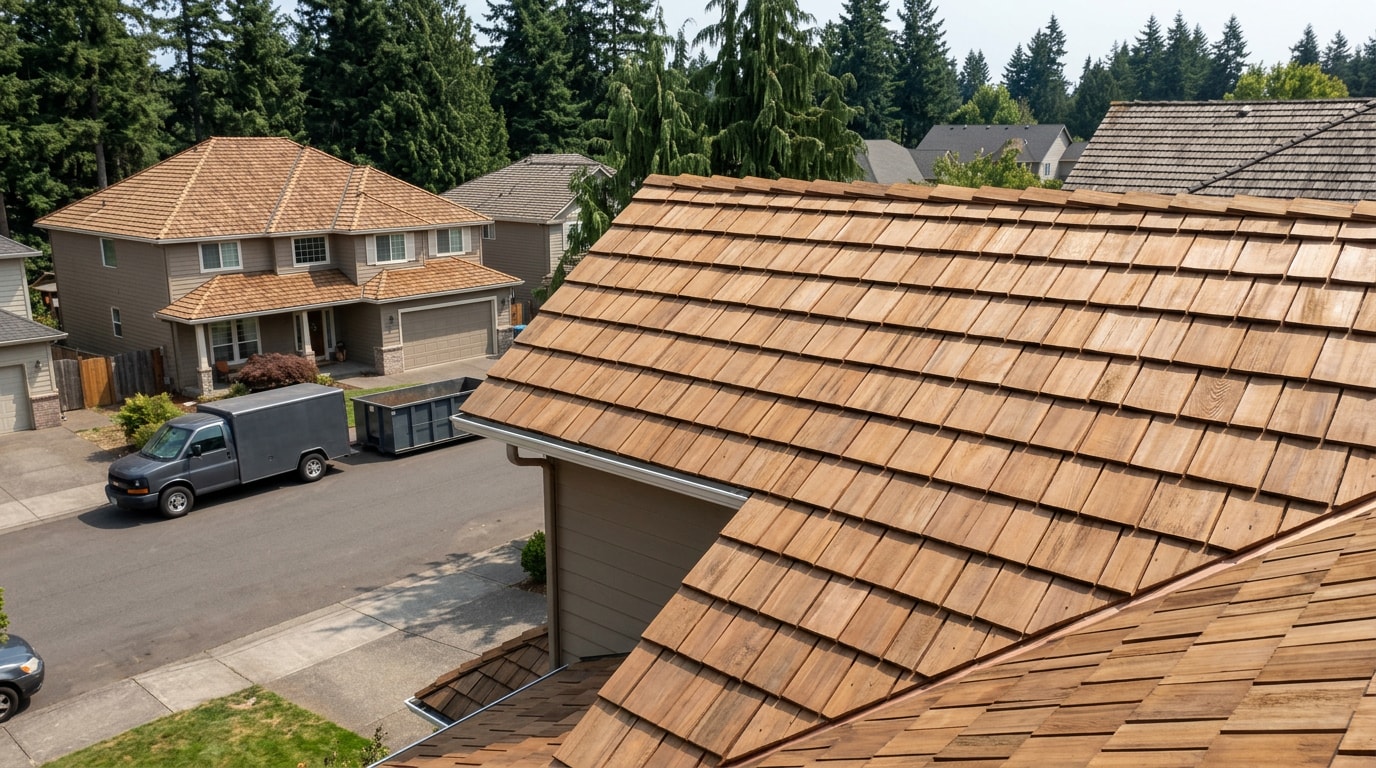

What is slate roofing? It's a roof covering made from thin sheets of natural stone, split and cut into tiles that are installed in overlapping courses, with modern synthetic versions now built to mimic the same look at a fraction of the weight. Homeowners usually notice it first: that distinctive, textured, charcoal-gray surface on older homes that looks nothing like asphalt shingles. This guide breaks down what slate is made of, how natural compares to synthetic, what it actually costs in 2026, and what installation and upkeep involve.
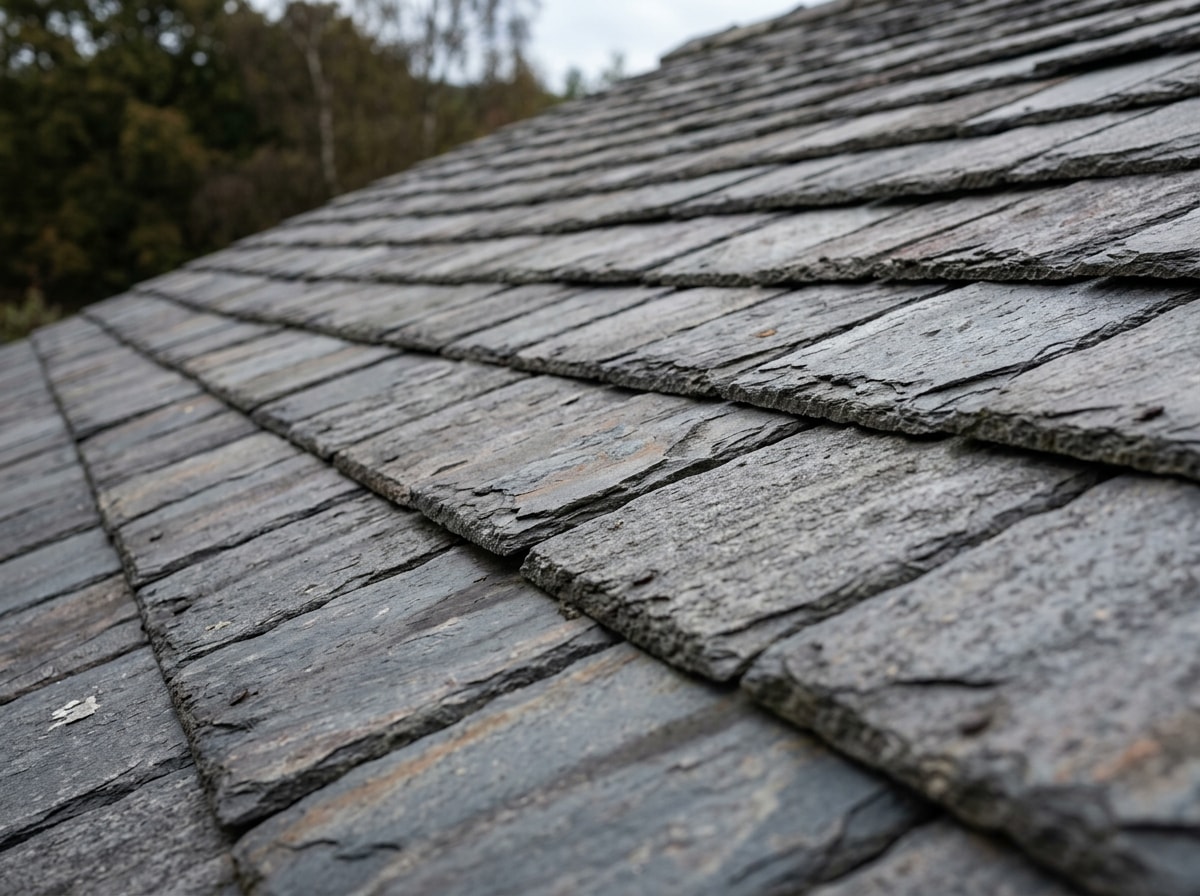
What Is Slate Roofing, Exactly?
Natural slate is quarried metamorphic rock, split along its natural grain into flat, durable tiles. When expertly cut by striking parallel to the foliation with a specialized tool in the quarry, many slates display fissility, forming smooth, flat sheets of stone which have long been used for roofing. That same splitting process is still used today, which is part of why slate roofing looks almost identical to examples that are a century old.
Slate isn't just durable for aesthetic reasons. Slate is particularly suitable as a roofing material as it has an extremely low water absorption index of less than 0.4%, making the material resistant to frost damage. That combination of density and low porosity is a big part of why well-installed slate roofs regularly outlast the structures they cover.
If you're comparing slate against other materials for an upcoming project, our roofing contractor team can walk through how it stacks up against asphalt, metal, or tile for your specific roof.
Pros and Cons of Slate Roofing
Slate isn't the right fit for every home or every budget. Here's a balanced look at what makes it appealing and what gives homeowners pause.
Pros of slate roofing:
- Exceptional longevity. A properly installed natural slate roof can outlast the house it protects.
- Natural fire resistance. Stone doesn't burn, which matters in wildfire-prone regions.
- Low environmental impact. It's a natural material that can often be reclaimed and reused rather than landfilled.
- Distinctive, lasting curb appeal. Few manufactured products replicate slate's texture and depth.
Cons of slate roofing:
- Significant weight. Most homes need structural review before a slate roof goes on.
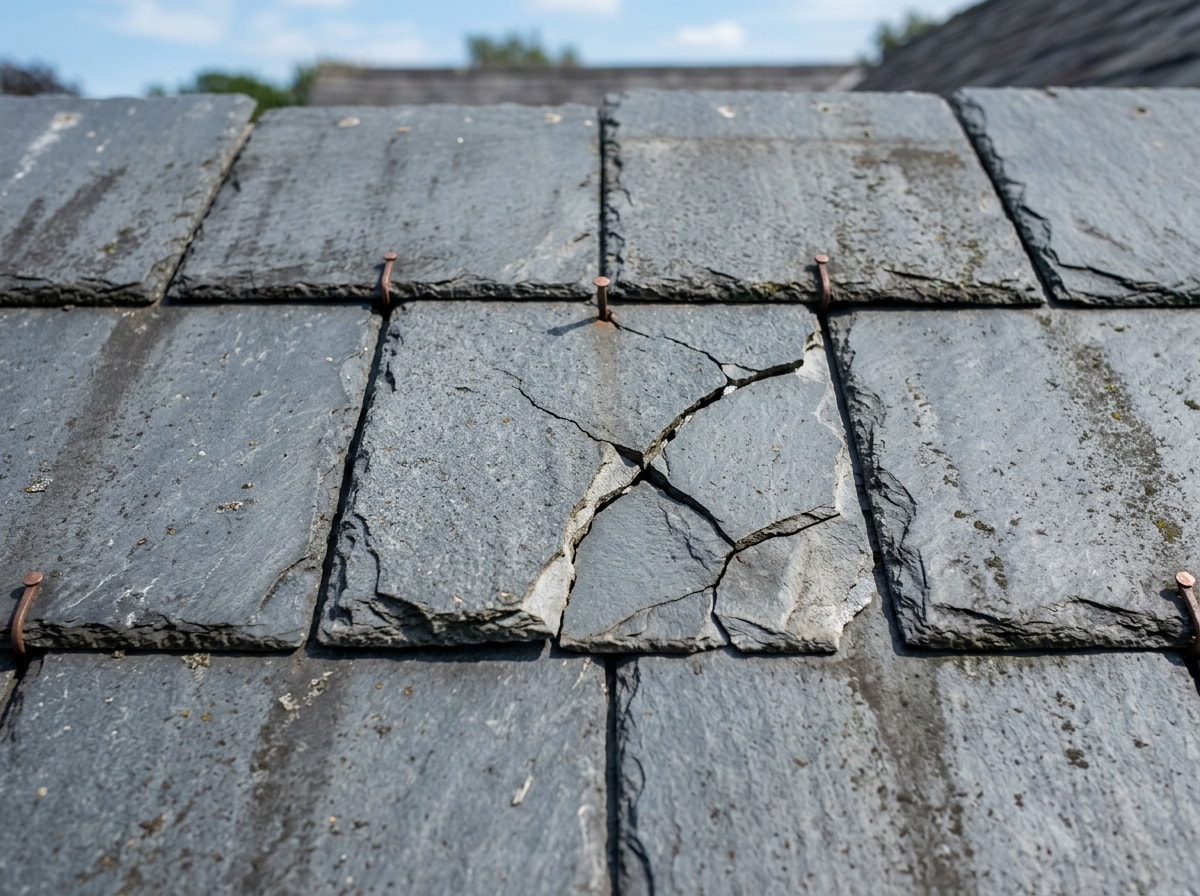
- Fragility underfoot. Individual tiles can crack under improper foot traffic or impact.
- Specialized installation. Few roofers are trained in traditional slate techniques, and a general contractor unfamiliar with the material can cause real damage.
- Higher upfront cost. Material, labor, and structural reinforcement all add up compared to standard roofing.
Types of Slate Roofing
Homeowners researching slate today will typically run into three broad categories: natural quarried slate, synthetic (composite) slate, and fiber-cement or rubber-based alternatives designed to mimic the look of stone.
Natural slate is usually installed in one of two layouts:
- Standard/uniform slate — tiles are cut to a consistent size for a clean, even pattern.
- Graduated slate — larger, thicker tiles are placed near the eaves and progressively smaller ones toward the ridge, a style common on historic and institutional buildings.
Graduated slate roofs were frequently installed on large institutional and ecclesiastical structures.
Synthetic and composite slate products are manufactured from engineered polymers or rubber compounds molded to replicate slate's texture and shape at a fraction of the weight. One advantage of synthetic options is color consistency, since manufacturers can produce uniform batches, while natural slate color varies by quarry and region.
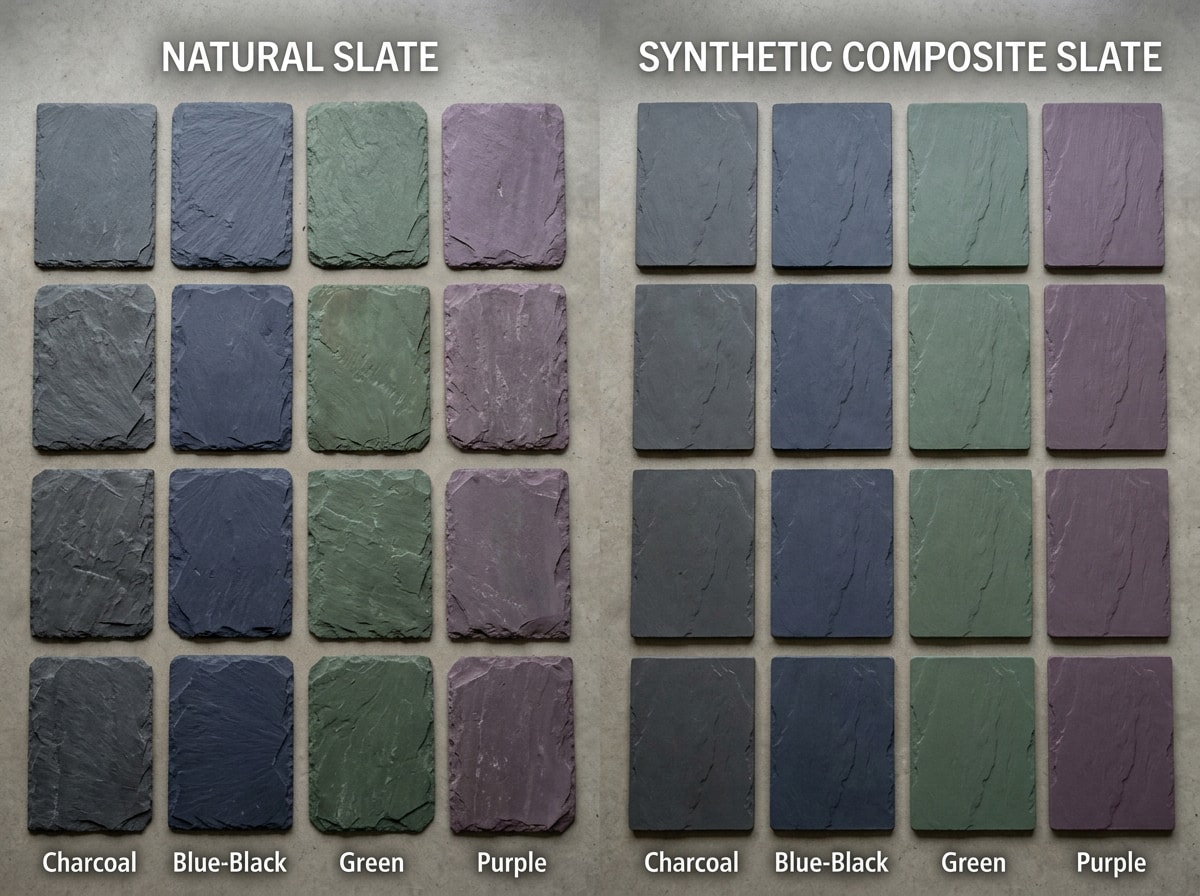
Natural Slate vs. Synthetic Slate Roofing
Choosing between natural and synthetic slate often comes down to budget, structural capacity, and how much weight your roof framing can safely carry.
| Factor | Natural Slate | Synthetic/Composite Slate |
|---|---|---|
| Cost per sq. ft. (installed) | $15–$30+ | $8–$15 |
| Typical lifespan | 75–150+ years | 40–60 years |
| Weight per square (100 sq. ft.) | 800–1,500 lbs | 150–300 lbs |
| Installation requirements | Specialist slate roofer, often reinforced framing | Trained roofer, standard framing in most cases |
| Maintenance | Low, but repairs need a slate specialist | Low, generally easier to repair |
Natural stone wins on sheer longevity and authenticity, but composite slate closes much of that gap at a lower cost and weight. Synthetic lifespan estimates vary by manufacturer and climate, so treat the 40–60 year range as an average rather than a guarantee. For many homeowners, the decision comes down to whether the home can structurally support real stone and whether the upfront cost fits the budget. If cost is the deciding factor, our breakdown of cost-effective roofing materials compares slate against asphalt, metal, and other options side by side.
Is a Slate Roof Heavy?
Yes. Natural slate is one of the heaviest common roofing materials, typically weighing 800 to 1,500 pounds per square (100 square feet), compared to roughly 200–400 pounds for asphalt shingles.
That weight is also why slate isn't a drop-in replacement for every roof. The roof shall be designed for the live load indicated in Table R301.6 or the snow load indicated in Table R301.2(1), whichever is greater, under the International Residential Code, and a slate roof's dead load has to be accounted for separately in that structural design. Before installation, most homes need a structural engineer to confirm the rafters, trusses, and decking can handle the added load. That review often leads to reinforcement work, which adds to the overall project cost.
How Much Does a Slate Roof Cost?
Natural slate roofing generally runs $15 to $30 or more per square foot installed, while synthetic slate typically costs $8 to $15 per square foot, a meaningful gap that often steers budget-conscious homeowners toward composite options.
Several factors push the price up or down:
- Tile thickness and grade — thicker, higher-grade slate costs more but lasts longer.
- Quarry origin — imported slate (Welsh, Spanish) typically costs more than domestic slate due to shipping.
- Roof complexity — steep pitches, valleys, and dormers all add labor time.
- Labor availability — few roofers are trained in traditional slate techniques, and that scarcity keeps installation rates higher than for asphalt or metal.
Synthetic slate tends to be more cost-predictable since it's factory-manufactured to consistent specs. The National Slate Association has maintained a material and installation standard for natural roofing slate in North America since 1922 , and its grading references are worth checking against any natural slate quote you receive. For a full breakdown of how roofing projects are priced per square, see our guide on how much a roofing square costs.
If you're weighing slate against other materials for your home, request a free roofing estimate to get specifics for your property.
How to Install a Slate Roof
Slate installation follows a fairly consistent sequence:
- The deck is prepped with waterproof underlayment, with reinforcement added if an engineer calls for it.
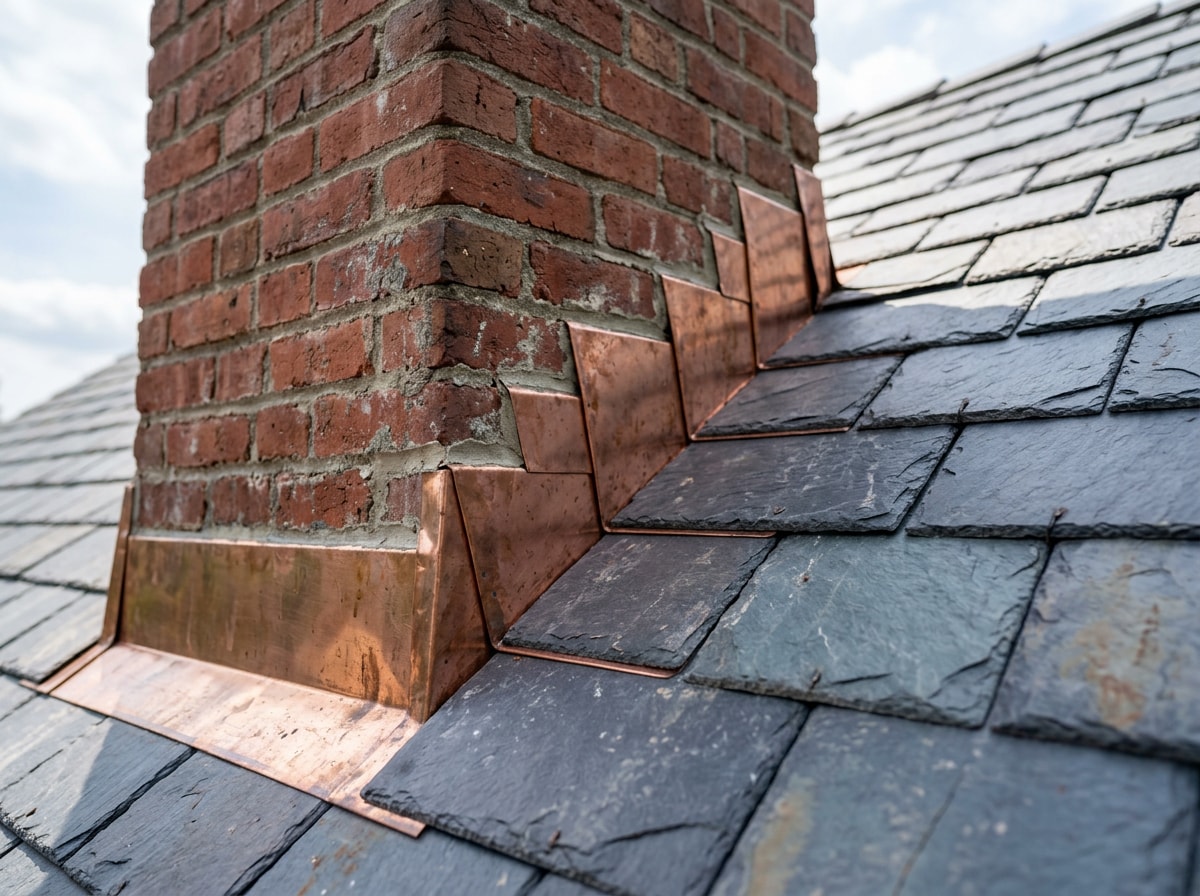
- Flashing is installed around penetrations like chimneys, valleys, and vents.
- Tiles are laid in overlapping courses starting at the eaves and working toward the ridge.
- Each tile is individually nailed or hung using copper or stainless hooks, since these materials won't corrode and stain the stone over decades of exposure.
Flashing deserves particular attention, since valleys and roof penetrations are the most common failure points on any roof, slate included. Because of the precision and weight involved, this isn't a project for a general handyman. In our experience estimating roofs across the Pacific Northwest, the slate repairs that turn into full tear-offs almost always trace back to flashing that was never properly integrated in the first place, not the slate itself failing. Hiring a roofer experienced specifically with slate is essential to avoid cracked tiles, leaks, or structural issues down the line. Our roof installation team can talk through whether your framing and budget make sense for a slate project.
Slate Roofing Maintenance Tips
A properly installed slate roof needs relatively little upkeep, but what maintenance it does need should be left to professionals.
- Schedule annual inspections. Catching loose, slipped, or cracked tiles early prevents leaks.
Significant slate roofs should not be stripped off and replaced with asphalt shingles when repair is still a realistic option.
- Leave foot traffic to specialists. Standard footwear and technique can crack tiles that would otherwise last decades.
- Watch the flashing and fasteners, not just the slate. Most failures start at the metal, not the stone.
- Address small issues fast. Timely repair of loose or cracked tiles is usually far cheaper than waiting until water intrusion damages the decking below.
For reference on long-term upkeep, the National Park Service's preservation guidance on historic slate roofs offers detail that applies well beyond historic properties. If your roof needs a closer look, our roof inspection and roof repair teams can schedule a visit. Homeowners in our Southwest Washington service area dealing with moss or persistent moisture on an aging roof can also see our Southwest Washington Metro coverage for local scheduling.
FAQ
Is a Slate Roof a Good Roof?
Yes, for homeowners who can afford the upfront cost and structural requirements. It's widely considered one of the most durable and longest-lasting roofing materials available, though its price and weight mean it's not the right fit for every home or budget.
What Is Slate Roofing Made Of?
Natural slate roofing is made from quarried metamorphic rock split into thin, flat tiles. Synthetic slate is made from engineered polymers or rubber compounds molded and colored to replicate the look of real stone at a lighter weight.
How Long Does a Slate Roof Last?
A natural slate roof typically lasts 75 to 150 years or more, depending on the slate's grade and region of origin. Synthetic slate generally lasts 40 to 60 years, still considerably longer than standard asphalt shingles.
Is Slate Roofing Worth It?
It depends on your timeline and budget. The high upfront cost is offset by decades, sometimes a century or more, of minimal replacement needs, making it a strong long-term value for homeowners planning to stay put or prioritize durability.
Can You Walk on a Slate Roof?
Walking on a slate roof is risky and should be left to trained professionals. Safety depends on proper footwear, distributing weight correctly, and knowing which tiles can bear foot traffic, since mistakes can crack tiles or cause a dangerous slip.
How Much Does a Slate Roof Cost?
Natural slate installed typically runs $15 to $30 or more per square foot. Synthetic slate runs $8 to $15 per square foot installed. Roof complexity, slate grade, and local labor rates all move the price within those ranges.
---
Reviewed by the roofing team at Black Bear Home Exteriors, based on field estimates and installations across Longview, Vancouver, Kennewick, and the greater Southwest Washington Metro area. Have a slate roof question specific to your property? Contact us for a free estimate.