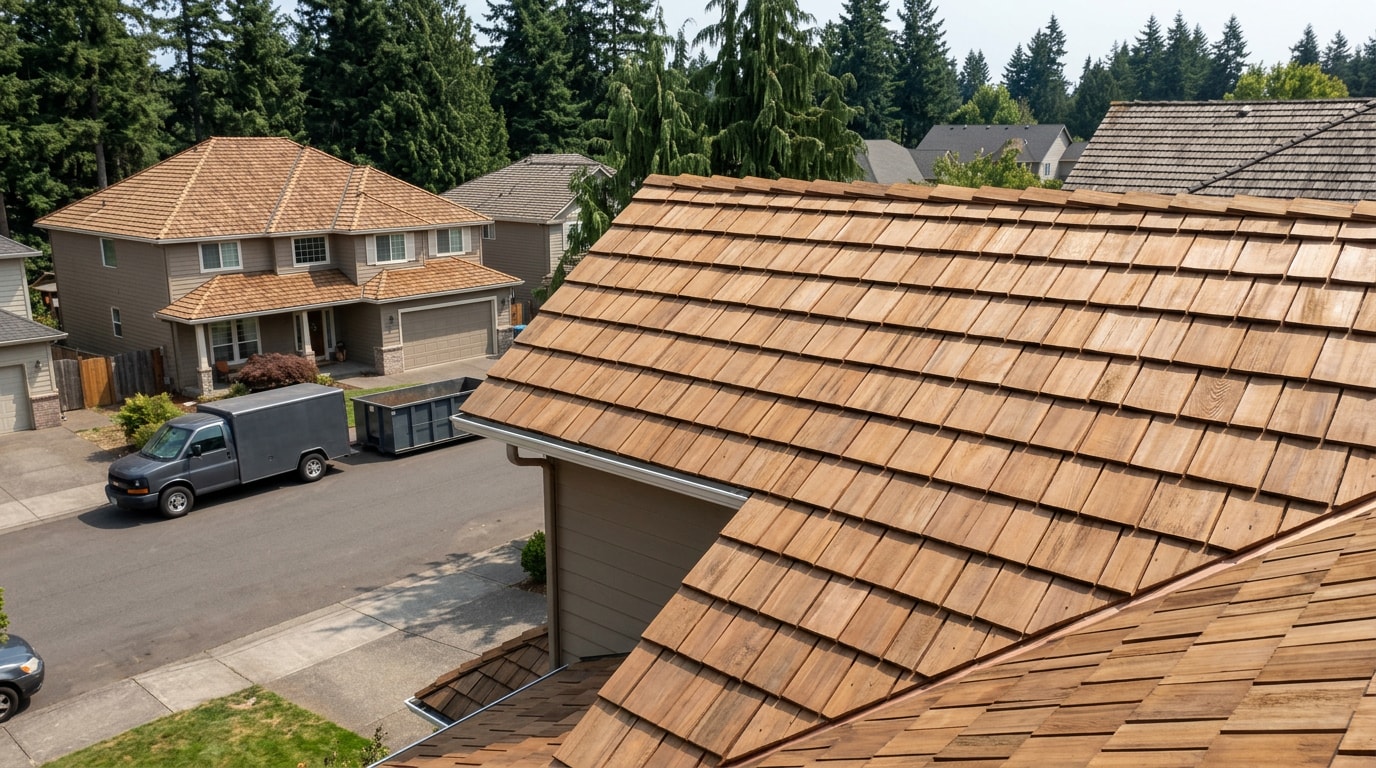
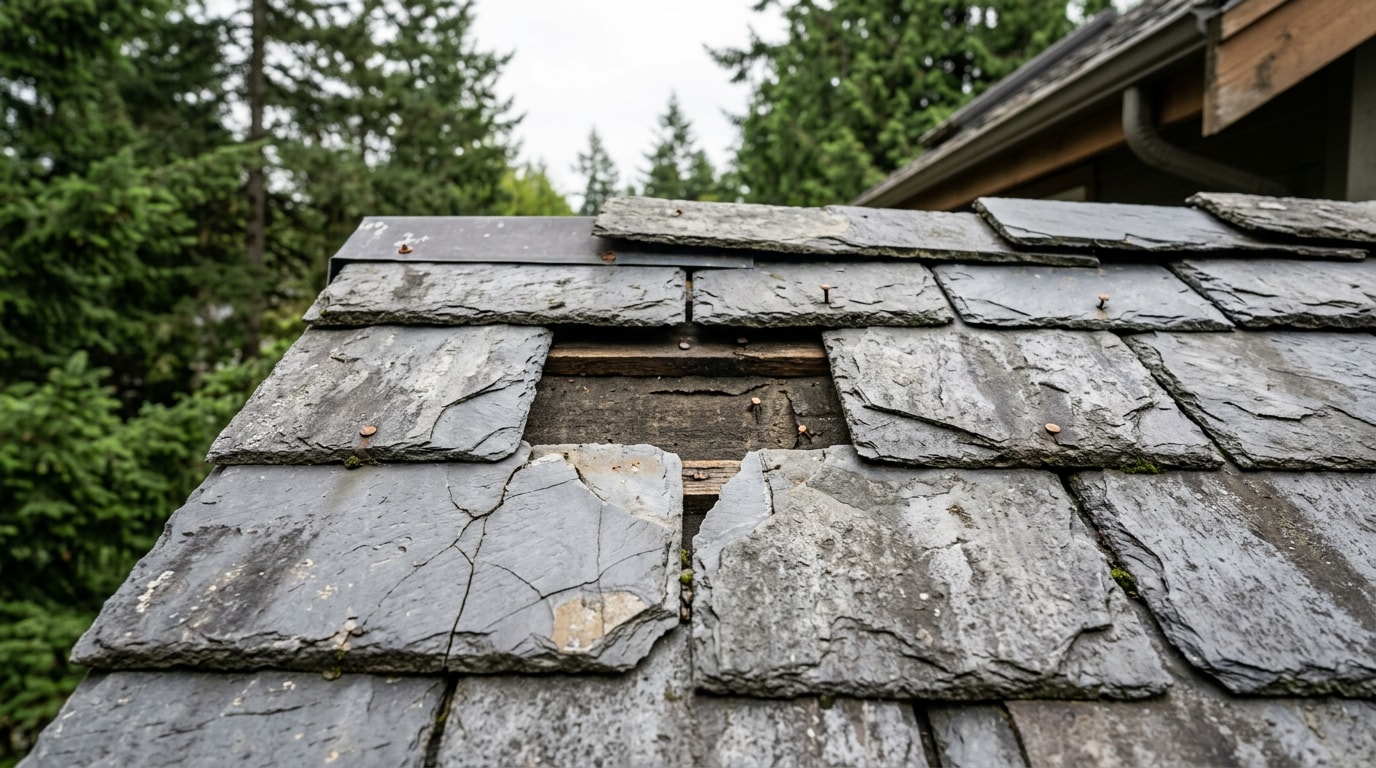
Slate roof repair in Longview, WA is rarely an all-or-nothing job. Most storm damage, a cracked tile, a slipped course, a leaking chimney flashing, can be fixed without tearing off the whole roof. The trick is knowing which repairs are routine and which signal it's time to stop patching.
Why Slate Roofs Need Specialized Repair
Slate repair isn't like patching asphalt shingles. The tiles are brittle stone, not flexible composite, so they crack under the wrong footstep or the wrong tool pressure.
A slate roof also overlaps dozens of tiles per square. One careless move while swapping a single slate can damage several neighboring pieces at once. Trade guidance is blunt about this risk: workers should stay off the tiles entirely and access the roof with scaffold-grade planks, roof ladders, hook ladders, chicken ladders, or lifts instead of walking directly on it .
The upside is longevity. Because the material itself can outlast several roof generations, an isolated problem usually calls for a targeted repair, not a full tear-off. Black Bear Home Exteriors works with homeowners across the region to figure out which category a given repair falls into before any work starts.
Start With a Ground-Level Inspection
Most slate damage can be spotted safely without ever touching a ladder. After a windstorm or heavy rain, walk the property line with binoculars and look for:
- Cracked, slipped, or missing slates
- Discolored or lighter patches where a tile has shifted
- Debris, granules, or broken slate pieces in the gutters
- Sagging or uneven courses along a slope
Interior water stains don't always sit directly beneath the actual defect. Water travels along rafters and sheathing before it drips through drywall, so a stain in the hallway ceiling might trace back to a flashing failure three feet away at the roofline.
Because walking on slate is risky even for confident homeowners, a full professional roof inspection is worth scheduling before deciding on next steps, especially on steep or aging roofs. If the damage followed a storm, an emergency roof repair visit can also stop active leaks while a longer-term plan comes together.
Common Slate Roof Repair Methods
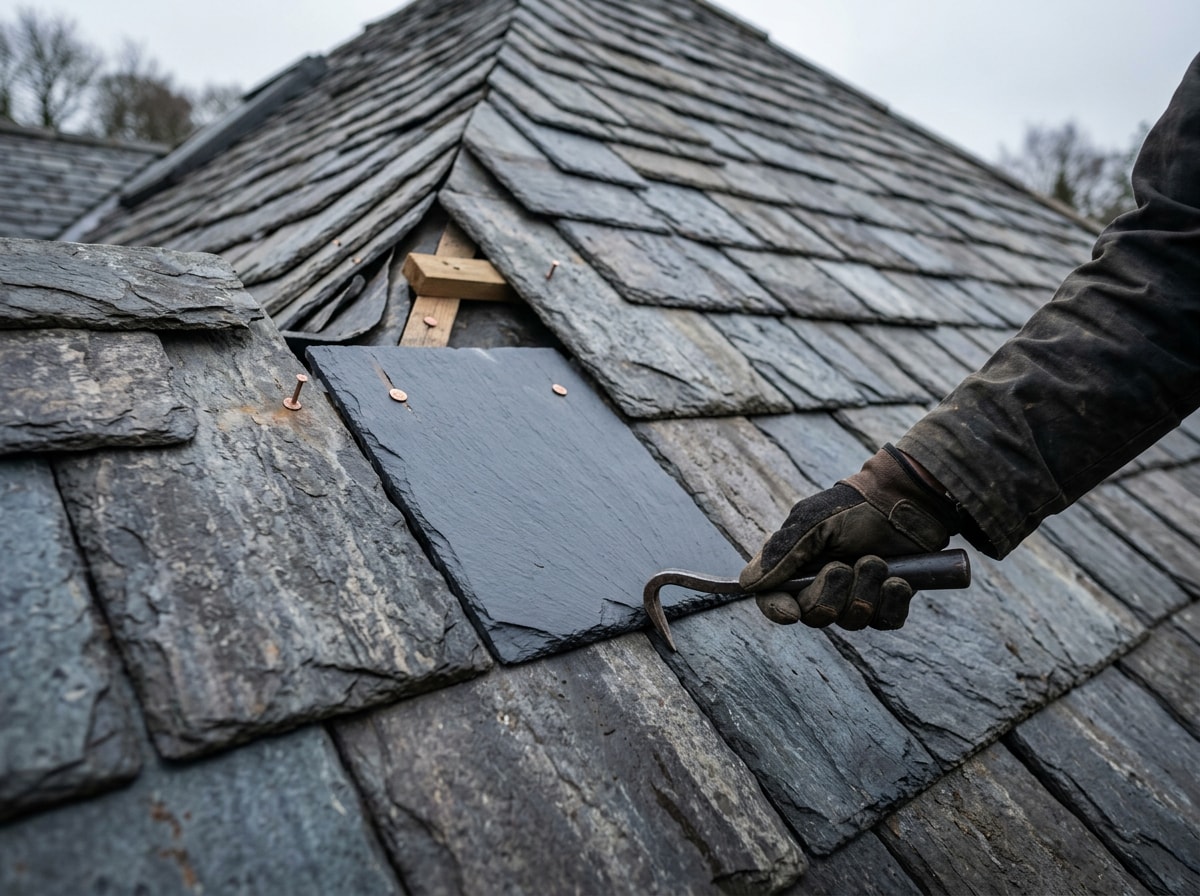
Professionals draw from a handful of proven repair methods depending on what's failed:
- Single-slate replacement for a cracked or missing tile
- Re-securing loose slates with slate hooks or stainless straps
- Re-cementing ridge caps that have come loose
- Rebuilding flashing around chimneys, valleys, and sidewalls where leaks typically start
Replacing a Single Broken Slate
This is the most common slate roof repair homeowners request, usually triggered by a falling branch, a hailstone, or foot traffic from a previous repair attempt. The process generally runs:
- A roofer slides a slate ripper under the damaged tile to cut the hidden nails.
- The broken piece is removed without disturbing the surrounding courses.
- A replacement slate matched for size, thickness, and grade is set in place.
- The new tile is secured with a slate hook or the traditional nail-and-bib method, using copper fasteners that won't corrode or stain the stone over time.
- Adjacent courses and nearby flashing are checked to confirm the repair is fully watertight.
For technique standards, the Slate Roofing Contractors Association's repair and restoration guidelines outline how hooks and bibs should be installed correctly, along with minimum experience benchmarks for the crews doing the work. As one industry source puts it, hiring a slater whose track record is in repair and restoration of natural slate matters more than hiring a general shingle crew .
The Mistake That Ruins Slate Roofs: Tar and Roof Cement
One of the most damaging slate roof repair mistakes is smearing roofing tar or cement over a cracked tile or tired flashing as a quick fix. It looks sealed from the outside, but it traps moisture underneath instead of letting it drain and dry.
Industry guidelines are direct on this point: roofing compounds should not be applied over top of any roofing slate surfaces . Over time, this kind of patch accelerates rot in the decking and corrosion in fasteners, turning a small problem into a much bigger one. The National Park Service's technical guidance on historic slate roofs reaches the same conclusion from a preservation angle: historic slate roofs should be repaired rather than replaced whenever possible , which only works if repairs are done with mechanical fasteners, not mastic.
Repair or Replace? Use the 20-30% Rule
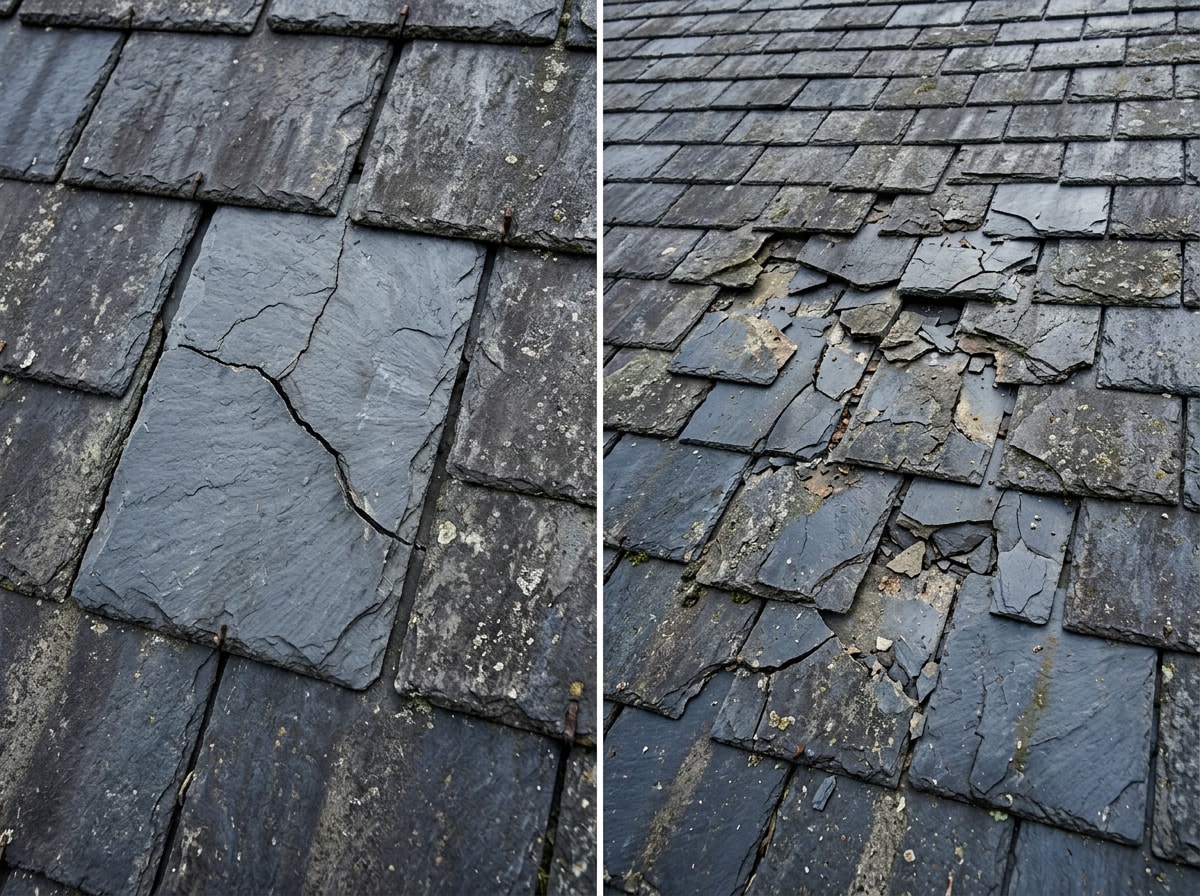
A commonly used industry guideline: if damage affects less than roughly 20-30% of the roof, targeted repair is almost always more cost-effective than full replacement. Beyond that threshold, a systematic re-roof typically costs less per year of remaining slate lifespan.
Applying that rule to real scenarios helps clarify where a given roof stands:
- Repair territory: One broken slate, a single leak at a chimney, or several slipped tiles scattered across one slope.
- Replacement territory: Widespread cracking, crumbling edges, or slates failing across multiple slopes, which usually signals the underlying stone has reached the end of its service life.
Part of why some slate roofs hold up for a century while others fail in 30 years comes down to the grade of stone used. Under the ASTM C406 specification for roofing slate, Grade S1 slate carries a minimum lifespan of more than 75 years, S2 is rated for 40 to 75 years, and S3 is rated for only 20 to 40 years . Knowing which grade is on the roof, something a slate roofing inspection can help identify, changes whether a widespread problem is a fluke or the expected end of that material's life. The full ASTM C406/C406M standard specification covers how those grades are tested and classified.
What Slate Roof Repair Typically Costs
Pricing on any individual slate roof repair depends on a handful of variables rather than a flat rate:
| Repair type | Typical cost driver |
|---|---|
| Single-slate replacement | Usually the lowest cost per visit; mostly labor and access |
| Flashing repair/replacement | Higher due to detail work around chimneys, valleys, sidewalls |
| Ridge cap re-cementing | Falls in between, depending on how much re-cementing is needed |
| Multiple slates in one visit | Per-slate cost drops since staging and access are fixed costs |
Because staging and roof access make up most of the labor on a slate job, bundling several repairs into one visit is almost always more economical than calling back out for each issue separately. A site visit is the only reliable way to get an exact number for a specific roof. Get a free estimate and a Black Bear Home Exteriors crew can walk the roof, document what's damaged, and price the repair before any work begins.
DIY or Hire a Professional for Slate Roof Repair
Slate's weight, brittleness, and specialized fasteners make most repairs a job for a trained slate specialist rather than a weekend project.
Where Homeowners Sometimes DIY
A handful of guides consider a single loose slate near the roof edge, one that's reachable from a ladder without walking the field, manageable for a confident homeowner with basic tools. That said, this is a minority view. Most professional sources recommend against any DIY slate work given how easily adjacent tiles crack underfoot.
When to Call a Qualified Slate Specialist
Anything involving valleys, flashing, ridge caps, or multiple missing tiles calls for a specialist, not a general roofing crew. A contractor without slate-specific experience carries nearly the same breakage risk as an untrained homeowner, which is why specialized know-how is the deciding factor, not general roofing experience.
For a closer look at the material itself before scheduling a repair, the complete guide to slate roofing covers grades, weight considerations, and what to expect from an installation. Homeowners in Cowlitz County can also see more about local service coverage on the Longview, WA area page, and ongoing roof maintenance can catch small slate issues before they turn into bigger ones.
FAQ
Can You DIY Slate Roof Repair?
Slate repair generally isn't a good DIY candidate because it requires specialized tools like a slate ripper, copper nails or hooks, and precisely matched replacement slates. Without that equipment, it's easy to crack more tiles than you fix.
How Much Does It Cost to Repair a Slate Roof?
Costs vary by job type, with single-slate swaps on the lower end and flashing or ridge work costing more due to added labor and materials. Getting a specific quote usually requires an on-site assessment.
How Long Does a Slate Roof Last?
Natural slate can last well over a century depending on grade, with S1-grade stone rated for more than 75 years and premium quarries often exceeding that by decades. Fasteners and flashing typically wear out long before the stone itself fails, which is why targeted repair, not full replacement, is usually the right first move when a leak appears.
Is It Cheaper to Repair a Slate Roof or Replace It?
Following the 20-30% rule, spot repairs are typically more cost-effective than full replacement when damage stays limited to a small portion of the roof. Once damage spreads beyond that range, replacement often becomes the better long-term value.
Can You Walk on a Slate Roof?
Not safely, and not without risking more damage. Trade guidelines call for roof ladders, hook ladders, or lifts instead of direct foot traffic, since even careful footsteps can crack tiles that otherwise had decades of life left.