Cedar shake roofing in Vancouver, WA gives Pacific Northwest homes a textured, natural look that asphalt can't match. It also demands a different maintenance rhythm than composition shingles, especially in a climate where rain falls on more than 160 days a year. This guide breaks down what cedar shake costs to own, how it holds up against moss and fire codes, and how to tell whether your roof needs a repair or a full tear-off.
Visit Black Bear Home Exteriors to see our services and request a free estimate.
What Is Cedar Shake Roofing?
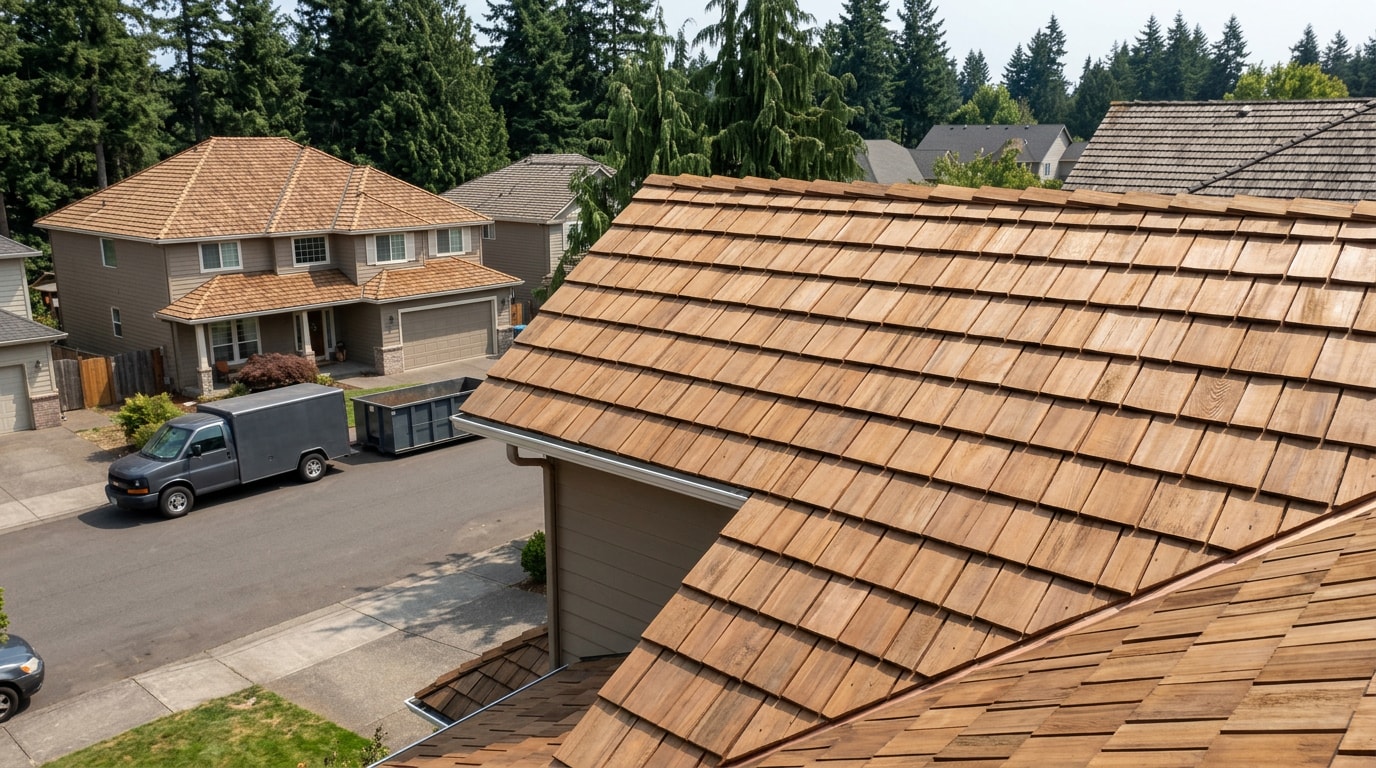
Cedar shake roofing is a roofing system made from thick, textured wood shingles, typically split or sawn from Western Red Cedar. Hand-split shakes have a rougher, more varied surface. Sawn shakes offer a cleaner, more uniform line.
The grade of shake you choose affects both appearance and how soon the roof will need attention. Premium (No. 1) grade shakes are cut from all-heartwood, edge-grain stock and resist splitting far longer than lower-grade material. Knowing the grade before you buy matters more with cedar than with almost any other roofing product, because a cheaper grade can shorten the roof's useful life by years.
Why Cedar Shake Still Works for Pacific Northwest Homes
Cedar shake stays popular because it offers something few manufactured materials match: a natural, textured surface that ages into a distinctive silver-gray patina over time. Western Red Cedar resists insects and holds up reasonably well under UV exposure. Its wood structure also provides natural insulation that can help moderate attic temperatures.

That said, cedar shake isn't free of trade-offs. It typically costs more upfront than asphalt shingles and asks for more consistent upkeep. If you're comparing options for an upcoming project, it's worth weighing cedar shake against our other roofing contractor services before deciding.
Cedar Shake Roofing Services We Provide
Whether you need a repair, a full replacement, or ongoing care, cedar shake work generally falls into three categories. Both residential and commercial cedar shake roofs benefit from the same attention to detail below.
Cedar Shake Roof Repairs
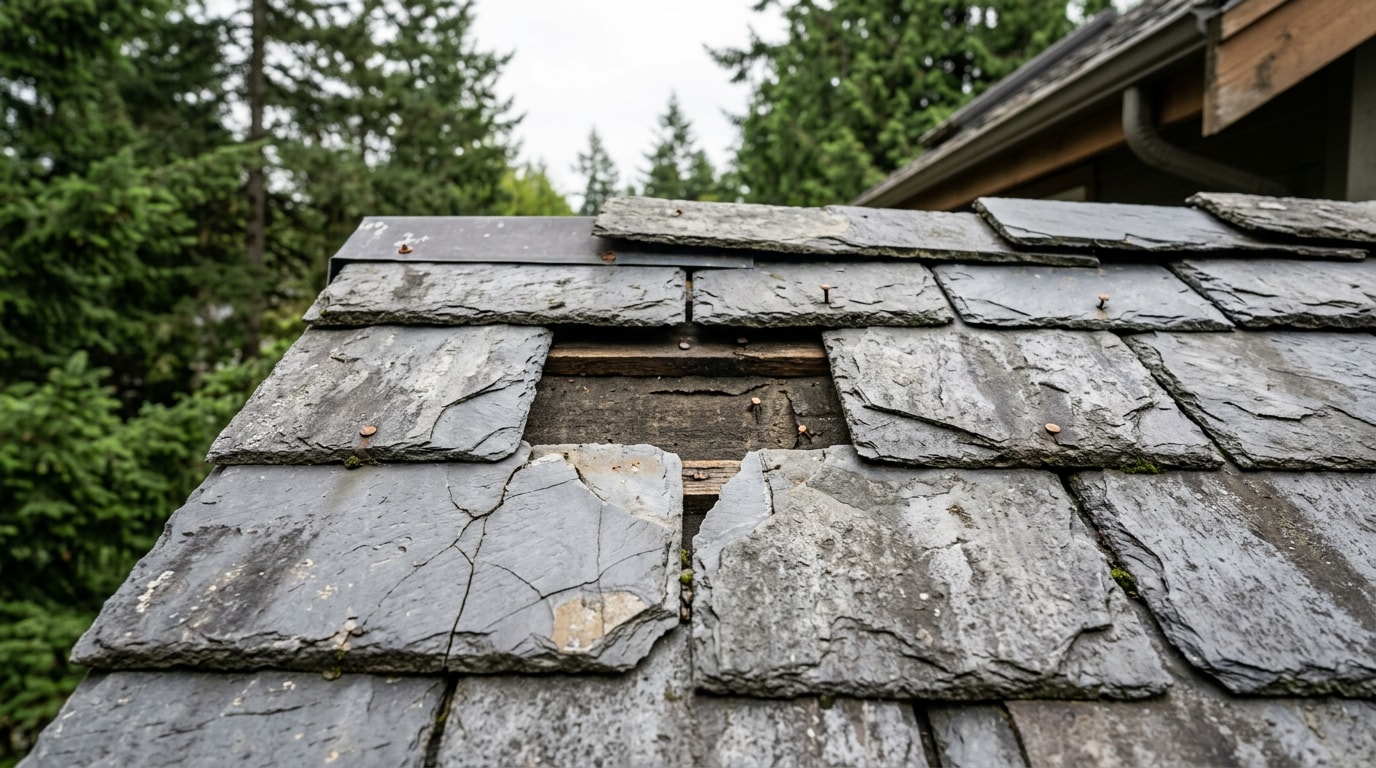
Split or cupped shakes, worn flashing, and isolated leaks are the most common reasons for a cedar shake repair call. Minor damage can often be patched shake-by-shake. Widespread splitting or repeated flashing repairs can signal it's time to consider replacement instead. A proper roof repair assessment can clarify which path fits your roof.
Cedar Shake New Roof Construction
A new cedar shake roof depends on correct spacing between shakes, quality underlayment, and adequate ventilation so the wood can dry between rain events. Skipping these details during installation can shorten a roof's lifespan considerably. For new build or full tear-off projects, see our new roof installation process for the specifics involved.
Cedar Shake Maintenance
Routine maintenance includes clearing debris, treating moss growth, and scheduling periodic inspections. This upkeep is often what separates a shake roof that reaches its full lifespan from one that fails early. A preventative roof maintenance plan helps catch small issues before they turn costly, and periodic roof cleaning keeps moss and debris from taking hold between visits.
Not sure which category your roof falls into? Get a free estimate and we'll tell you straight whether you're looking at a repair, a partial reshingle, or a full replacement.
Rain, Moss, and Moisture: What Vancouver's Climate Does to a Cedar Roof
Vancouver, WA receives an average of 42 inches of rain per year and approximately 163 days of measurable precipitation annually, according to NOAA 1991–2020 climate normals. That steady moisture is one of the biggest factors in how long a cedar shake roof actually lasts here, more than the grade of wood itself in many cases.
Moss on cedar shake traps moisture against the wood far more than it does on asphalt, and that trapped water accelerates wood decay from the inside out. Needles, leaves, and other roof debris compound the problem by holding dampness in place long after a storm passes.
Periodic cleaning, improved airflow, and treatments like copper or zinc strips can slow regrowth. No treatment removes the need for regular inspection in a climate this wet. The Cedar Shake & Shingle Bureau, the industry's certification body for Certi-label products, publishes detailed installation and care standards specifically because moisture management is the single biggest variable in cedar roof longevity.

Cedar Shake vs. Synthetic Shake: A Side-by-Side Look
Fire classification is the one area where natural and synthetic shake diverge the most. Untreated cedar shakes typically do not achieve a Class A rating on their own.
Fire-retardant-treated cedar can achieve a Class A rating as part of an approved roofing assembly , while many synthetic shake products are manufactured to meet Class A standalone.
| Factor | Natural Cedar Shake | Synthetic Shake |
|---|---|---|
| Appearance | Authentic wood grain, ages to a silver-gray patina | Molded to mimic cedar texture; color stays consistent |
| Fire rating | Unrated untreated; Class A only with fire-retardant treatment or an approved assembly | Often rated Class A as a standalone product |
| Maintenance | Regular cleaning, moss treatment, and inspection | Minimal routine upkeep |
| Typical upkeep cost over time | Higher, due to periodic treatments and inspections | Lower long-term maintenance cost |
| Material cost | Generally higher per square | Varies by manufacturer and profile |
Beyond fire rating, the two materials differ mainly in upkeep. Natural cedar typically needs more frequent cleaning and treatment, while synthetic shake is largely low-maintenance. Many homeowners feel the authentic texture and aging process of real cedar justifies the extra care, while others prioritize the lower upkeep of a synthetic profile. If you're weighing the two, our reshingle roof estimate guide for Vancouver, WA breaks down how pricing factors shift between materials.
Fire Rating and Building Code Basics for Wood Roofing
Washington's building code addresses wood shake roofing directly rather than leaving it to manufacturer claims. Special purpose wood shingle or wood shake roofing shall conform to the grading and application requirements of Section 1507.8 or 1507.9. Where a fire-retardant-treated assembly is required, fire-retardant-treated wood shakes and shingles shall be treated by impregnation with chemicals by the full-cell vacuum-pressure process, in accordance with AWPA C1.
This matters most in wildfire-prone zones. If a cedar shake or shingle roof is allowed in wildfire-prone areas, it will be required to be Class A. Clark County isn't classified the same way as drier parts of the state, but insurance underwriting and local permit requirements still vary by jurisdiction, so it's worth confirming current rules before you commit to untreated cedar. The full code language is available through the Washington State Building Code's roof assemblies chapter.
What to Ask Before You Hire a Cedar Shake Roofer
Cedar shake calls for different skills than asphalt work, so experience specifically with wood shake matters when hiring a roofer. A few questions worth asking before you sign anything:
- Do you install and repair cedar shake regularly, not just occasionally?
- What spacing and underlayment approach will you use for proper drying between rain events?
- Will you inspect the existing roof deck before quoting a price, rather than quoting sight-unseen?
- Can you walk me through how you'll handle flashing around chimneys, vents, and valleys?
A thorough roof inspection is a reasonable first step for any homeowner considering cedar shake in the Vancouver area, whether you're repairing an existing roof or planning a full replacement. If you're in Vancouver, WA and want a second opinion before committing to a bid, contact us for a free estimate.
FAQ
How long does a cedar shake roof last in Vancouver, WA?
Most well-maintained cedar shake roofs in this climate last somewhere in the 20 to 40 year range. The grade of shake, ventilation quality, and how consistently moss and debris are managed make the biggest difference. Neglected roofs, especially ones left untreated for moss, can fail well before that range.
Is cedar shake roofing a fire hazard in the Pacific Northwest?
Untreated cedar carries more fire risk than treated or synthetic alternatives. Fire-retardant-treated shakes can meet higher safety classifications under Washington's building code. Rules and insurability vary by jurisdiction, so check with your local building department before finalizing material choice.
Can I install solar panels on a cedar shake roof?
Yes, though mounting requires extra care to avoid puncturing shakes and trapping moisture underneath. A qualified installer should assess structural support and flashing details before mounting any solar array on wood shake.
How much does a cedar shake roof cost?
Cedar shake cost varies with shake grade, roof complexity, and whether a full tear-off is needed. Expect a noticeably higher price per square than asphalt shingles, with labor often making up the larger share of the total project cost.
Does cedar shake roofing require more maintenance than asphalt shingles?
Yes. Cedar is an organic material that reacts to moisture, sun, and organic growth in ways manufactured asphalt shingles don't. It needs more frequent cleaning, moss treatment, and inspection to reach its full lifespan.
Can I finance a cedar shake roof replacement?
Financing availability depends on the contractor and lender, not the material itself. Ask any roofer you're considering whether they offer payment plans or third-party financing options as part of their estimate process.
{ "hero": { "prompt": "Photoreal exterior photo of a Pacific Northwest residential home with a weathered Western Red Cedar shake roof, natural silver-gray patina, steep pitch, surrounded by evergreen trees under an overcast sky, no people, unbranded scene, no company name, no logos, no phone number, no text or signage anywhere, plain unmarked ladder leaning against the house, photoreal architectural photography style", "alt": "Weathered Western Red Cedar shake roof on a Pacific Northwest home" }, "inline": [ { "id": "inline-1", "prompt": "Photoreal close-up of a well-maintained cedar shake roof section showing natural wood texture, varied shake widths, and subtle color variation from honey-brown to silver-gray, daylight, no people, unbranded scene, no logos, no text, no company markings, no phone numbers", "alt": "Cedar shake roof showing natural curb appeal on a Pacific Northwest home" }, { "id": "inline-2", "prompt": "Photoreal close-up of a cedar shake roof surface with patches of green moss growth being cleaned away with a soft-bristle brush, water droplets visible, overcast Pacific Northwest lighting, no people visible, unbranded scene, no logos, no text, no company name, no phone number, plain unmarked tools only", "alt": "Moss growth being cleaned from a cedar shake roof in the Pacific Northwest" } ] }