TPO roofing stands for thermoplastic polyolefin, a single-ply membrane built for flat and low-slope roofs. If a contractor quoted you a "TPO roof" and you want to know exactly what that means before you sign anything, here's the plain-English breakdown.
What Does TPO Stand For in Roofing?
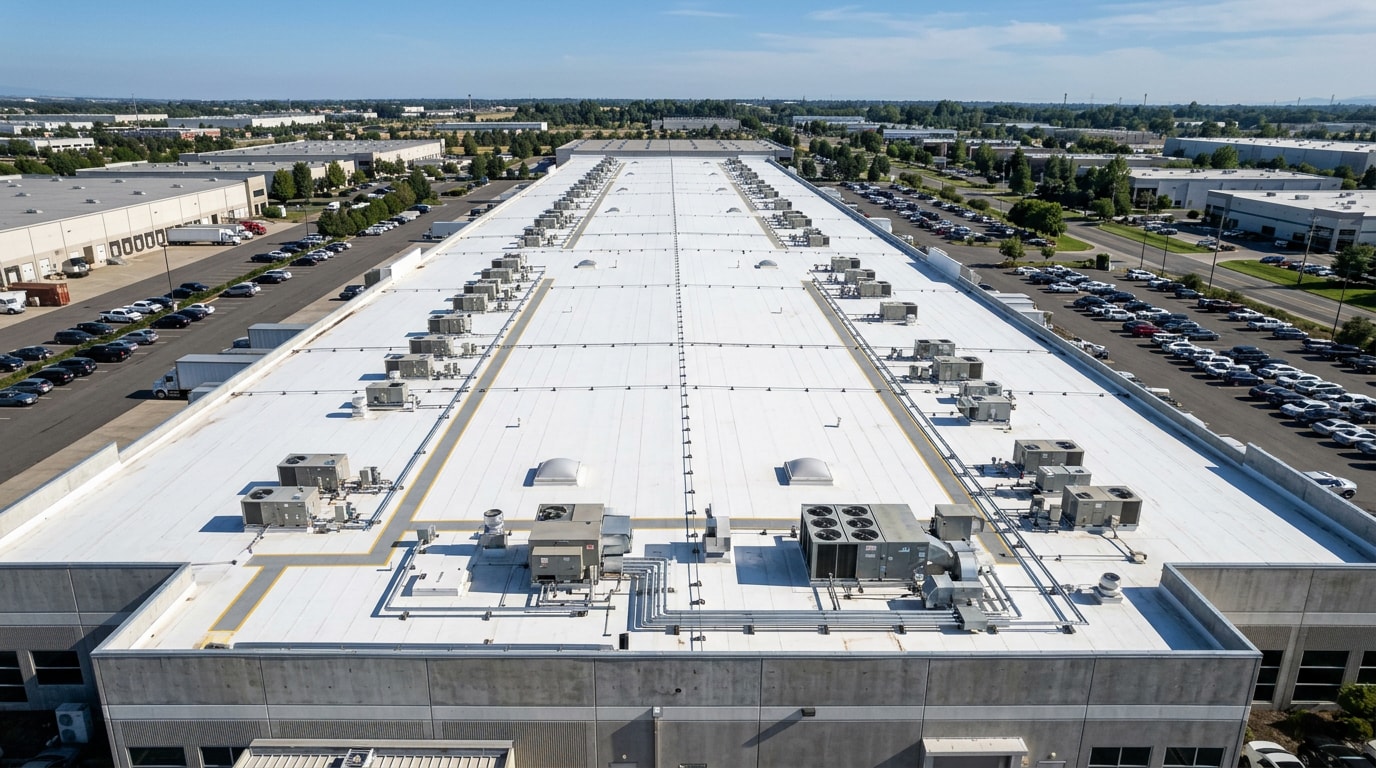
TPO stands for thermoplastic polyolefin. It's a material engineered specifically for flexibility, durability, and heat resistance. It's a single-ply roofing membrane used almost exclusively on flat and low-slope roofs, where asphalt shingles aren't practical.
TPO has only been around since the early 1990s, so it is a relative newcomer to the commercial roofing industry, and it's categorized as a single-ply roofing membrane, meaning it's installed to roof substrates in a single layer.
Since then, adoption has climbed fast. Thermoplastic olefin (TPO) remains the market leader with a 40% share of new construction and 30% of the reroofing market in NRCA's national survey data, and it's held that lead position in the years since.
From working on flat-roof commercial and residential additions across Southwest Washington, our crews at Black Bear Home Exteriors see the same pattern in almost every TPO tear-off: the membrane itself rarely fails first. The seams do, when they were welded too fast or too cold during the original install.
What Is TPO Roofing Made Of?
The membrane is primarily made from a blend of polypropylene and ethylene-propylene rubber, along with reinforcing fillers and additives that enhance flexibility, durability, and UV resistance.
A typical TPO system is built in layers:
- Structural roof deck — the base the whole system sits on
- Insulation board — controls thermal performance and energy-code compliance
- TPO membrane — the waterproofing and reflective top surface
- Fastening system — mechanically attached, fully adhered, or ballasted
- Heat-welded seams — fuse overlapping sheets into one continuous barrier
TPO membranes are manufactured in rolls at widths of 4, 6, 10, and 12 feet and at thicknesses of 45, 60, and 90 mils , with thicker membranes generally standing up better to foot traffic and long-term wear.
Seam and sheet performance for TPO is governed by a published industry standard. This specification covers flexible sheet made from thermoplastic polyolefin (TPO) as the principal polymer, intended for use in single-ply roofing membranes exposed to the weather , per ASTM International's D6878 standard.
How Does a TPO Roof System Work?
TPO goes down as one layer instead of stacked sheets, which keeps both labor and long-term repairs simpler. The membrane can be attached by mechanically attaching, ballasting, plate bonding, or adhering , and the right method depends on the roof deck, local wind codes, and whether it's new construction or a re-cover.
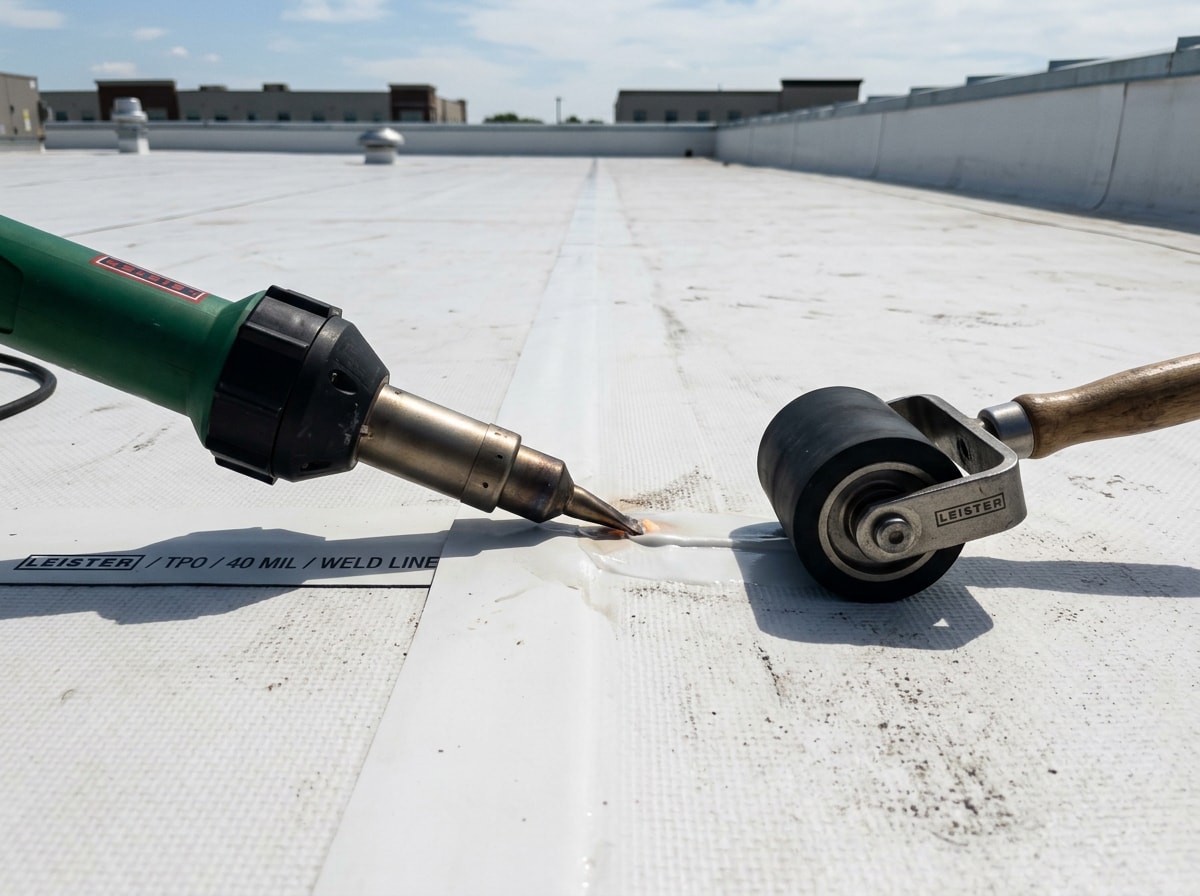
Seams between sheets are heat-welded rather than glued. Because TPO is a thermoplastic, contractors can weld the seams together using hot air rather than glue , creating a continuous, waterproof barrier over the insulation below.
Here's the catch: installer skill matters as much as the material. Rushed or under-heated seams are the single most common cause of early TPO leaks. A qualified roofing contractor team should know the correct welding temperature for your climate and membrane thickness before a single panel goes down.
Why Property Owners Choose TPO Roofing
Most property owners pick TPO for one combination: durability plus energy savings.
- Reflects heat — the white surface bounces sunlight instead of absorbing it, which helps cut cooling costs on large buildings
- Lightweight — easier on the structure than multi-layer systems
- Chemical-resistant — holds up against grease, oils, and common rooftop exposure
- Fast to install — fewer labor hours than a built-up roof
Many TPO products are evaluated through the Cool Roof Rating Council's third-party program, which publishes the measured solar reflectance and thermal emittance values in their online Rated Products Directory and on CRRC Product Labels for use by roof specifiers, codes officials, architects, contractors, engineers, and building owners. That data lets building owners compare products on actual performance numbers, not just marketing claims.
TPO vs Other Flat Roofing Systems
TPO isn't the only flat-roof option. Here's how it stacks up against EPDM, PVC, and built-up roofing (BUR).
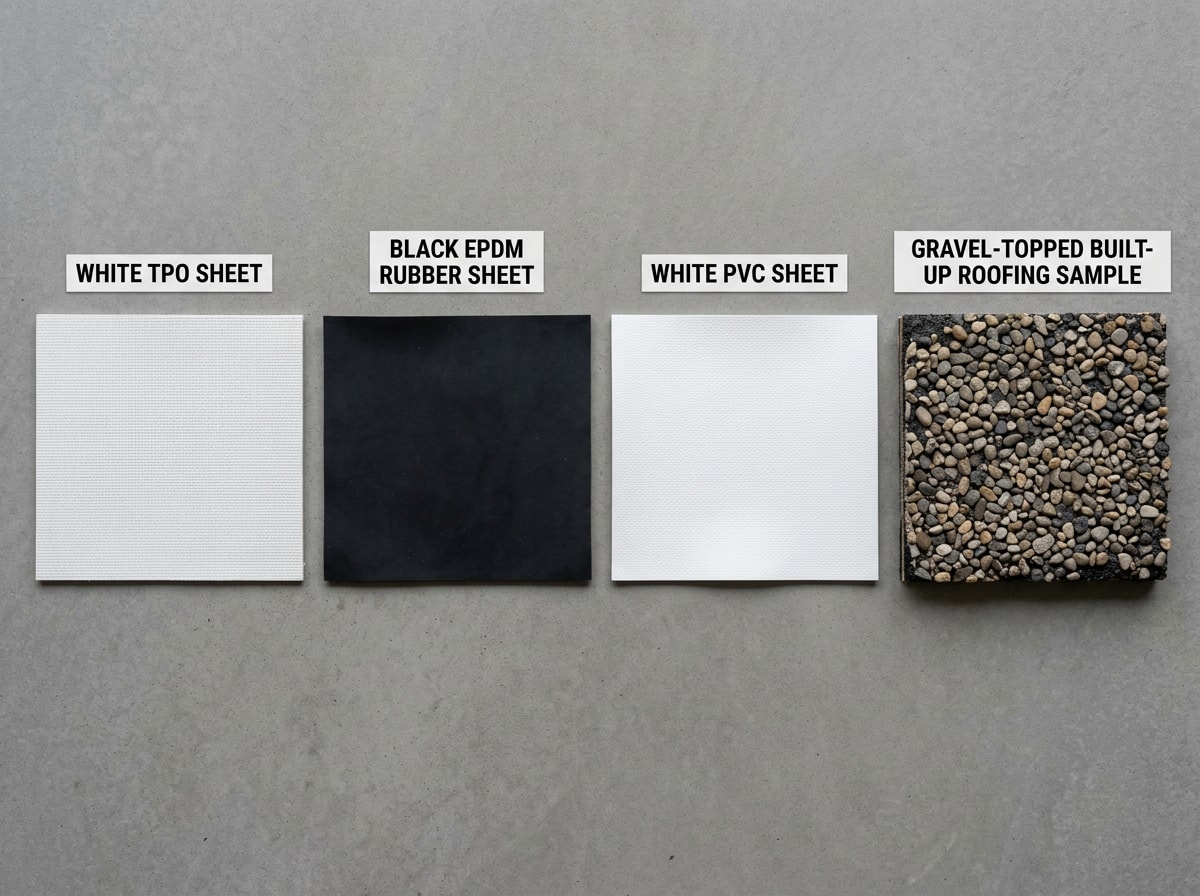
| Material | Typical Cost (per sq. ft., installed) | Lifespan | Color Options |
|---|---|---|---|
| TPO | $5.50–$8.50 | 20–25 years | White, gray, tan |
| EPDM | $4.50–$8.00 | 20–30 years | Primarily black |
| PVC | $6.50–$10.00 | 20–30 years | White, gray |
| BUR | $4.00–$8.00 | 15–20 years | Gravel-topped, gray |
Treat these as ballpark ranges, not a quote. Membrane thickness, insulation needs, roof access, and local labor rates all move the final number. For an exact figure on your building, request a free estimate.
TPO vs EPDM
EPDM is the black, cured-rubber membrane most people picture when they hear "rubber roof." It's a thermoset material, so its seams are glued or taped rather than heat-welded. TPO's heat-welded seams generally test stronger than adhered EPDM seams, but EPDM has a longer track record in cold climates. If you're weighing the two, our breakdown of what EPDM stands for in roofing walks through the material side by side with TPO.
TPO vs PVC
PVC and TPO are both heat-welded single-ply membranes, but PVC holds up better against grease, oils, and chemical exposure, which is why it shows up more often on restaurant and industrial roofs. TPO usually costs less per square foot installed.
TPO vs BUR
Built-up roofing is a traditional multi-layer asphalt system made of alternating layers of asphalt and reinforcing fabric, topped with gravel. TPO's single-ply, heat-welded design is lighter, faster to install, and generally easier to repair than a multi-layer asphalt assembly.
What Color Does TPO Roofing Come In?
TPO ships in white, gray, and tan. White is the most common choice because it maximizes UV reflection and energy savings, but gray and tan are available where a building owner wants a different look without giving up performance.
How Long Does TPO Roofing Last?
Properly installed TPO typically lasts 20 to 25 years. Routine maintenance — scheduled inspections and prompt repairs — protects that lifespan by catching seam issues before they turn into leaks.
A roof inspection once or twice a year is the simplest way to extend the life of a TPO system, and it's far cheaper than an emergency tear-off. If a leak does show up between scheduled visits, emergency roof repair is the faster fix than waiting for routine service.
Is TPO Right for Your Building?
TPO works well for flat and low-slope commercial buildings, especially in hot climates, as long as an experienced crew installs it. It's increasingly common on residential flat-roof additions, garages, and modern flat-roof home designs too.
It's less suited to steep-slope residential roofs, where shingles, metal, or tile are the better fit. If you're not sure which category your building falls into, a straightforward way to find out is to have a roofing contractor walk the roof with you before you commit to a system.
Black Bear Home Exteriors serves property owners across Longview, WA, Vancouver, WA, Kennewick, WA, and the wider Southwest Washington Metro area. If you're planning a roof replacement and TPO is on your shortlist, contact us for a free estimate, or visit our homepage to see the full range of exterior services we handle.
FAQ
Is TPO roofing the same as rubber roofing?
No. TPO is a thermoplastic membrane. True rubber roofing (EPDM) is a cured, black synthetic rubber membrane. The two get confused because both ship in large single-ply rolls, but their chemistry, seaming method, and color are different.
How much does TPO roofing cost?
TPO typically runs $5.50 to $8.50 per square foot installed, depending on membrane thickness, insulation needs, and roof size. Get an exact number by requesting a free roofing quote.
Is TPO roofing a good choice for my building?
It's a strong fit for flat or low-slope commercial buildings, especially in hot climates, as long as it's installed by an experienced crew. It's a poor fit for steep-slope residential roofs.
Can TPO roofing be used on residential roofs?
Yes, increasingly so. In commercial settings, TPO is valued for covering large flat surfaces efficiently. In residential homes, it's often used for additions, garages, or modern flat-roof designs.
How long does TPO roofing actually last?
Most manufacturers and contractors put TPO's service life at 20 to 25 years with proper installation and routine maintenance. Poor seam welding during install is the most common reason a TPO roof falls short of that range.
What's the difference between TPO and EPDM roofing?
TPO is thermoplastic with heat-welded seams; EPDM is thermoset rubber with glued or taped seams. TPO is usually white or light-colored for reflectivity, while EPDM is almost always black. See our full EPDM roofing guide for a deeper comparison.