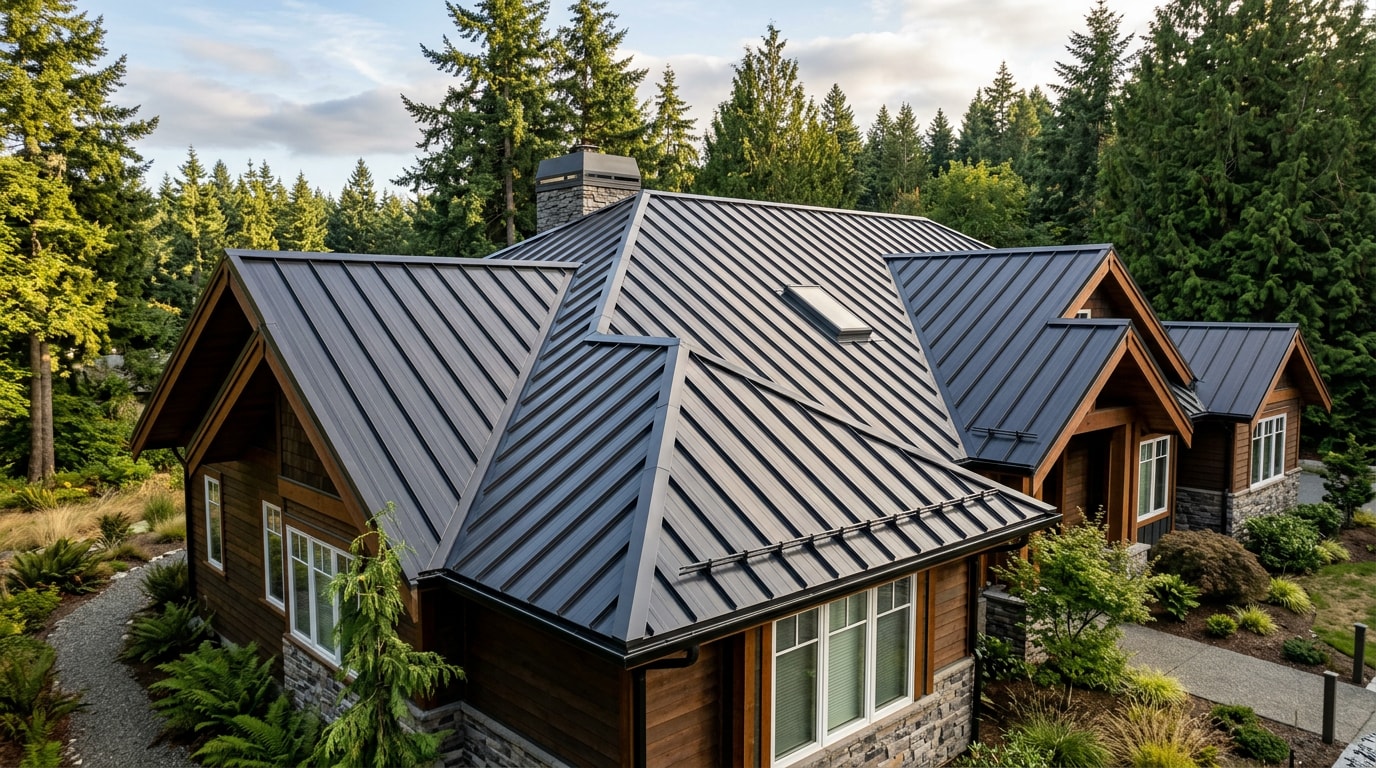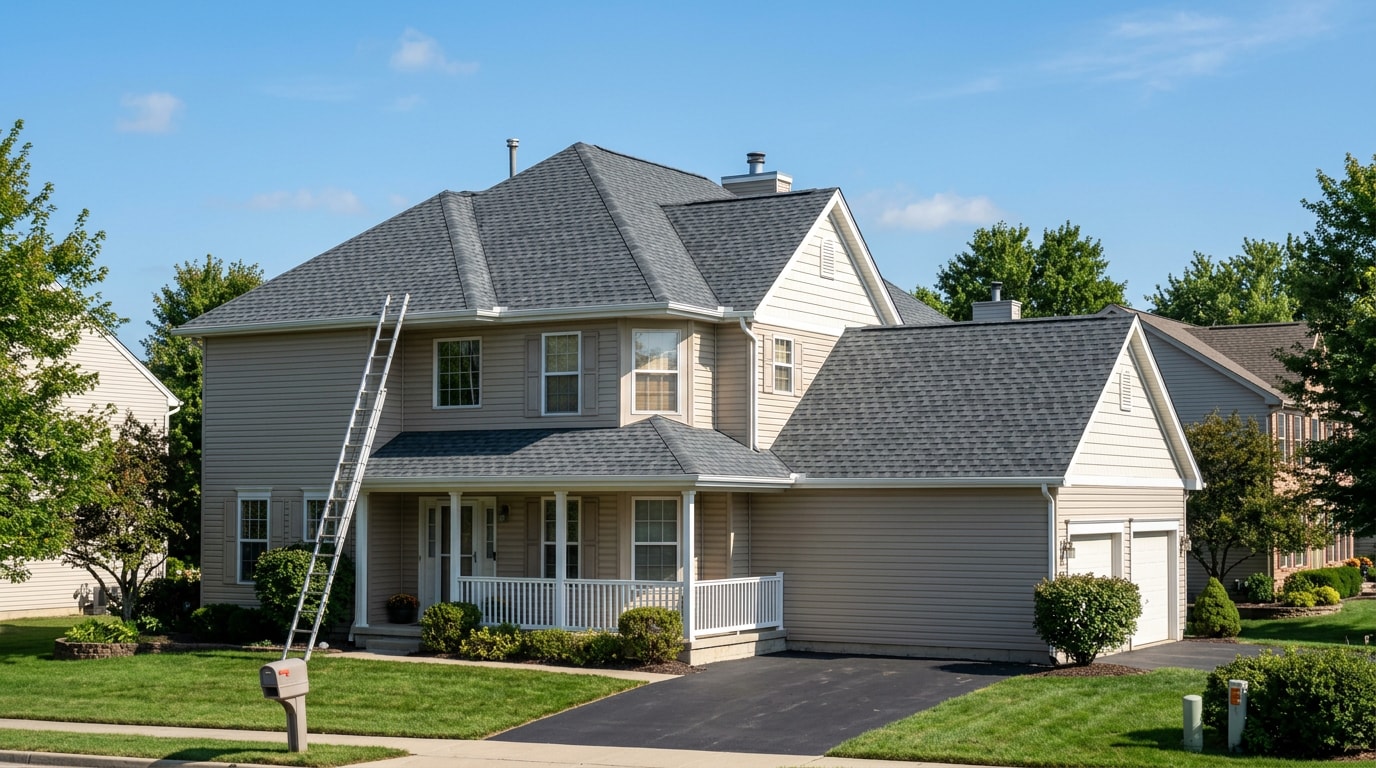
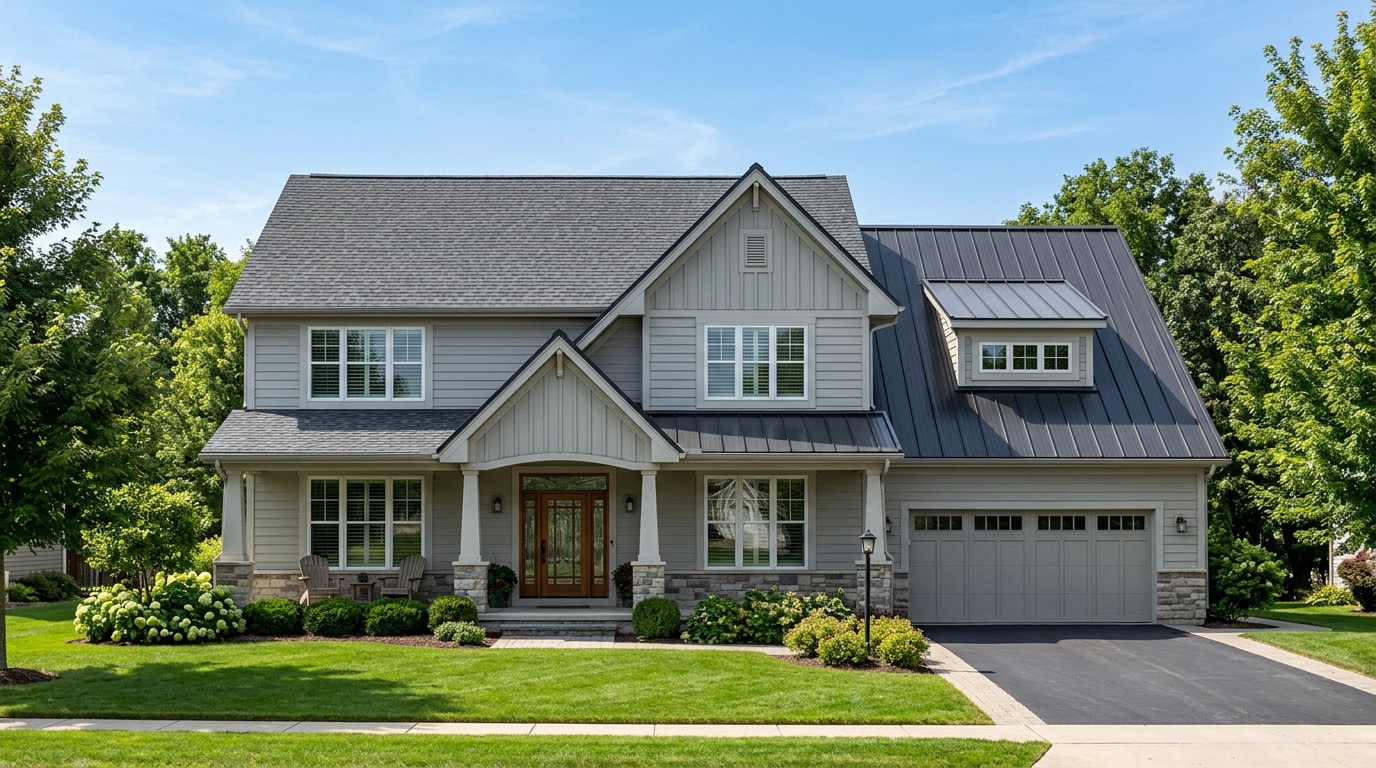
Is metal roofing better than shingles? For homeowners planning to stay put more than a decade, yes, metal wins on lifespan, storm resistance, and energy savings. Asphalt still takes the win on upfront price and remains the right call for short-term owners or tight budgets. Below is the full cost, durability, and insurance breakdown so you can decide with real numbers instead of guesswork.
Metal Roofing vs. Asphalt Shingles: Quick Comparison
| Category | Metal Roofing | Asphalt Shingles |
|---|---|---|
| Average Lifespan | 50-70+ years | 15-30 years |
| Cost per Sq Ft (Installed) | $4-$30 | $1.50-$6.00 |
| Maintenance | Minimal; occasional seam/panel check | Regular inspections and repairs |
| Energy Efficiency | Reflects 25-40% more solar radiation | Absorbs more heat, raising cooling costs |
| Wind Rating | Often rated 140+ mph | 60-110 mph depending on grade |
| Fire Rating | Class A (non-combustible material) | Class A possible through assembly |
| Weight | 50-150 lbs per square | 200-400 lbs per square |
| Noise (over solid decking) | Quiet with proper insulation | Naturally quiet |
| Resale Value Recoup | Often 60%+ | Often 50-60% |
These numbers shift depending on your region, roof pitch, and the specific product line you choose. Our crews install both systems across Longview, Vancouver, and the wider Southwest Washington Metro area, and this guide reflects patterns we see on actual job sites, not just manufacturer brochures. For measurements and options specific to your roof, the {{SITE_URL}} team can walk through both materials in person.
Cost Comparison
Upfront price and lifetime cost tell two different stories. The gap between them is where most of the "metal vs. shingles" debate actually lives.
A standing seam metal roof runs about $4 to $30 per square foot installed. Asphalt shingles land between $1.50 and $6.00 per square foot. On an average 2,000-square-foot roof, asphalt might cost $6,000 to $12,000, while metal could run $16,000 to $40,000 depending on panel type and finish.
That's a real gap, and it's fair to say metal costs two to three times more upfront than asphalt. But it also lasts two to three times longer. When you divide total cost by expected lifespan, metal often works out to a similar or lower cost per year than asphalt, especially once you factor in fewer repairs and one less full tear-off over a 50-year span. Our guide to cost-effective roofing materials breaks down the regional pricing factors that move these numbers up or down.
Which Is More Durable: Metal Roofing or Asphalt Shingles?
Metal roofing typically lasts 50 to 70 years or more, depending on the material and upkeep. Asphalt shingles last 15 to 30 years depending on grade and climate. On raw lifespan alone, metal wins decisively.
Asphalt shingles degrade from UV exposure, repeated thermal cycling, and trapped moisture. Granules wear off, edges curl, and the mat underneath becomes brittle over time. Metal panels don't absorb water the same way and resist UV breakdown far better, so they tend to hold their structural integrity much longer.
Actual durability still depends on installation quality, climate exposure, and maintenance habits on either material. A periodic roof inspection catches small issues, loose flashing, a cracked shingle, a lifted seam, before they turn into leaks on either roof type.
Performance in Extreme Weather Conditions
Climate and storm exposure often matter more than sticker price when choosing between these materials. A roof that fails during a storm costs far more than the price difference ever saved.
High Wind and Heavy Snow
Asphalt shingles typically carry wind ratings between 60 and 110 mph depending on grade. Edge uplift during high wind is the most common failure point on a shingle roof. Metal roofing systems are frequently rated well above that, with many standing seam products holding up past 140 mph when properly installed.
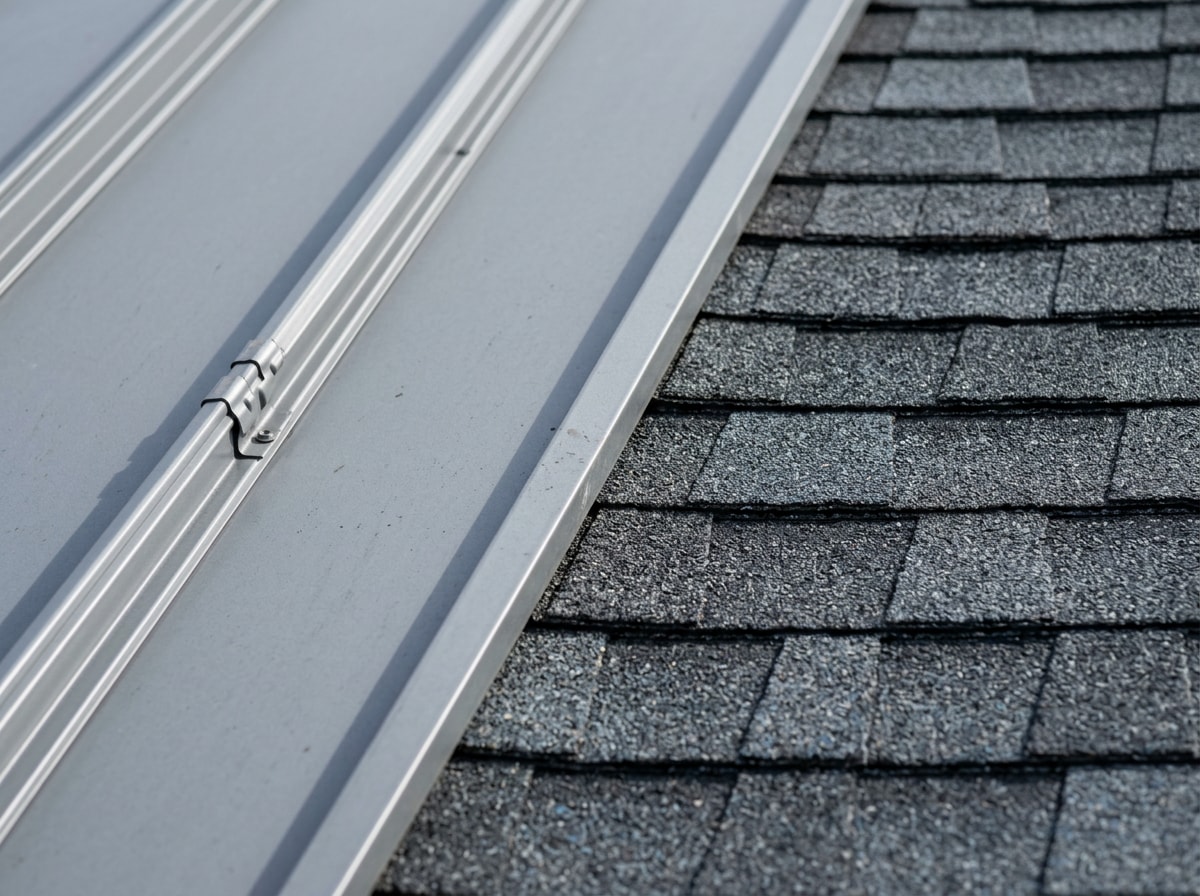
Snow performance tells a similar story. Metal's smooth surface sheds snow instead of letting it accumulate, which reduces load on the structure and limits ice dam buildup along eaves and valleys. Asphalt's textured surface holds snow longer, giving melting snow more time to refreeze at the edges. If a storm has already compromised your shingles, a full roof replacement is often cheaper long-term than repeated patch repairs.
Fire Resistance
Metal carries a Class A fire rating because steel simply doesn't burn. Modern architectural shingles can also reach Class A, but only through specific treatments and backing layers in the full roofing assembly, not the shingle material alone.
For homes in wildfire-prone areas, two "Class A" roofs aren't automatically equal. Underlayment, decking, and installation details all affect how the assembly performs under real fire exposure. The impact ratings used by insurers, UL 2218, come from the same testing body that UL Solutions uses to evaluate roofing products for wind and hail performance, and it's worth asking your contractor which rating your chosen system actually carries.
Does Roofing Material Affect Your Home Insurance Premium?
This is the part most comparison guides skip, and it can swing your decision as much as material cost does.
Metal roofs often qualify for a UL 2218 Class 4 impact rating, which some insurers reward with a premium discount in hail-prone states. But there's a catch: many carriers pair that discount with a cosmetic damage exclusion, meaning they won't pay to fix dents that don't cause a leak. A metal roof can look hail-battered and still receive no claim payout, while a shingle roof with the same storm exposure gets a full replacement check.
Asphalt isn't off the hook either. IBHS, the insurance industry's own research arm, tests roofing assemblies for both wind and impact performance, and shingles rated "Good" or "Excellent" on its hail scale can qualify for the same FORTIFIED Roof credits that benefit metal installations.
Bottom line: before you choose a material based on insurance savings, call your agent and ask two questions:
- Does this specific product qualify for a discount in my state?
- Does the policy include a cosmetic damage exclusion for metal panels?
The answers vary by carrier and by zip code, so a quote in hand beats any national average.
Energy Efficiency
Metal roofs reflect 25-40% more solar radiation than asphalt shingles, which keeps attic and interior temperatures lower during peak summer heat. Reflectivity is the core idea behind any cool roof system, metal or otherwise, and ENERGY STAR's guidance on cool roofs explains how that reflectance translates into lower cooling loads.
In hot climates, that reflectivity can translate to roughly 10-25% lower cooling costs over a typical summer. Asphalt shingles, by contrast, absorb heat and release it slowly into the roof deck, even after sunset.
Reflective coatings can narrow this gap somewhat on asphalt products, but metal still holds a natural edge in warm-summer regions.
Resale Value
Both roofing options add value to a home, but metal tends to add more. Appraisers and buyers increasingly view a metal roof as a long-term upgrade rather than a maintenance item waiting to happen.
Industry estimates generally put asphalt replacement recoup in the 50-60% range at resale. Metal roofing often recoups 60% or more, partly because buyers factor in decades of remaining life without another replacement. The exact return varies by market, so local comps matter more than national averages.
Should You Choose a Metal Roof or Asphalt Shingles?
Pulling the cost, durability, weather, and insurance findings together, the decision usually comes down to two things: how long you plan to stay in the home, and how much weather exposure your roof actually faces.
Choose asphalt shingles if you:
- Want the lower price today
- Expect to sell the house within 10 to 15 years
- Want to match the traditional look of homes around you
- Live in a moderate climate without major wind, snow, or wildfire risk
Choose metal roofing if you:
- Plan to stay long-term and don't want to replace a roof twice
- Live in a storm-prone, high-heat, or wildfire-exposed area
- Want lower cooling costs over the life of the roof
- Are willing to pay more upfront for fewer repairs later
Neither choice is wrong. It's a question of timeline and exposure. If you want a professional opinion on which fits your specific roof, schedule a roof installation consultation, or browse our full roofing contractor services to compare both materials side by side with someone who installs both every week.
Ready to get real numbers for your home instead of national averages? Get a free estimate and we'll measure your roof, walk through both materials, and give you a straight answer.
FAQ
Are Metal Roofs Better Than Shingles?
Metal roofs generally outperform shingles on lifespan, durability, and energy efficiency, lasting 50-70+ years versus 15-30 years for asphalt. Shingles still win on upfront cost. Whether metal roofing is better than shingles for you depends on your budget, timeline, and local climate.
What Are the Disadvantages of a Metal Roof?
The main drawbacks are higher upfront cost and the need for an experienced, specialized installer, since poor installation can affect performance. Noise is often cited as a con, but with solid decking and standard insulation, rain noise is comparable to asphalt in most homes.
Do Metal or Shingle Roofs Increase Home Value?
Both materials increase resale value, but metal typically recoups more. Asphalt replacements often recoup 50-60% of cost at resale, while metal frequently recoups 60% or higher, largely due to its remaining lifespan at the time of sale.
Is It Cheaper to Install Metal Roofing or Asphalt Shingles?
Asphalt shingles are cheaper to install upfront, generally running $1.50 to $6.00 per square foot versus $4 to $30 for metal. See the Cost Comparison section above for a full breakdown of total job costs and lifetime value.
Does a Metal Roof Cost More to Insure Than Shingles?
It depends on the carrier. Metal can earn a Class 4 impact discount in hail-prone states, but some insurers pair that with a cosmetic damage exclusion that limits payouts for dents. Ask your agent for a quote on both materials before assuming either one is automatically cheaper to insure.
Will Metal or Asphalt Perform Better in My Climate?
Metal performs best in regions with high wind, heavy snow, wildfire exposure, or intense summer heat. Quality asphalt shingles hold up fine in milder, moderate climates. Homes near saltwater should lean toward aluminum, zinc, or coated steel panels, since some bare steel products corrode faster in salt air.