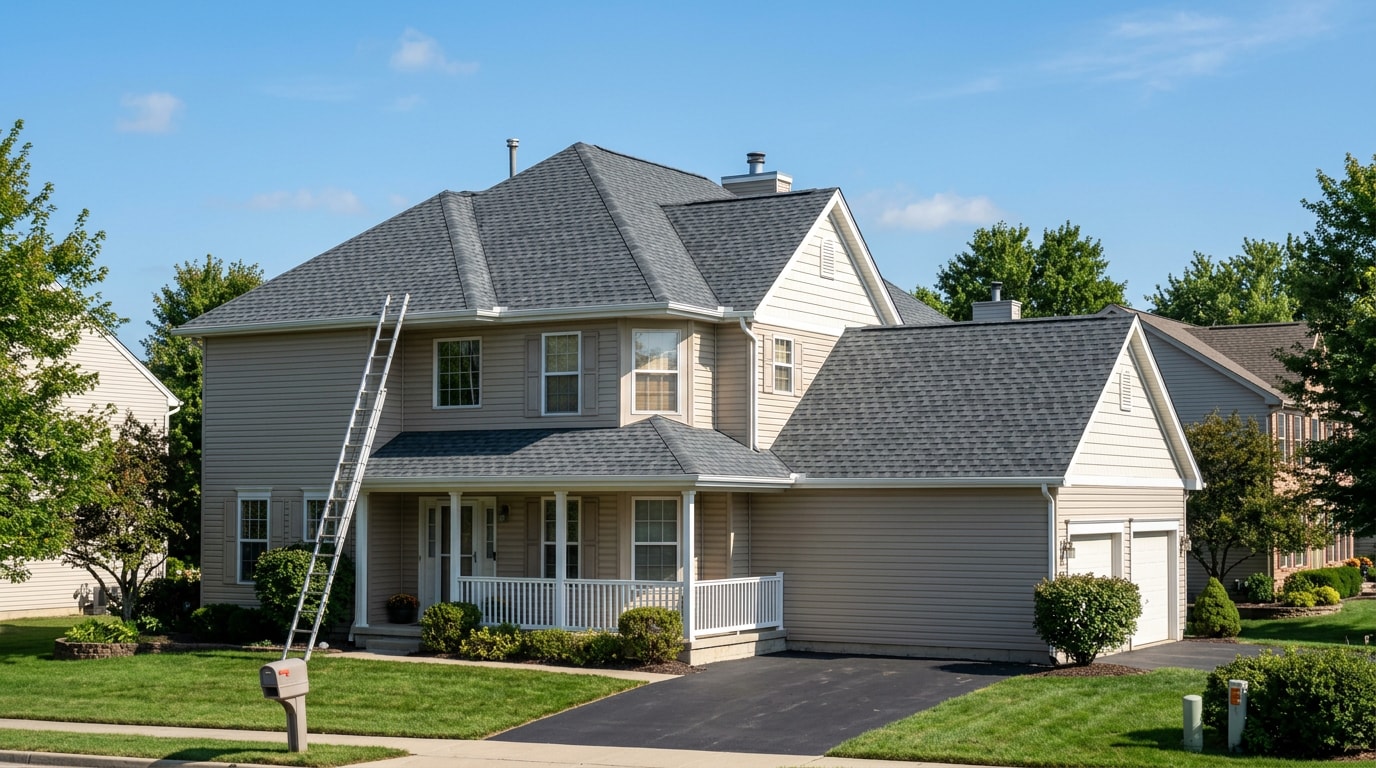
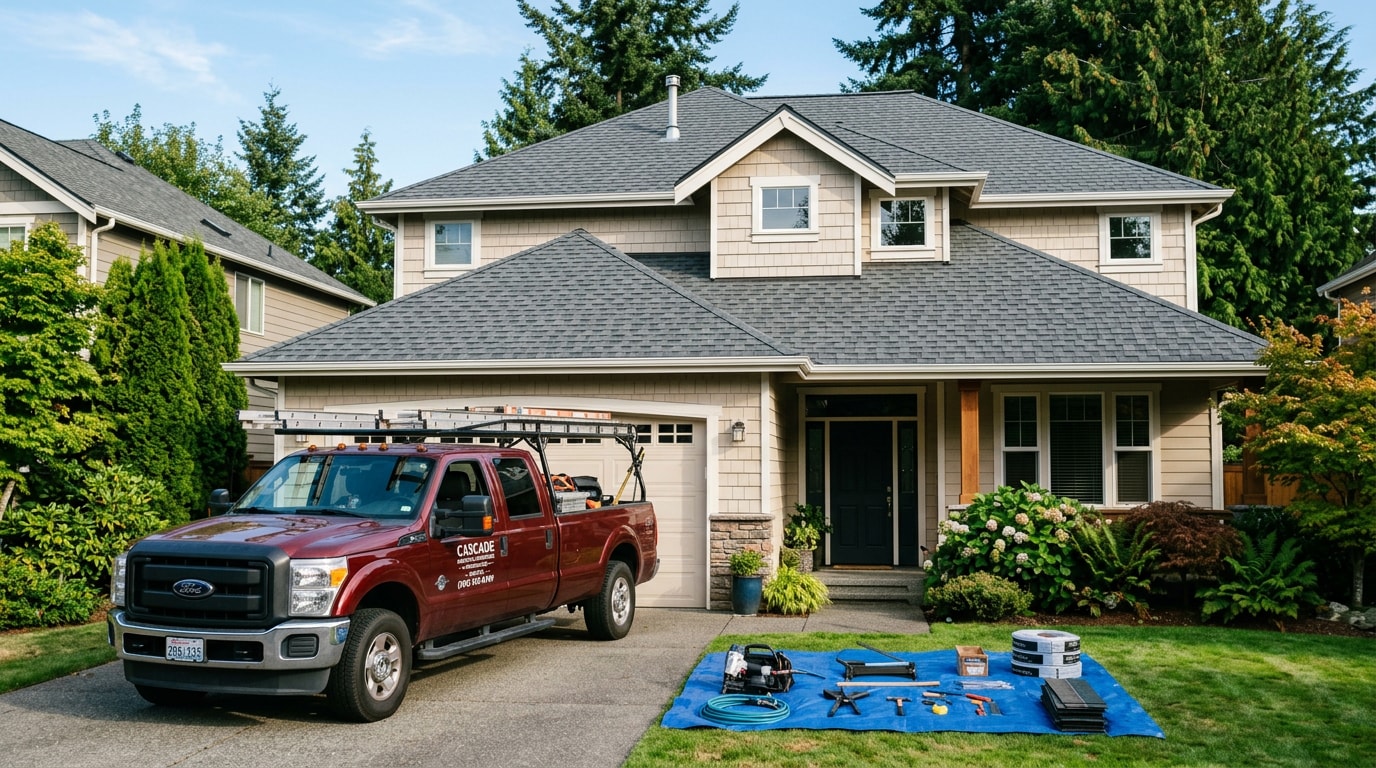
Learning how to grow a roofing company starts with admitting that working harder isn't a strategy. Revenue plateaus, crews feel stretched thin, and the phone stops ringing as often as it used to. The fix is building systems for leads, people, operations, and money that let the business scale without burning you out.
At Black Bear Home Exteriors, we've watched crews across Southwest Washington hit this exact wall, usually right around the second or third truck. The twelve steps below are the order we'd tackle them in if we were starting over.
1. Build a Written Business Plan
A written business plan forces you to define what growth actually looks like instead of just reacting to whatever job comes in next. Two pieces matter most: knowing your market cold, and knowing your numbers.
Research your market first. Study who else is working your service area, what they charge, and where they're weak. A company with slow estimate turnaround or thin reviews leaves an opening for you.
Market conditions vary block by block. A crew competing in Vancouver, WA faces different price sensitivity and competition than one working Kennewick, WA or Longview, WA. Pull separate numbers for each submarket inside the broader Southwest Washington Metro, WA region before you set one regional price.
Then build the financial plan. Set a budget for labor, materials, equipment, and marketing. Forecast revenue against realistic close rates and average job size.
This is different from day-to-day cash management, which we'll cover later. This is about setting targets before the year starts, not reacting to a bank balance mid-project. Review the plan against actuals every quarter and adjust as the market shifts.
2. Fix Your Lead Generation Mix Before Anything Else
No growth plan works without a steady pipeline of qualified work. Before you invest in crews, software, or new service lines, make sure your lead engine is actually producing.
Most roofing companies lean on a mix of channels, and each behaves differently:
- Google Business Profile (organic): Low cost per lead once optimized. Takes months to build momentum; reviews and photos matter more than most owners expect.
- Paid search (Google Ads): Higher cost per lead, faster time-to-ROI. Strong for storm-damage and emergency searches where buyers are ready to act now.
- Door-knocking: Low direct cost but labor-intensive. Works well in storm-affected neighborhoods, with lower close rate per door but high volume potential.
- Referral partnerships: Often the cheapest leads per close. Built on relationships with real estate agents, insurance adjusters, and past customers, but slow to scale.
- Social proof (reviews, before/after photos): Not a standalone channel, but it multiplies the close rate of every channel above.
A company leaning entirely on paid search gets squeezed the moment ad costs rise. One depending only on referrals can't scale fast when a big storm hits. Run two or three channels together, with Google Business Profile as the steady baseline. For a deeper breakdown of pipeline-building specific to larger jobs, see our guide on how to get commercial roofing leads.
3. Speed Up Your Estimating Process
Slow estimates lose jobs. Homeowners and property managers often sign with whoever responds first with a credible number.
Satellite and drone measurement tools now let crews generate accurate roof dimensions without a site visit, cutting turnaround from days to hours. Pair that with standardized proposal templates so your team isn't rebuilding a bid from scratch every time.
Fast, organized proposals signal competence before a single shingle goes down. Homeowners comparing three bids tend to trust the one that showed up fastest and looked the most professional, not necessarily the cheapest. A documented roof inspection process also gives your estimators a consistent checklist to work from on every job, so quality doesn't depend on who happens to be on the roof that day.
4. Hire Ahead of Demand
A roofing company can only grow as fast as its crews can keep up. Treat hiring as an ongoing priority, not something you scramble to fix after a crew quits mid-project.
Build real career paths: lead installer, foreman, crew supervisor. Skilled workers stay when they can see a future at your company instead of jumping for fifty cents more an hour.
The labor math backs this up. The median annual wage for roofers was $55,440 in May 2025 , and employment of roofers is projected to grow 5 percent from 2025 to 2035, faster than the average for all occupations , according to the U.S. Bureau of Labor Statistics. That growth means every other roofing company in your market is chasing the same applicants. Move fast, run background checks, and still close out the hiring process within days, not weeks.
5. Build a Culture Worth Staying For
Culture isn't a soft add-on. It directly affects whether good roofers stick around or walk after one bad season. Companies that invest in culture typically see lower turnover, which means less time and money spent retraining new hires every few months.
Strong team collaboration starts with consistent communication: regular meetings, clear feedback loops between crews and office staff, and informal moments where workplace friendships can form.
When crew members feel heard, morale improves, and that shows up in fewer callbacks and better workmanship. Open channels for raising safety concerns or scheduling conflicts prevent small frustrations from turning into resignations.
6. Put a Crew Management System in Place
One crew can run on memory and a group chat. Three or more crews running at once cannot. This is typically where a roofing company needs a real management system, not just good intentions.
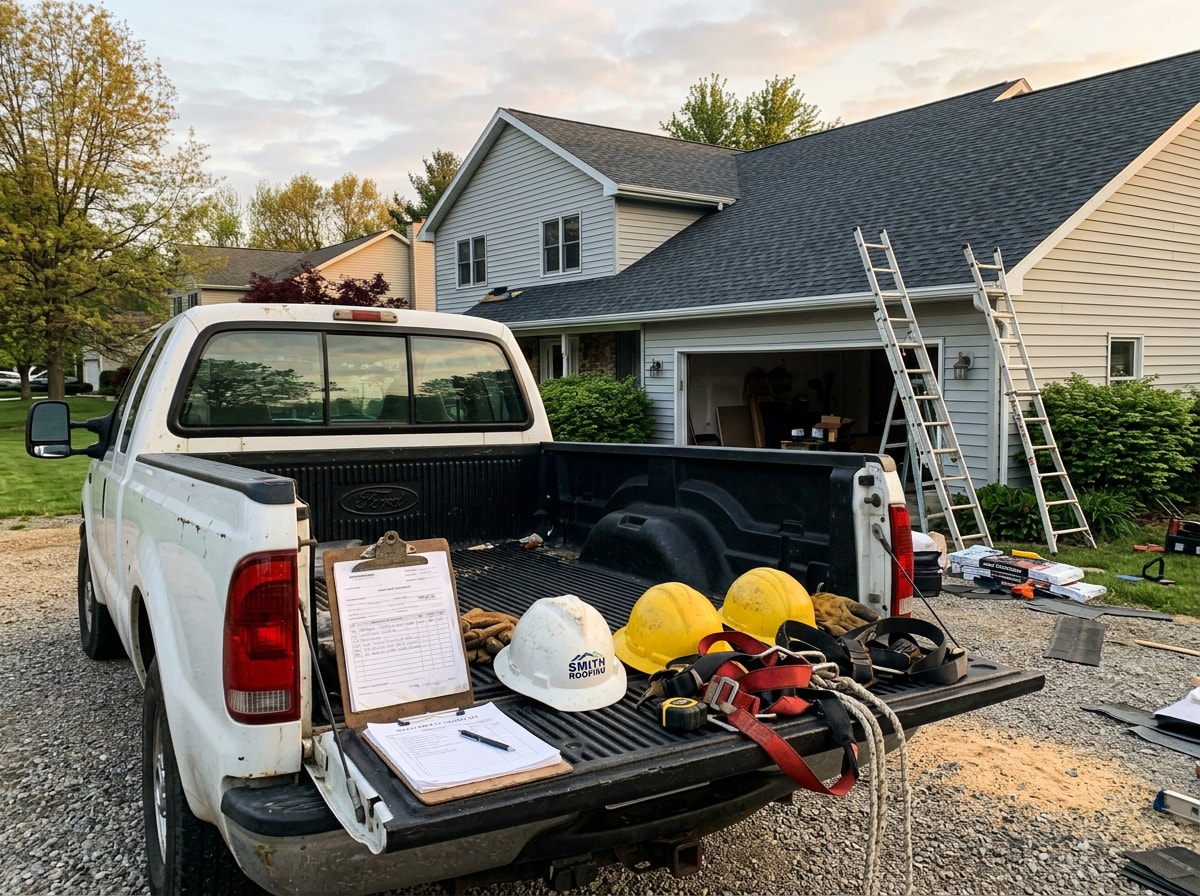
Assign a foreman to each crew so there's a single point of accountability for quality and schedule on every site. Use digital scheduling so the office always knows which crew is where, and can react fast when a job runs long or weather forces a reshuffle.
Track squares installed per day per crew. This data shows which crews are underperforming, which need more training, and which are ready to lead a second team. Without this visibility, growth usually means more chaos, not more profit.
7. Run Operations on Software, Not Sticky Notes
Growth exposes every inefficient process a company has been quietly tolerating. Standardized workflows and the right software let a roofing company take on more volume without the office becoming the bottleneck.
Roofing-specific software for estimating, invoicing, scheduling, and customer tracking replaces the spreadsheets that work fine for one crew but fall apart at five. A roofing CRM keeps customer history, warranty details, and follow-up reminders in one place instead of scattered across an inbox.
Project management tools give owners visibility into job profitability in real time, not just at month-end. Automated scheduling cuts the back-and-forth of manually assigning crews, freeing office staff to focus on sales and customer service instead of logistics.
8. Decide Your Storm Strategy
Every growing roofing company has to answer a strategic question: chase storms, build retail and recurring revenue, or blend both. This decision shapes crew staffing, marketing spend, and how far your trucks travel.
| Storm Chasing | Retail / Recurring Revenue | |
|---|---|---|
| Revenue pattern | Spiky, high-volume after events | Steady, predictable |
| Travel/overhead | Often requires a travel radius and temporary crews | Localized, lower travel cost |
| Marketing need | Rapid-response door-knocking, storm leads | Long-term local SEO, referrals |
| Risk | Tied to insurance restoration volume and weather | Slower growth but more stable |
A blended approach, a core local crew handling retail and maintenance work with one storm-ready crew that can mobilize within a set radius, gives many companies the best of both. The NOAA NCEI Storm Events Database is a free, searchable record contractors can use to gauge how often severe weather actually hits a given county before committing marketing dollars to a storm-chasing model.
9. Learn Insurance Restoration the Right Way
Insurance restoration work can be one of the most profitable segments of roofing if a company learns the process properly. That means understanding the claims process from the initial inspection through adjuster negotiation to final payout.
Thorough documentation of storm damage, often using estimating software like Xactimate, strengthens every claim and speeds up approval. Building genuine adjuster relationships over time, not adversarial ones, produces smoother negotiations and fewer disputed line items.
This is a specialized skill set. The National Roofing Contractors Association's roofing guidelines are a solid reference on industry standards before a company leans heavily into restoration work. Companies new to insurance work should expect a learning curve. A rushed roof replacement quote or a skipped documentation step is a common, costly mistake.
10. Make Customer Experience Your Growth Engine
Service quality is the single most recurring theme among roofing companies that grow successfully, because referrals and repeat business cost far less than new lead generation. A homeowner who had a great experience becomes a walking advertisement. One who didn't becomes a warning to the neighbors.
Technology helps here too. Appointment reminders and real-time job tracking keep customers informed without extra phone calls, and a clear workmanship warranty builds trust before the sale even closes.
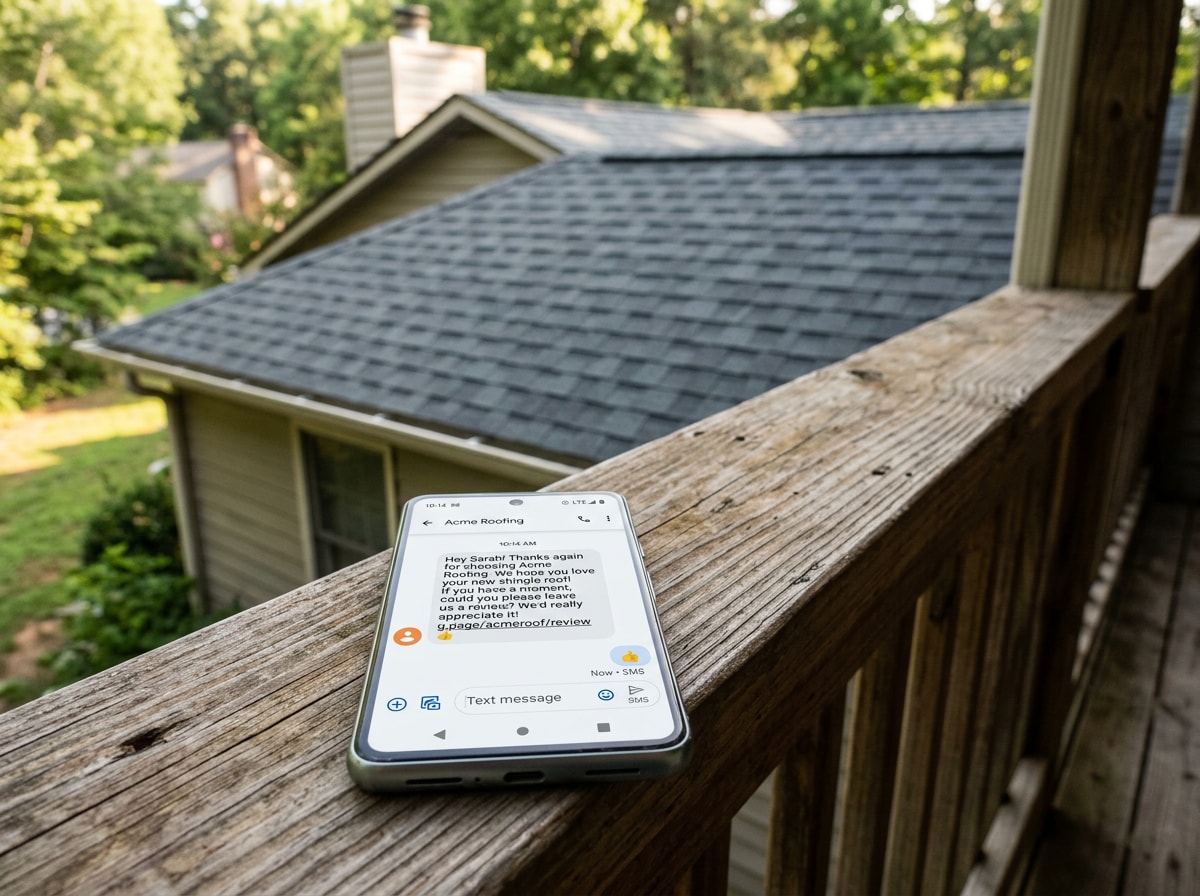
Collecting feedback through post-job surveys and direct review requests turns satisfied customers into visible proof for future leads. Occasional check-ins with repeat customers can surface problems before they show up in a bad review.
11. Expand Into Adjacent Services
Adding adjacent services opens new revenue streams without needing to find entirely new customers. Existing clients are usually the easiest ones to sell additional work to.
Maintenance plans covering periodic inspections, minor repairs, and gutter cleaning create recurring revenue and keep a company in front of customers between major replacements. They also catch small problems, like minor leaks or damaged flashing, before they turn into expensive claims.
24/7 emergency service differentiates a company instantly in markets where most competitors only work standard hours. A dedicated emergency roof repair line, promoted on your website and truck signage, captures urgent calls that would otherwise go to whichever competitor answers first. For companies ready to round out a full exterior offering, browse the complete roofing contractor services list to see which adjacent lines make sense next.
12. Protect Your Margins and Cash Flow
Margin protection and cash-flow discipline separate roofing companies that scale sustainably from those that grow fast and then collapse under their own overhead. Many owners come from a trade background, not a finance one, and that gap is a common reason growth stalls or reverses.
Price for profit, not just to win the bid. That means understanding true job costs, including labor, materials, waste, and overhead, before quoting a number. Accounting software built for contractors tracks job costing automatically instead of relying on guesswork at tax time.
Budgeting for slow seasons matters as much as chasing peak-season revenue. The U.S. Small Business Administration's guide to managing your finances is a useful starting reference for owners building this discipline for the first time, especially around separating cash-method bookkeeping from the fuller accrual picture.
Ready to put these systems to work instead of just reading about them? Get in touch with our team or visit the Black Bear Home Exteriors homepage to see how we structure crews, estimates, and service lines across Southwest Washington. If you're pricing out a roof replacement as part of your own growth math, our breakdown of how much a roofing square costs in 2026 is a useful companion read.
FAQ
What marketing strategies are most effective for roofing businesses?
Local SEO, paid search, and active networking produce the most consistent results. A strong Google Business Profile combined with paid search for urgent jobs, plus referral relationships with agents and adjusters, covers most of what effective roofing marketing requires.
How can I ensure my roofing business is financially healthy?
Monitor cash flow weekly, not monthly. Work with an accountant on tax planning throughout the year instead of scrambling each spring. Consistent cash flow monitoring catches problems while they're still cheap to fix.
How fast can a roofing company grow?
Growth speed varies, but companies with strong systems for lead generation, hiring, and operations can sometimes double revenue within a year or two. Growing too fast without the crew management and financial controls to support it often backfires, so scaling should stay deliberate, not reckless.
How do I grow my roofing company without adding more overhead?
Focus on operational efficiency first: tighten estimate turnaround, improve close rates, and get more production out of existing crews before hiring more staff. Better systems, like scheduling software and standardized workflows, often reduce overhead while increasing output.
What's the biggest mistake roofing company owners make when scaling?
Hiring crews or buying ads before the business has the systems to support them. Extra capacity without a crew management system, a financial plan, or a documented sales process usually creates quality problems and cash-flow stress faster than it creates profit.
How many lead sources should a growing roofing company run at once?
Two or three working at the same time is typically the sweet spot. Relying on a single channel, whether that's paid search or referrals alone, leaves the business exposed the moment that one channel slows down or gets more expensive.