Yes, most reputable roofing companies finance new roofs, either through an in-house payment plan or a partnership with a third-party lender. Not every contractor offers this, and terms vary widely, so it's worth confirming financing availability during your estimate before you commit to a project. This guide breaks down exactly how those plans work, what lenders check before approving you, and whether financing makes sense for your roof.
Do Roofing Companies Offer Financing?
A new roof is one of the largest home expenses most people face, and few homeowners can pay for one out of pocket without some planning. Roofing companies know this, which is why financing has become a standard part of the sales process rather than a rare perk.
If you're comparing your options, our roofing contractor team can walk you through what's available for your project, or you can get a free estimate and ask about financing directly.
How Roofing Companies Offer Financing
Contractors that offer financing typically use one of two models. They either fund and manage the plan themselves, or they partner with an outside lender that handles approvals and payments. Some companies offer both and let homeowners pick whichever fits their credit profile and timeline.
In-House Financing
In-house financing means the roofing company extends credit to you directly, sometimes through an informal arrangement with a local bank rather than a national lending platform. Because the contractor controls the terms, in-house plans can be more flexible on approval requirements than a big third-party lender.
That flexibility comes with a catch. Direct financing is less common industry-wide. It requires the contractor to have real financial stability and cash reserves to carry the loan. Smaller or newer companies rarely offer it for that reason.
Third-Party Financing
Third-party financing is the more common setup. The roofer partners with a lending company that handles the credit check, funding, and monthly payments, while the contractor completes the installation.
These partnerships often include promotional perks like a 0% interest period for a set number of months, though qualifying usually means meeting stricter credit standards than an in-house plan. The lender assumes more risk than the contractor does, so it screens applicants more carefully.
| Financing Type | Who Approves You | Credit Flexibility | Typical Speed |
|---|---|---|---|
| In-house | The roofing company | Often more flexible | Fast, but limited to that contractor |
| Third-party lender | An outside finance company | Usually stricter | Fast, but standardized underwriting |
Beyond private lenders, homeowners have a government-backed option worth comparing. HUD's Title I Property Improvement Program can be used to finance large and small improvements, including alterations, repairs, and site improvements on single-family homes , through HUD-approved private lenders. For a single-family home, the maximum loan amount is $25,000 with repayment terms up to 20 years . It's a program most roofing-financing guides skip entirely, but it's worth asking a lender about if a contractor's in-house or third-party rates don't fit your budget. You can find HUD's Title I program details directly on HUD.gov.
Types of Roof Financing to Consider
Contractor-arranged plans aren't the only route to paying for a new roof. Homeowners routinely finance roofing work through personal loans, home equity products, or a mix of both, sometimes bypassing the roofer's financing offer entirely.
Personal Loans
A personal loan for roof work is unsecured. Approval is based on your credit and income rather than your home's value. You can typically use the funds for roofing or anything else, and there's no lien placed on your property.
The trade-off is speed versus cost. An unsecured roof loan usually funds faster than a home-equity product, but interest rates tend to run higher since the lender has no collateral backing the loan.
Home Equity Loans and HELOCs
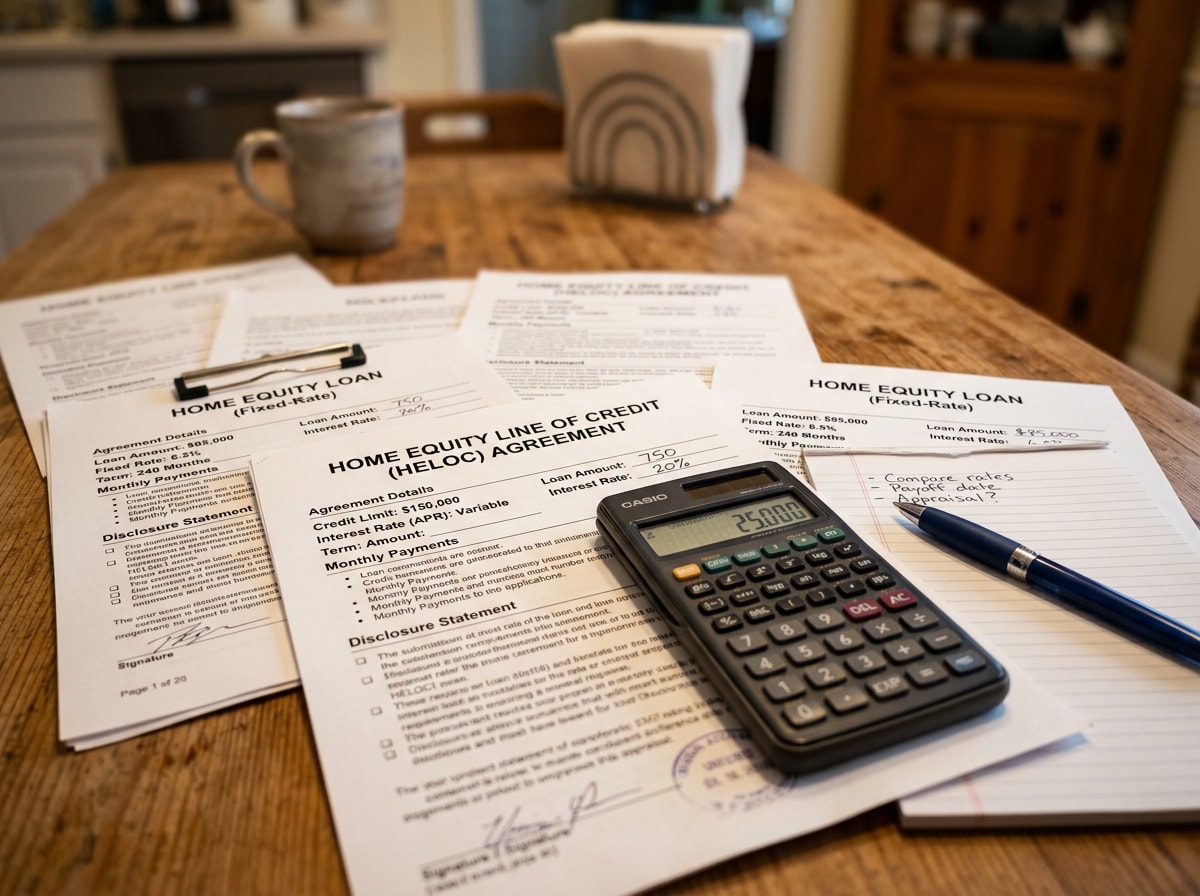
A home equity loan gives you a lump sum repaid on a fixed schedule. A HELOC (home equity line of credit) works more like a credit card you can draw from as needed. Both borrow against equity you've built in your home, and both typically carry lower interest rates than personal loans or contractor financing.
The catch is risk. These products use your home as collateral, so if you cannot pay back the loan, the lender could foreclose on your home . That risk is worth weighing carefully before you sign, and the Consumer Financial Protection Bureau's home equity loan overview is a good place to see how it's structured.
| Financing Option | Secured by Home? | Typical Rate Range | Best For |
|---|---|---|---|
| Personal loan | No | Higher | Fast funding, smaller projects |
| Home equity loan | Yes | Lower, fixed | Large projects, predictable payments |
| HELOC | Yes | Lower, variable | Ongoing or phased exterior work |
If you're weighing home equity against contractor financing, our roof replacement page breaks down what a full replacement typically involves so you can size the loan correctly.
How to Qualify for Roofing Company Financing
Lenders generally evaluate three things when you apply:
- Stable income or employment to show you can afford the monthly payment
- Credit history, including your score and any past delinquencies
- Debt-to-income ratio (DTI), meaning how much of your monthly income already goes toward debt
Credit score requirements vary a lot by lender. Some programs accept scores well below what you'd assume, though usually with a higher interest rate or a required co-signer attached. On the DTI side, many lenders treat a debt-to-income ratio around 43% as a rule of thumb rather than a hard cutoff, so a slightly higher ratio doesn't automatically disqualify you, it usually just means higher costs.
The application process itself is straightforward:
- Get a written estimate from the contractor.
- Compare financing offers from the contractor and outside lenders side by side.
- Submit income and identification documents for underwriting.
Most homeowners can complete this within a day or two. If you're ready to see numbers specific to your roof, request a free estimate and ask what financing programs are currently available.
Is Financing a New Roof a Good Idea?
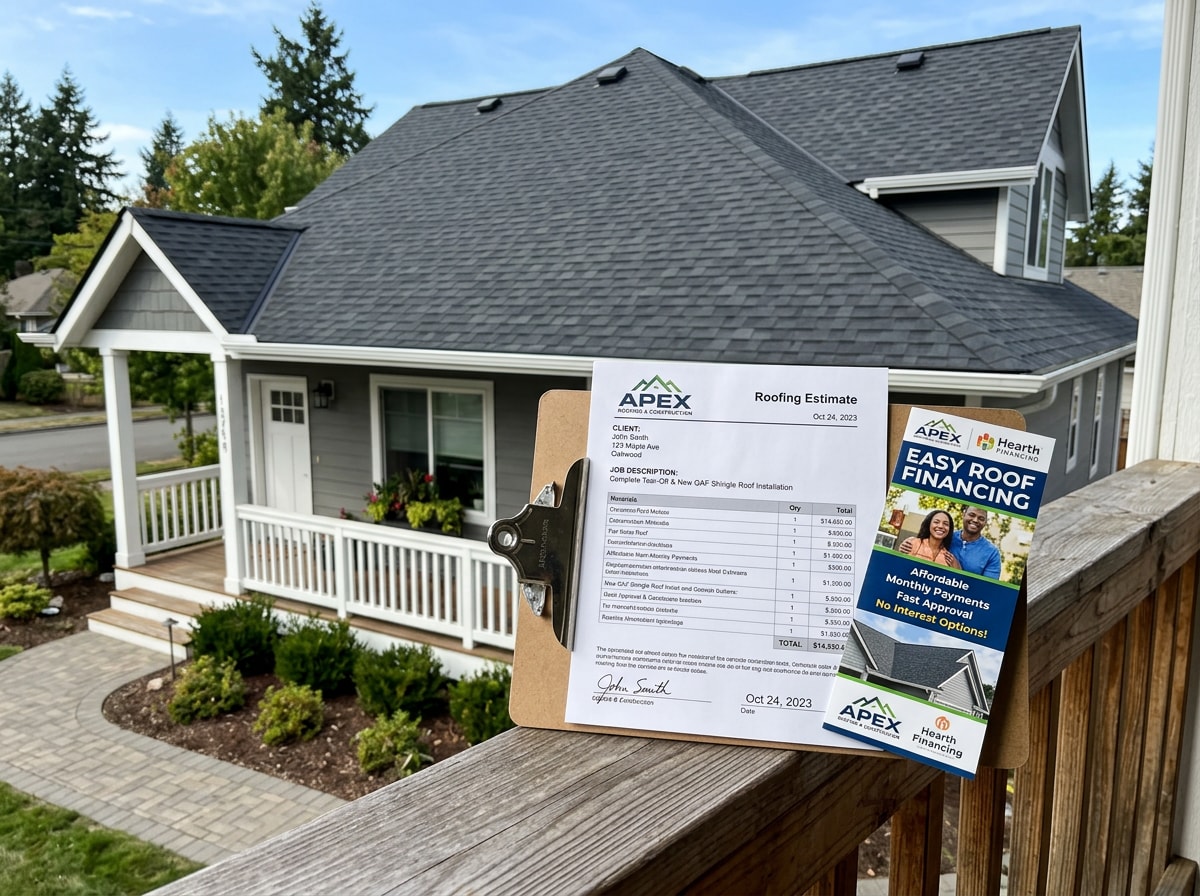
For most homeowners, yes, financing a roof makes sense provided the terms are reasonable. It spreads a large cost over manageable monthly payments, preserves your savings for emergencies, and often makes a higher-quality roofing system affordable that a cash budget wouldn't stretch to cover.
Before committing, weigh the interest rate, the length of the repayment term, and whether early repayment carries a penalty. Pay close attention to "0% financing" offers, too. Some bake a dealer fee into the project price to cover the promotion, which means you could pay more upfront than a straightforward low-APR loan, even though the interest line reads zero.
Here's a simplified example on a $15,000 roof, meant to illustrate the trade-off rather than predict your exact quote:
| Scenario | Total Cost |
|---|---|
| 0% offer with a 5% dealer fee baked in | $15,750, no interest |
| 7.9% APR loan over 5 years, no dealer fee | Roughly $17,900 over the full term |
| Same 7.9% loan, paid off in 2 years | Roughly $16,250, closer to the 0% offer |
The math depends entirely on your repayment timeline, so it's worth running both scenarios before deciding. Across projects we've priced out for homeowners in Vancouver and Longview, the ones who save the most are usually the ones who ask the contractor for the exact APR and fee breakdown in writing, then compare it against a five-minute rate check with their own bank, before signing anything.
Delaying a roof that's already failing to avoid financing often backfires. Water intrusion and structural damage tend to escalate quickly, and the eventual repair bill is frequently higher than the financing costs would have been. If your roof is showing wear, a roof inspection can tell you how much time you actually have. Choosing the right materials also affects your total cost, and our guide to cost-effective roofing materials is a useful next read before you lock in a loan amount.
Ready to see what financing looks like for your project? Get a free estimate or visit our homepage to see the full range of exterior services we offer.
FAQ
Do all roofing companies offer financing?
No. Many do, but availability and terms vary by company and lender, so always ask directly during your estimate rather than assuming it's included.
Can I get roof financing with bad credit?
Yes, some programs accept lower credit scores, though terms often include higher interest rates or a required co-signer. Local or state home-repair assistance programs may also be worth exploring.
Is financing only available for a full roof replacement, or also repairs?
Financing isn't limited to full replacements. Many lenders and roofing companies also extend financing to major repairs, depending on the project size and the specific lender's policies.
Does getting approved for roof financing take a long time?
Approval is usually fast once your application is submitted, often within one to two business days. Work can typically begin shortly after you're approved and sign off on the terms.
Is financing a roof better than using a credit card?
Generally, yes. Roof financing plans usually carry lower interest rates and more structured repayment terms than high-interest credit cards, making them the better choice for a large expense like a new roof.
How long are roof financing terms usually?
Most contractor and third-party roof loans run three to ten years. Home equity loans can stretch longer, sometimes up to 20 years, which lowers the monthly payment but increases total interest paid.
Is interest on a roof loan tax deductible?
Sometimes, but only under specific conditions. Interest on home equity loans and HELOCs used for home improvements, including a roof, may be deductible, while unsecured personal loan interest generally is not. Check with a tax professional before assuming either way.