Yes, you can paint metal roofing, but only if the panel is still structurally sound, the old finish is properly prepped, and repainting won't void an active manufacturer warranty. Skip any one of those checks and a coating that looked great in June can be peeling by next winter. This guide walks through real costs, which roof types don't take paint well, and the exact steps that keep a repaint job from turning into an expensive redo.
Check Your Warranty Before You Touch a Brush
Most factory-finished metal roofs carry two separate warranties: one for the paint finish and one for the metal panel underneath. The first thing to check is the current warranty, because painting over a warrantied panel will void it.
The finish warranty covers fading, chalking, and peeling of the factory coating, most often SMP or PVDF (sold under names like Kynar 500). The two most common factory-applied coatings for metal roofs are SMP (silicone modified polyester) and PVDF (polyvinylidene fluoride, often sold as Kynar 500). These finishes aren't rated equally: a factory Kynar 500 PVDF finish typically holds color and gloss for 30 or more years with minimal fade , and independent lab testing behind that durability follows a specific industry benchmark. Coating performance is measured against the AAMA 2603, 2604, and 2605 specifications, which use accelerated and real-world testing in South Florida to rate how well a finish resists fading, chalking, and gloss loss. You can review those testing standards through the National Coil Coating Association, the trade group that represents coil-coating manufacturers.
Pull your original invoice or panel spec sheet, find the manufacturer and coating line, and confirm whether that warranty is still active before doing anything else. If you're not sure how to read the paperwork, a quick roof inspection can confirm both the coating type and the panel's real condition before you commit to a repaint.
Is Your Roof Even a Good Candidate?
A roof between 15 and 25 years old, with intact panels and no active leaks, is usually the best repaint candidate. The sweet spot is a roof that has outlived its factory finish warranty but still has another two or three decades of structural life ahead of it.
Paint is cosmetic protection, not a repair. What paint cannot do is restore structural integrity, stop rust that has already eaten through the panel, or fix failed fasteners.
Metal roofs are designed to last up to 50 years , but that number assumes the substrate stays sound underneath the finish. If you're seeing rust-through, backed-out fasteners, or active leaks, you're really weighing repaint versus replace, and replacement is usually the right call once structural damage shows up.
A Pacific Northwest note: at Black Bear Home Exteriors, the roofs we get called out to inspect across Longview, Vancouver, and Kennewick are often structurally fine but coated in moss and algae on shaded, low-slope sections, something drier-climate guides rarely mention. That growth has to be treated and fully removed before any cleaning or priming starts, or it just grows back under the new coat. If you're in our Southwest Washington service area and unsure whether moss has done more damage than it looks like, that's worth a professional look before you buy a single gallon of paint.
Repaint vs. Replace: What It Actually Costs Over Time
Upfront price is not the number that matters. Cost per year of service is. Repainting tends to cost less than a full new roof on the surface, but the full picture requires weighing that cost against the value and longevity you're actually getting.
| Option | Typical Cost (2,000 sq ft roof) | Expected Lifespan | Approx. Cost per Year |
|---|---|---|---|
| Repaint | $2,000-$6,000 | 7-15 years | $270-$550/year |
| Full Replacement | $16,000-$32,000 | 30-50 years | $450-$640/year |
A field-applied paint job typically holds up 7 to 15 years before fading, chalking, or peeling, depending on the paint system, prep quality, and the original factory finish underneath. These figures are general ranges, not a quote. Actual pricing depends heavily on your roof's pitch, access, and current condition, which is exactly why we recommend a written estimate before budgeting either direction.
A full roof replacement costs more upfront but resets the clock with another 30 to 50 years of service and a new factory warranty, so a new roof can actually be the better long-term value when you break it down per year. If your panels are structurally healthy, repainting wins on near-term cost. If your roof is aging out, replacement often wins over its full life. See our roof replacement services page for what that process involves, or get a free estimate to compare both options against your actual roof.
Not Every Metal Roof Takes Paint the Same Way
Panel style and base material change both the prep work and the risk involved.
Standing Seam vs. Exposed-Fastener Panels
Standing seam panels have no exposed fasteners, which removes one common failure point. The seams themselves just need a clean, well-adhered surface before coating.
Exposed-fastener roofs need more legwork. Exposed-fastener corrugated or ribbed panels require individually inspecting and re-gasketing every penetration before coating, which can mean 200 to 400-plus fasteners on a standard home, since skipping them lets moisture work under the coating at every screw head. If you're not sure what a proper re-gasketing pass involves or where the fasteners sit on your specific panel profile, our guide on where to screw metal roofing breaks down placement and spacing in detail.
Copper, Stone-Coated, and Galvalume Roofs
Some substrates shouldn't be field-painted at all.
- Copper:
The patina on copper is the point, not a defect, and standard metal roof coatings aren't designed for copper substrates. Paint traps moisture beneath that protective layer and can accelerate corrosion instead of preventing it.
- Stone-coated panels:
The granular surface has poor adhesion for liquid coatings and a sprayer can't reach the irregular profile evenly, so there's no standard field-paint protocol for granular finishes.
- Galvalume: This zinc-aluminum coated steel needs a primer formulated specifically for that surface, or the topcoat peels within a year or two.
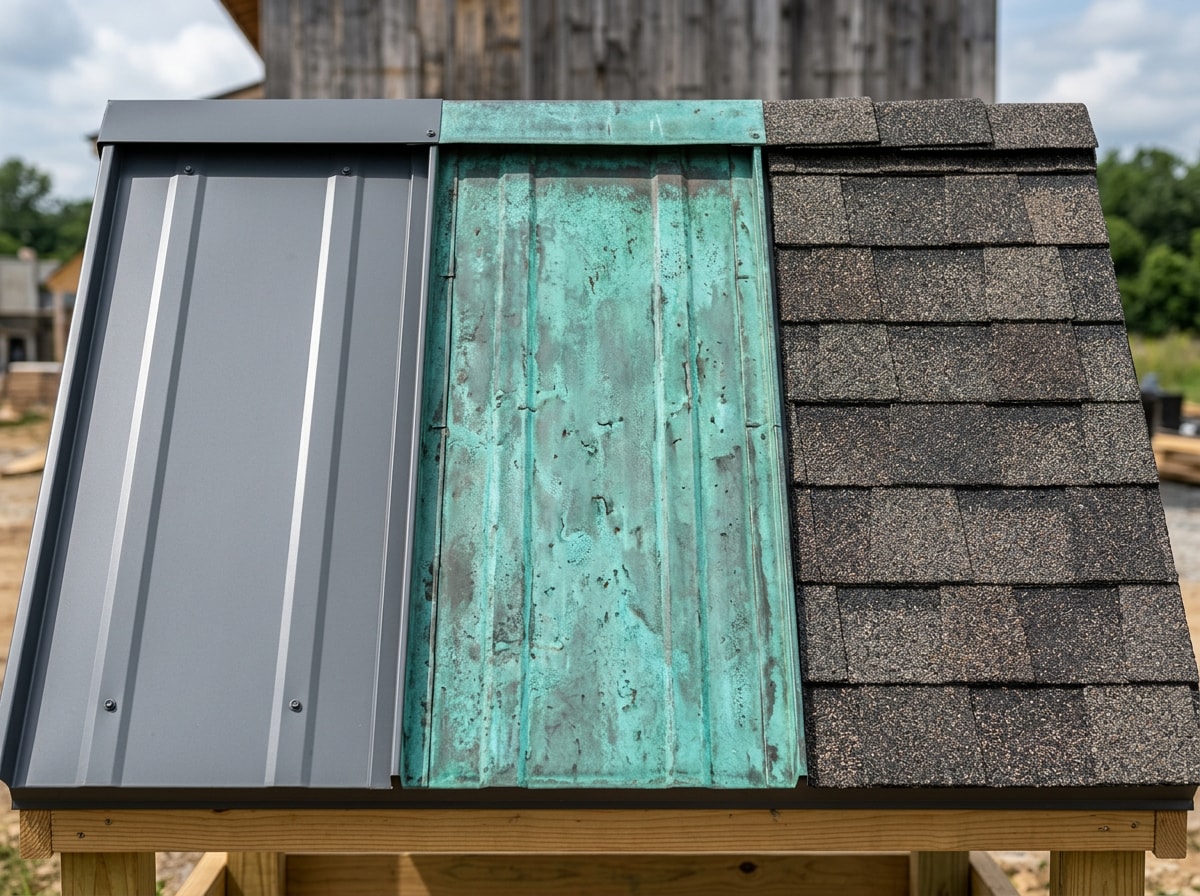
For any of these three, talk to the manufacturer or a coatings specialist before you climb the ladder.
How to Paint a Metal Roof, Step by Step
Once you've confirmed your roof is a reasonable candidate, the process follows a consistent order: clean, prep, prime, then paint under the right conditions.
1. Clean and remove rust. Pressure wash the whole surface to strip loose dirt, chalking, and algae. Wire-brush or sand any rust spots down to bare metal; painting over active rust just seals moisture in and speeds up failure underneath the new coat. Let the roof dry fully before moving on.
2. Prime for your specific substrate. A bonding primer is the step that matters most, since it creates the mechanical bond between an existing baked-on finish and the new topcoat, and skipping it means the new paint peels within a few years. Galvanized steel needs a zinc-compatible primer, bare aluminum does best with a self-etching primer, and carbon steel needs a rust-inhibitive primer whether or not rust is currently visible.
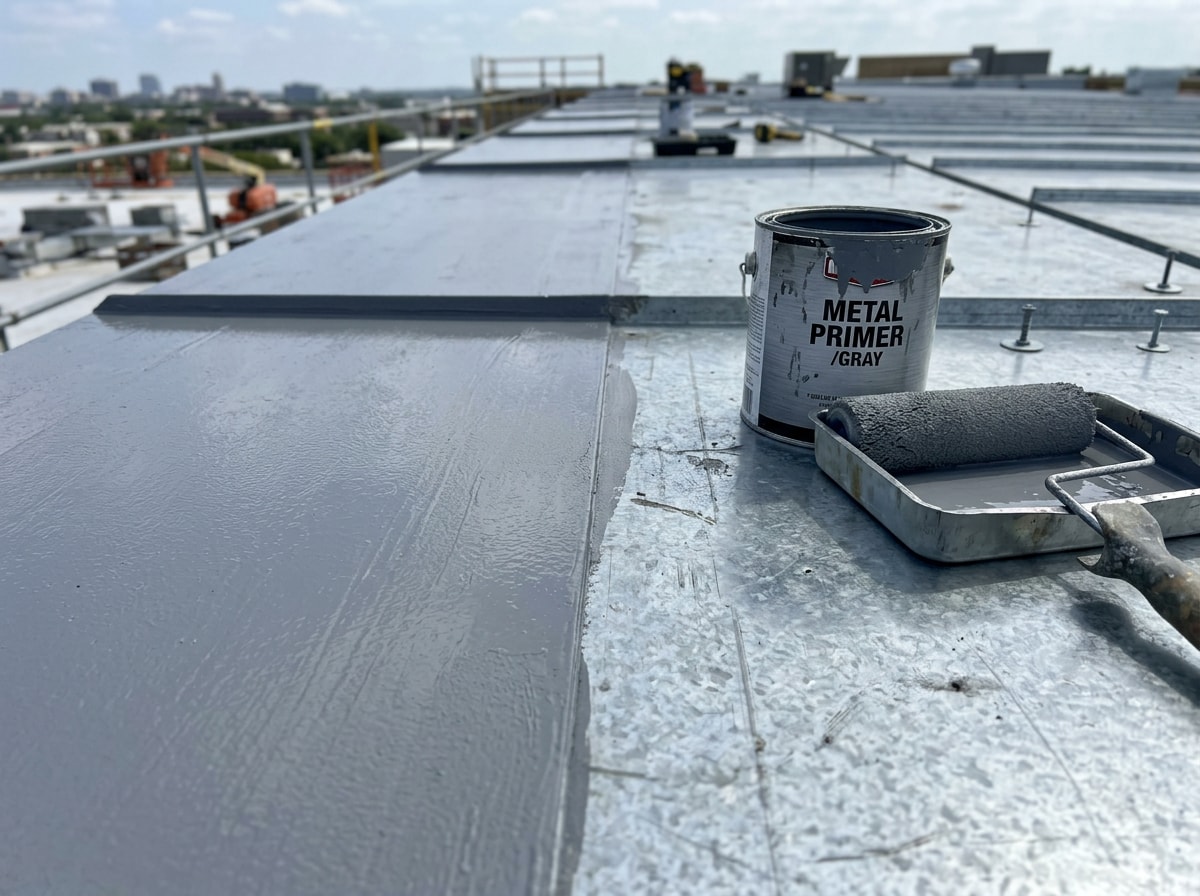
3. Choose a compatible topcoat. Acrylic latex is the most common field-applied choice because it flexes with temperature swings and resists UV fading. Elastomeric coatings add extra waterproofing on older roofs with hairline seams but cost more per gallon. Prep first by cleaning, sanding away rust, washing off mold or mildew, patching holes or cracks, and adding a layer of primer before painting, then wait for warm, dry weather, since latex and oil-based metal paints work best between 50 and 85°F.
4. Apply in the right conditions. An airless paint sprayer applies a clean, even coat on any metal type and gets the job done in a fraction of the time while using less paint than a roller. A roller still works fine on smaller roofs and gives more control near seams and edges. Always check the manufacturer's technical data sheet for exact temperature and humidity ranges, since these vary by product.
Common Mistakes That Cause Early Failure
- Skipping primer. Paint applied directly to bare or rusted metal peels within a season or two.
- Painting over active rust. The rust keeps spreading invisibly under the new coat.
- Painting in the wrong weather. Too hot, too humid, or too close to rain causes poor curing and bubbling.
- Using interior-grade paint outdoors. It breaks down fast under UV exposure and temperature swings it was never built for.
One Add-On Worth Considering: Reflective Coatings
If you're already repainting, a solar-reflective topcoat can lower attic temperatures in the summer. A cool roof has high solar reflectance, meaning it reflects sunlight, and high thermal emittance, meaning it releases absorbed heat quickly, and an ideal cool roof has both. Reflective coating performance is tracked by the Cool Roof Rating Council database referenced in ENERGY STAR's cool roof program, so ask any coating supplier for their CRRC rating before assuming a product qualifies.
DIY vs. Hiring a Professional
DIY painting is realistic for a small, low-slope roof with the right safety gear. Steep or high roofs change that math fast. Metal surfaces get slick when wet or even lightly dusty, and fall protection isn't optional at height. When guardrail, safety net, or personal fall protection systems aren't feasible on a residential roof, OSHA requires a written fall protection plan and specific training instead. Review the OSHA residential fall protection guidance before you plan a DIY job on anything beyond a gentle slope.
Beyond safety, a professional crew brings the right sprayers, harness systems, and experience matching primer to substrate the first time. As a full-service roofing contractor, Black Bear Home Exteriors handles everything from a single coating job to a full roof replacement for homeowners across Southwest Washington. If your roof has any real pitch, or you're unsure about rust extent or fastener condition, get a free estimate before you buy materials.
FAQ
What Type of Paint Is Best for a Metal Roof?
Acrylic latex is generally the best field-applied paint because it flexes with temperature swings and resists UV fading. Elastomeric coatings add waterproofing on older roofs with hairline cracks. Whatever you choose, confirm the primer and topcoat are rated compatible by the same manufacturer.
How Long Will Paint Last on a Metal Roof?
A field-applied paint job typically lasts 7 to 15 years before fading, chalking, or peeling starts, depending on prep quality and climate. Factory PVDF finishes last much longer, often 30 or more years, which is one reason field paint never fully matches a factory finish's lifespan.
Do You Need Primer on a Metal Roof?
Yes. Primer creates the bond between the metal (or existing finish) and the new topcoat, and it inhibits rust underneath the paint. Skipping it is one of the fastest ways to see peeling within the first year.
Can You Paint a Galvanized Metal Roof?
Yes, but the shiny factory surface needs extra prep. Clean and lightly abrade the surface first, then use a primer formulated for galvanized or zinc-coated steel. Skipping that step is the most common reason paint fails to bond on galvanized panels.
Can You Change the Color of a Metal Roof by Painting It?
Yes, a properly prepped and primed metal roof can be painted almost any color. The exception is copper, where the natural patina is functional and shouldn't be painted over, and stone-coated panels, which generally don't accept standard field paint at all.
What Materials Do You Need to Paint a Metal Roof?
A pressure washer, wire brush or sandpaper for rust removal, a substrate-appropriate primer, exterior metal paint, a sprayer or roller, and fall-protection gear cover the core list. Biodegradable cleaner and drop cloths for surrounding areas round it out.