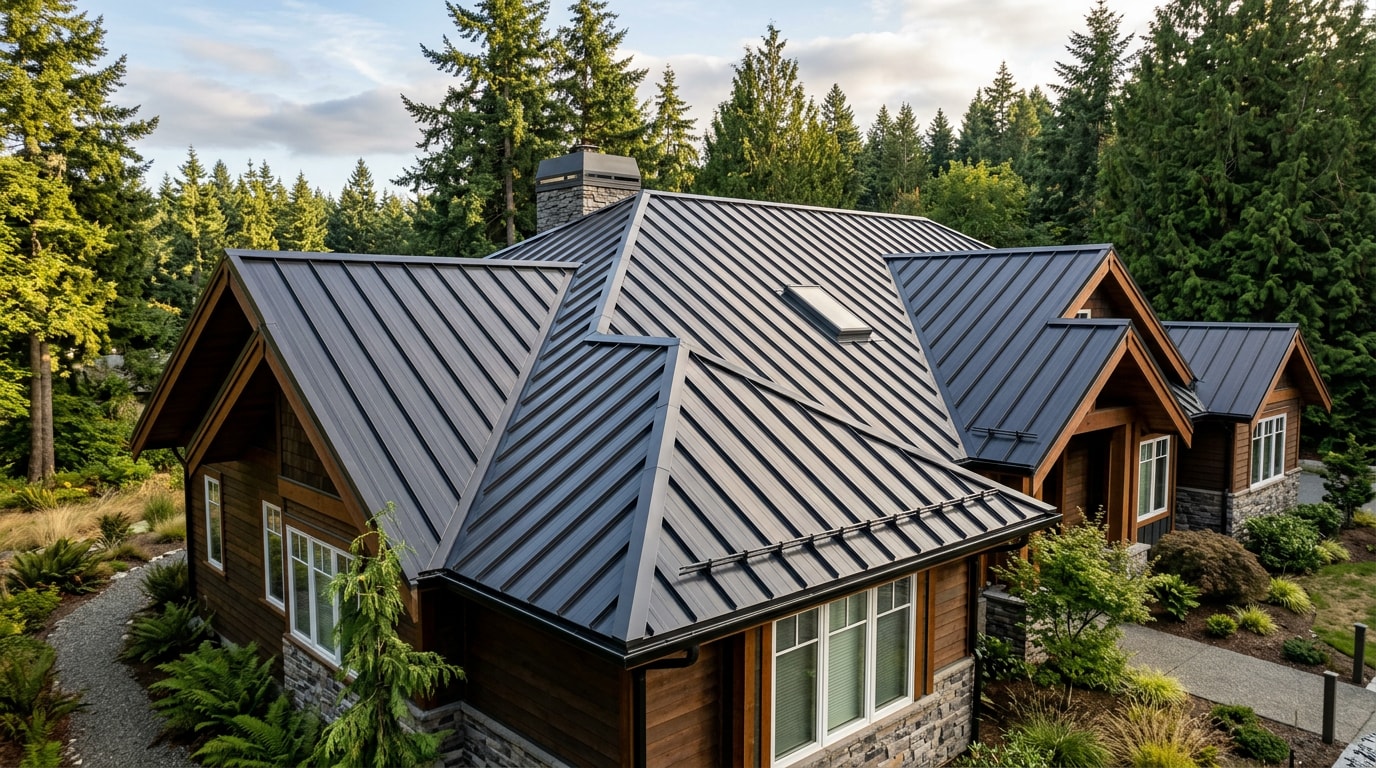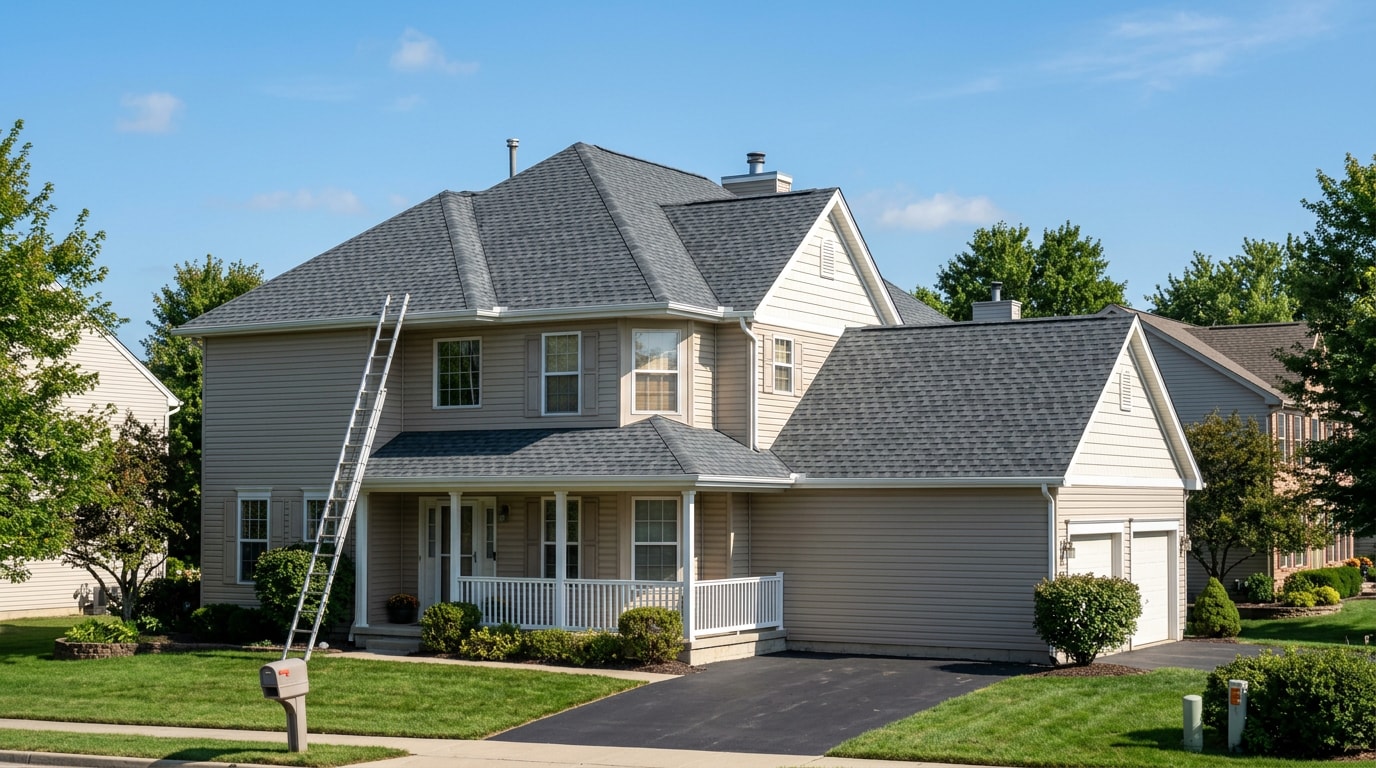
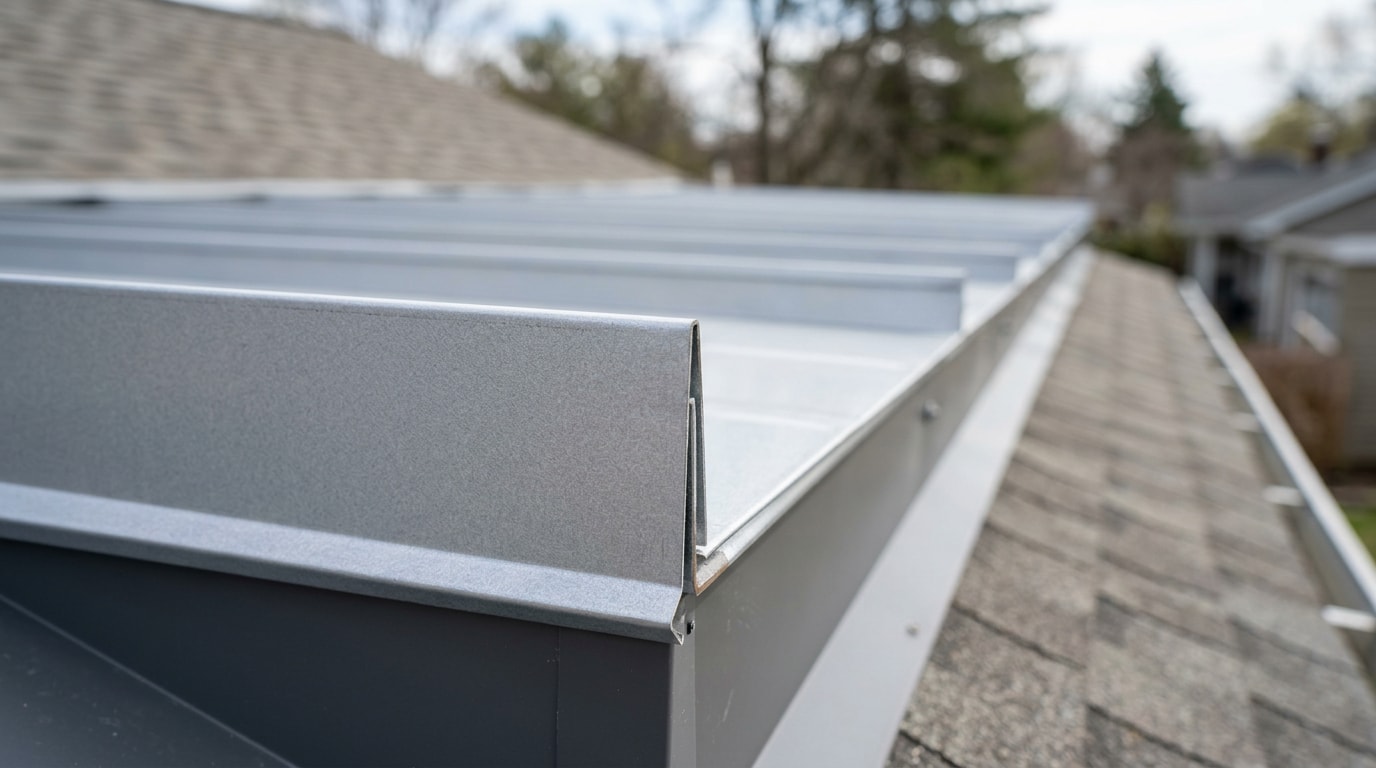
Professionals cut metal roofing with cold-cutting tools, electric shears, aviation snips, and nibblers, matched to the panel's gauge and profile instead of reaching for one blade for every job. Heat-generating tools like abrasive chop saws and plain circular-saw blades are a last resort because friction burns through protective coatings and invites rust at the cut line. Here's exactly which tool goes with which cut, and the technique that keeps a metal roof watertight for decades.
How Do Professionals Cut Metal Roofing? The Quick Answer
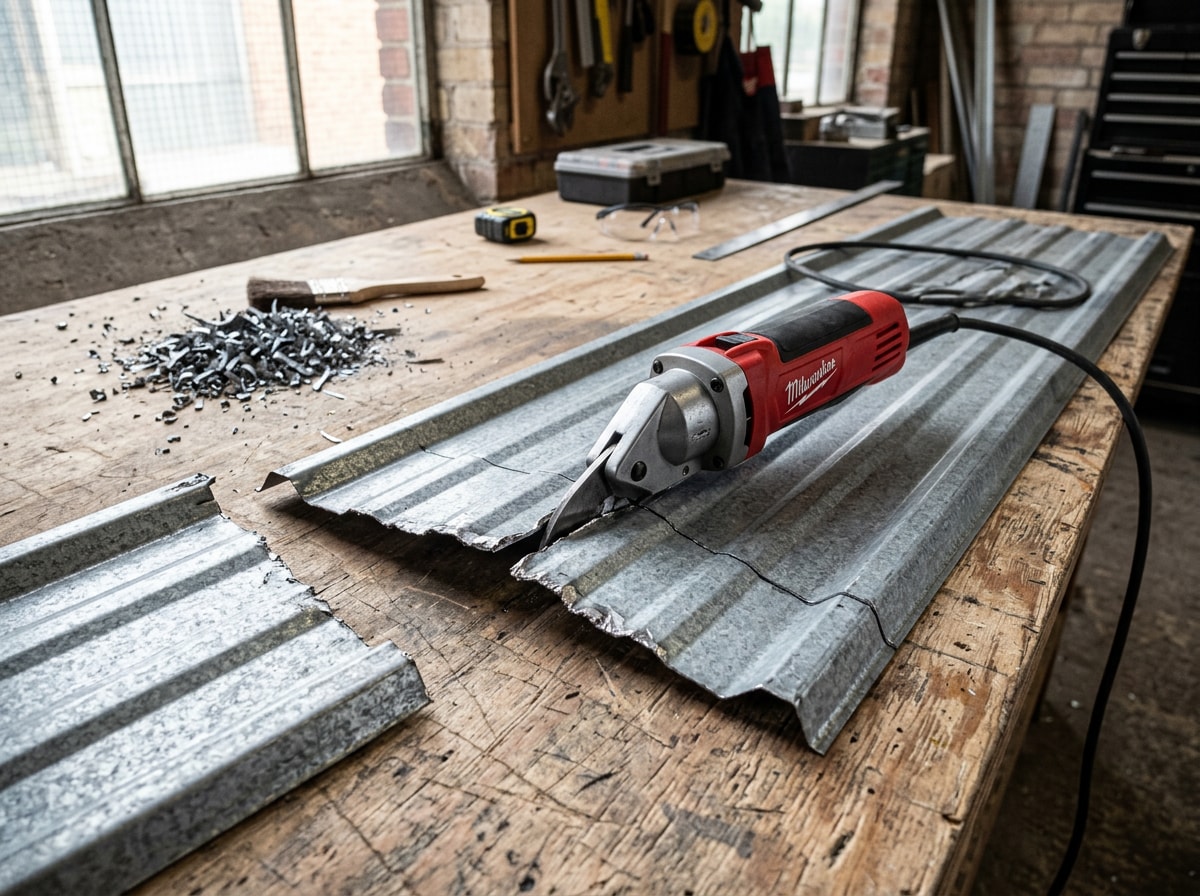
Pros cut metal panels on the ground or on a bench before installation, not balanced on a roof slope. They pick cold-cutting tools, shears, snips, or a nibbler, over anything that generates heat, because heat scorches coatings and leaves a rust-prone edge.
This approach stays the same whether the material is steel, aluminum, or stone-coated steel, and whether the profile is corrugated, standing seam, or flat metal shingle. The target is always a straight, burr-free edge that won't leak or rust once the panel goes on the roof.
Crews at Black Bear Home Exteriors default to electric shears for nearly every full-length panel on a job, keeping a nibbler in the truck for vent boots, pipe collars, and other curved cuts. That split is standard on any metal roofing crew that cuts panels daily rather than once a year.
What Is the Best Tool to Cut Metal Roofing?
There's no single best tool to cut metal roofing. The right pick depends on cut length, panel gauge, and how clean the finished edge needs to be.
| Cut Type | Best Tool | Blade/Tooth Count | Typical Gauge Range |
|---|---|---|---|
| Straight, long runs | Electric shears | N/A (shear action) | 22–29 gauge |
| Trim & detail cuts | Tin snips | N/A (hand shear) | 24–29 gauge |
| Curves & vent cutouts | Nibbler | N/A (punch action) | 18–24 gauge |
| High-volume straight cuts | Circular saw, metal-cutting blade | 40–60 tooth carbide | 18–26 gauge |
| Thick or layered panels | Angle grinder, metal-cutting disc | 60–80 grit disc | 16–22 gauge |
Pros avoid abrasive chop saws, standard wood-cutting blades, and plain abrasive discs. Manufacturer field guidance generally steers installers toward electric nibblers or profile-matched field shears designed specifically for metal roofing panels, since matching the shear to the exact panel profile lets installers cut accurately without distorting the ribs or damaging the painted surface . That same guidance notes high-speed friction cutting tools such as circular saws with abrasive or metal-cutting blades can create heat and metal shavings that damage protective coatings, which is why many manufacturers do not recommend circular saws for field cuts .
Essential Tools for Cutting Metal Roofing
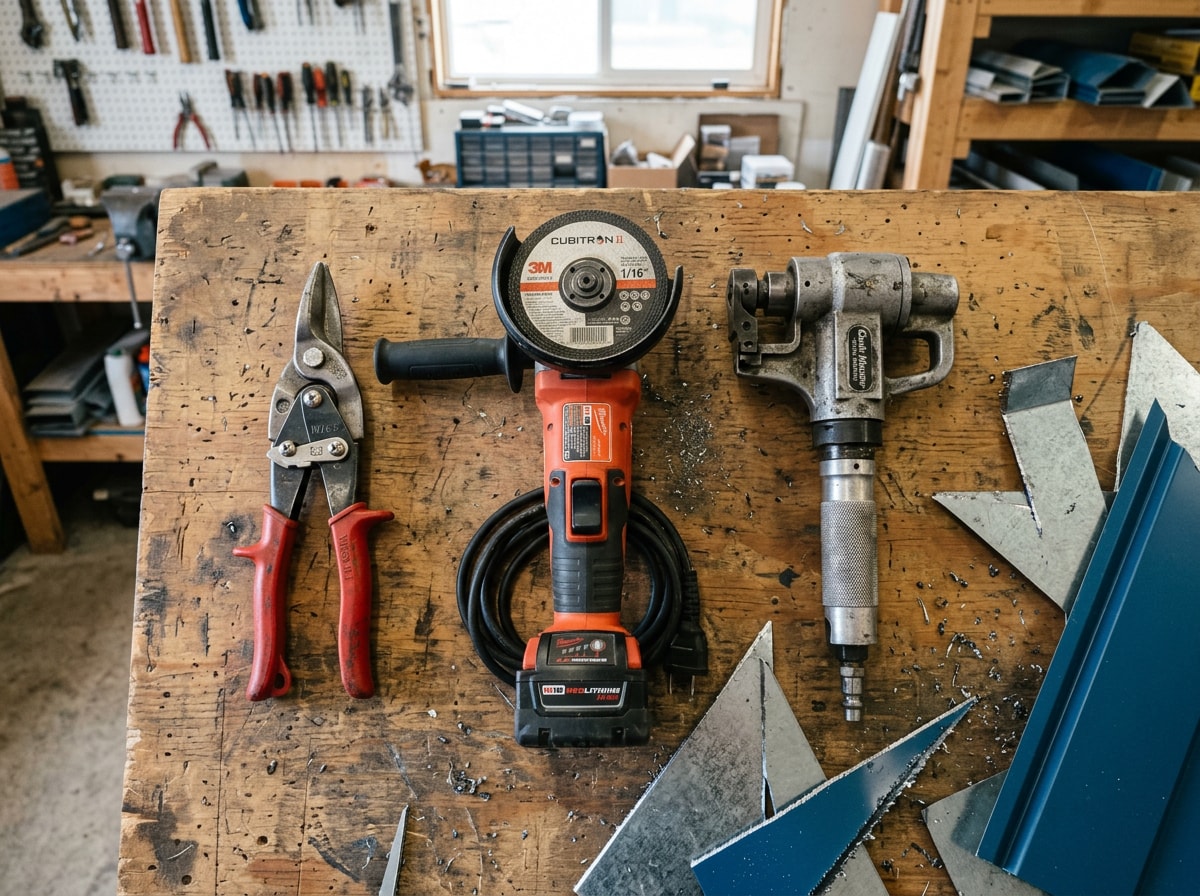
Tool choice, not brute force, separates a clean professional cut from a ragged DIY attempt. A crew planning a full metal roof installation typically carries four or five of these tools on the truck, not just one.
Tin Snips (Aviation Snips)
Tin snips handle small sections, trim pieces, and tight corners where a power tool is overkill. Left-cut, right-cut, and straight-cut versions let a roofer follow a curve or a straight edge without twisting the metal.
Most pros keep all three styles on hand so they're never forcing a snip through a cut it wasn't built for.
Metal Shears
Powered shears handle long, straight runs faster than hand snips and leave a smoother edge with less hand fatigue on big jobs. Pros reach for electric shears when cutting dozens of full-length panels, saving tin snips for shorter trims and tight spots.
Nibbler
A nibbler punches out small bites of metal as it moves, which lets it follow a curve without bending or warping the panel. Pros use it for round vent openings, pipe boots, and other curved cuts where a straight-blade tool would distort the sheet.
Angle Grinder
An angle grinder with a metal-cutting disc cuts fast, but the friction heat can discolor or burn the Galvalume coating along the cut line. To limit that damage, pros make several shallow passes instead of forcing one deep cut, keeping the disc moving so heat never builds up in one spot.
How to Cut Metal Roofing: Step-by-Step Process
Every method boils down to the same core sequence professionals follow on site, whether they're installing a new roof or handling a roof repair.
Preparing the panel:
- Measure and mark the cut line twice before touching a tool. A mismeasured panel can't be un-cut.
- Clamp the sheet to a stable, flat surface so it can't shift mid-cut.
- Position the panel so the offcut piece falls away from the blade, not toward the cutter's hands.
Cutting by profile:
- Corrugated and tin panels: cut with snips or a nibbler along the flat part of the wave, not the raised ridge.
- Standing seam panels: cut in the flat pan, away from the vertical seam, using shears or a saw fitted with a metal-cutting blade.
- Metal shingles: being smaller and often thicker-gauge, these usually call for a nibbler or angle grinder for clean notch cuts.
Gauge matters as much as profile. Thinner 29-gauge stock cuts cleanly with hand snips, while heavier 24-gauge or thicker material needs powered shears or a saw.
How Do Professionals Cut Metal Roofing Differently From DIYers?
The biggest difference is where and how the cut happens. Pros cut cold, never heating the metal with a torch or an overused grinder disc, and they cut on the ground or a bench rather than balanced on a roof slope.
Panels go face-down or face-up depending on the tool, protecting the finished coating from scratches. Same-day cleanup is standard too: metal shavings left on a roof rust quickly and can scratch the coating as wind moves them around.
Pros also reach for profile-matched tools rather than general-purpose ones. Matching the shear or nibbler to the exact panel profile is what lets a crew cut accurately without distorting the ribs or damaging the paint, a detail most DIY guides skip entirely. If a job calls for more than a handful of clean cuts, it's usually faster and cheaper to work with a licensed roofing contractor who already owns the right tools for the panel profile on hand.
Safety Precautions Pros Follow When Cutting Metal Roofing
Cut metal edges are sharp enough to slice through a work glove, and power tools throw hot filings that can burn skin or start a small fire in dry debris. Construction safety rules require that employers not issue or permit the use of unsafe hand tools , which is why pros inspect snips, shears, and blades before every shift rather than assuming yesterday's edge is still sharp.
On a typical job site, that translates to a short checklist:
- Cut-resistant gloves and safety glasses or a face shield for every cut
- Hearing protection when running a circular saw or angle grinder for long stretches
- A dust mask when grinding coated or galvanized panels
- Immediate cleanup of filings so they don't rust into the panel finish or scatter underfoot
Frequently Asked Questions
Can You Cut Metal Roofing With a Circular Saw?
Yes, but only with a dedicated metal-cutting blade, a carbide or diamond-tipped blade built for sheet metal. A standard wood blade will tear the panel, dull almost instantly, and leave a dangerously rough, hot edge.
What's the Cleanest Way to Cut Metal Roofing?
Shears or a nibbler generally give the cleanest edge, since both use a shearing or punching action instead of friction or heat. For small jobs or trim pieces, hand tin snips also produce a clean, straight cut without much effort.
Is It Safe to Use an Angle Grinder on Metal Roofing?
It can be used safely, but many pros avoid it as a first choice because the heat from a cutting disc can burn through protective coatings. That coating damage shortens the roof's lifespan by exposing bare metal to moisture at the cut line.
How Do I Prevent Rust on Cut Edges?
Deburr the edge with a file to remove sharp metal shavings, then apply touch-up paint or sealant matched to the panel's coating. Raw cut edges expose bare steel, and left untreated, that's the first place rust starts.
How Do I Prevent Metal Roofing From Bending While Cutting?
Clamp the panel to a flat, stable work surface and support both sides of the cut line, not just one. Unsupported metal flexes under blade pressure, which causes waves or bends that are hard to straighten afterward.
Can You Use Regular Scissors to Cut Metal Roofing?
No. Household scissors aren't built to shear sheet steel or aluminum and will either slip, bend, or snap before completing a cut. Use tin snips or electric shears instead.
Can You Mark Metal Roofing With a Pencil?
Pros avoid it. A pencil shouldn't be used to mark cuts and fastener layouts because graphite sits on the galvanic scale and can corrode a roofing panel's metallic coating. A felt-tipped marker or chalk line is the safer choice for cut lines.
What Gauge of Metal Roofing Is Hardest to Cut by Hand?
Heavier panels in the 22- to 24-gauge range are noticeably harder to cut with hand snips and usually call for electric shears or a nibbler instead. Lighter 28- to 29-gauge panels cut easily by hand but dent more easily if a tool slips.
If you're still weighing material options before cutting anything, our guide to what is GAF roofing breaks down how asphalt shingle systems compare on cost and lifespan. For metal specifically, a free estimate is the fastest way to find out whether your panel count justifies renting tools or hiring it out.
Black Bear Home Exteriors cuts and installs metal roofing for homeowners across Vancouver, WA and the broader Southwest Washington Metro area, and our crews bring profile-matched shears to every job instead of improvising with whatever's in the truck.
About the Author
Derek Haines is the lead roofing estimator at Black Bear Home Exteriors, a licensed roofing and exteriors contractor serving Longview, Vancouver, Kennewick, and the greater Southwest Washington Metro area. He has spent more than a decade cutting, fastening, and inspecting metal and shingle roof systems in the field. Questions about a metal roofing project? Contact Black Bear Home Exteriors for a free estimate.